






For many teachers, taking up an acting appointment is supposed to be an opportunity to demonstrate leadership, gain administrative experience and prepare for substantive promotion. However, for some educators, what begins as a temporary responsibility gradually turns into years of additional work, mounting pressure and financial disappointment.
They manage schools, supervise colleagues, oversee institutional operations, handle disciplinary matters and account for public resources. They perform duties ordinarily associated with headteachers, deputy headteachers and other senior administrators, yet their payslips continue to reflect their substantive positions.
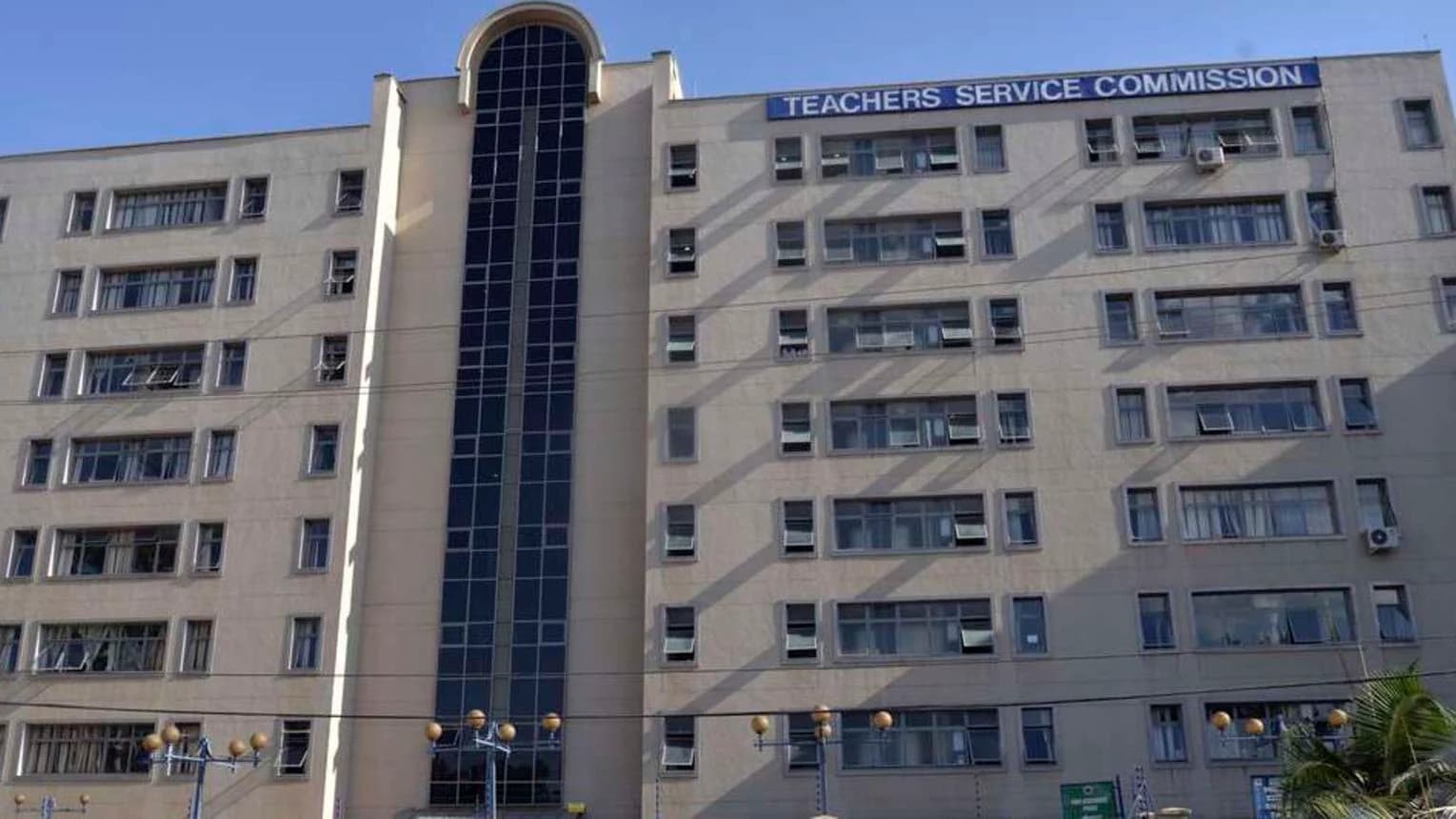
This contradiction has now attracted judicial scrutiny, with the Employment and Labour Relations Court delivering a significant ruling against the Teachers Service Commission over the treatment of teachers serving in acting capacities.
The decision offers hope to thousands of educators who believe they have been performing higher responsibilities without receiving the financial recognition attached to those positions.
The case involved 22 teachers who challenged TSC's handling of acting appointments, arguing that they had been entrusted with senior administrative responsibilities for extended periods without substantive appointments or appropriate acting allowances.
Some had reportedly served in acting positions since 2012, 2016, 2017, 2019 and 2021.
The court, in a decision delivered by Justice Jemimah Keli, directed the commission to compensate the affected teachers for the additional responsibilities they had undertaken.
At the heart of the dispute was a fundamental employment principle: an institution cannot continuously benefit from an employee's higher-level services while disregarding the financial obligations that accompany those responsibilities.
When temporary appointments become years of unrewarded service
Acting appointments are ordinarily intended to ensure continuity when substantive officeholders are absent or positions become vacant.
They allow institutions to continue operating while recruitment, confirmation or promotion processes are undertaken.
However, the situation becomes problematic when temporary arrangements stretch into years.
In the teaching service, school leadership carries considerable responsibilities. Headteachers are expected to manage institutional finances, supervise teachers, maintain discipline, oversee examinations, implement government policies and safeguard learners.
Deputy headteachers and other administrators also shoulder substantial responsibilities that extend beyond ordinary classroom teaching.
When teachers are assigned these duties, they assume additional professional and administrative burdens.
It is therefore difficult to justify a situation in which an educator performs the work of a higher-ranking officer indefinitely but continues receiving remuneration attached to a lower position.
The court's intervention brings this contradiction into sharp focus.
TSC's six-month acting appointment question
One of the significant issues raised in the dispute concerns the duration of acting appointments.
The teachers challenged the commission's practice of allowing acting arrangements to extend beyond six months without adequately resolving the employment and remuneration implications.
The court's directive to pay acting allowances from the dates the affected teachers assumed the additional responsibilities places TSC under pressure to reconsider how it administers temporary appointments.
The ruling also raises an important question about succession planning within the teaching service.
Why should a teacher be allowed to manage an institution for several years without a clear decision on whether the position will be substantively filled?
If the vacancy exists, the commission should establish a transparent process for filling it. If the institution requires the teacher to continue performing higher duties, the corresponding remuneration should be provided.
Teachers should not be trapped between temporary appointments and indefinite waiting periods.
The Sh2.2 billion question: Who will finance acting allowances?
The ruling comes against the backdrop of financial pressure within TSC.
The commission has indicated a Sh2.2 billion funding shortfall for acting allowances in the 2026/2027 financial year.
This presents an implementation challenge, particularly when considered alongside the commission's other financial obligations, including recruitment, promotions, salaries and teacher welfare programmes.
However, financial constraints cannot become a convenient justification for an employment arrangement that places additional responsibilities on teachers without corresponding compensation.
If the education system depends on acting administrators to keep schools operational, then their remuneration must be incorporated into institutional planning and budgeting.
The government must also recognise that proper school administration is not an optional expenditure. It is central to the delivery of quality education.
Hard-to-staff areas and the question of professional fairness
The judgment also carries wider implications for teachers working in Arid and Semi-Arid Lands (ASAL) and other hard-to-staff regions.
Educators serving in these areas face distinctive challenges, including insecurity, geographical isolation, difficult climatic conditions, inadequate infrastructure and limited opportunities for career progression.
The court recognised the marginalisation concerns affecting teachers in these regions and directed TSC to make appropriate budgetary provisions for relevant allowances.
This is particularly important because equitable treatment in the teaching profession cannot be measured exclusively through identical administrative requirements.
Teachers working in difficult environments require policies that recognise the circumstances under which they deliver education.
A promotion and remuneration framework that ignores these realities risks perpetuating inequalities within the profession.
Promotion without meaningful financial progression
The acting allowances dispute also exposes a wider problem within the teaching service: the disconnect between professional responsibility, promotion and financial progression.
Teachers have repeatedly raised concerns about career stagnation, limited promotional opportunities and administrative barriers that prevent experienced educators from advancing.
Some teachers acquire additional qualifications, accumulate years of experience and undertake leadership responsibilities but still struggle to secure substantive appointments.
The situation creates frustration and undermines motivation, particularly among educators who feel that their commitment is not matched by institutional recognition.
Although TSC maintains that promotions depend on qualifications, merit, vacancies and available funding, these considerations should not be used to perpetuate prolonged acting arrangements without fair compensation.
The commission has indicated that it promoted 5,291 teachers during the 2024/2025 financial year and relaxed certain promotion requirements.
Nevertheless, the latest judicial intervention demonstrates that more needs to be done to ensure that administrative decisions are consistent with employment rights.
It is important to distinguish between promotion and acting allowances. The judgment does not automatically confer substantive promotions on the affected teachers. Its central concern is compensation for the additional responsibilities they performed.
Why the ruling should force TSC to reassess its policies
The significance of the judgment extends beyond the 22 teachers who approached the court.
It raises questions about thousands of other educators who may be serving in similar circumstances across the country.
TSC should undertake a comprehensive audit of acting appointments, identifying the teachers involved, the duration of their appointments, the responsibilities assigned to them and the allowances due.
Such an exercise would help establish the scale of the problem and prevent temporary appointments from becoming permanent administrative conveniences.
The commission should also develop clear timelines for filling vacant administrative positions and communicating decisions to affected teachers.
Where teachers qualify for substantive appointments, transparent and predictable promotion processes should be followed.
Where they are required to continue serving in acting capacities, their additional responsibilities should attract appropriate financial recognition.
The bigger lesson: Teachers cannot be expected to lead without recognition
The teaching profession is built on responsibility, accountability and service. However, professional commitment should never be confused with an obligation to provide higher-level services without fair compensation.
A teacher entrusted with running a school is not merely filling an administrative gap. That individual is safeguarding an institution, managing public resources, supervising colleagues and ensuring that learners continue receiving education.
Such responsibilities deserve institutional recognition.
The court has therefore raised an important question that TSC can no longer afford to ignore: why should teachers carry the weight of senior offices while remaining financially confined to lower positions?
For educators who have spent years acting in positions they have effectively been performing, the ruling represents more than a financial victory. It is an affirmation of professional dignity and the principle that responsibility must be matched by recognition.
Ultimately, the quality of education depends not only on curriculum reforms, infrastructure and learning materials but also on how the country treats the professionals entrusted with running its schools.
A teaching service that demands accountability from educators must also demonstrate accountability in the way it remunerates and manages them.


Reader Discussion (0)
Sign in to comment