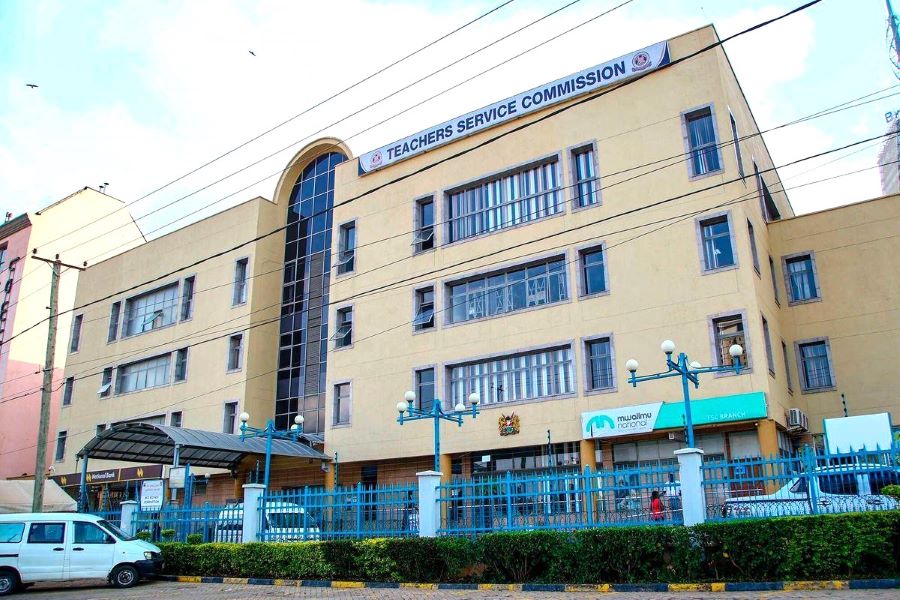
- TSC has requested KSh460.627 billion for 2026/27 but has received an allocation of approximately KSh424.3 billion, leaving a gap of about KSh36.3 billion across its operations.
- The Commission identified unfunded requirements including KSh2.2 billion for acting allowances, a KSh2.3 billion shortfall in confirming 20,000 JSS interns, and KSh5.3 billion for a medical insurance scheme.
- The writer argues that responsibility for the funding gap should be shared among TSC, Treasury and Parliament, rather than attributed solely to the Commission.
The ongoing debate over teachers’ welfare, school leadership, and the future of Junior Secondary School (JSS) keeps returning to the same question: what has the Teachers Service Commission (TSC) failed to do? That question misses the point. The more useful one is what TSC asked for, what Treasury provided, what Parliament ultimately approved, and which obligations were left unfunded. This distinction matters because TSC employs Kenya’s teachers, but it does not set its own budget ceiling.
A budget requirement far larger than what was approved
Treasury’s Education Sector Report puts TSC’s total 2026/27 requirement at KSh460.627 billion — KSh458.718 billion recurrent and KSh1.909 billion capital, against a 2025/26 approved budget of KSh387.181 billion. An earlier Treasury public-hearing presentation had placed the requirement at KSh459.023 billion, with a proposed 2026/27 allocation of KSh422.214 billion; the final national budget eventually settled the allocation at approximately KSh424.3 billion. The figures shift slightly because they come from different stages of the budget process. Still, the underlying reality does not change: TSC asked for substantially more than it was given, leaving a gap of roughly KSh36.3 billion.
That requirement was never a single envelope for one purpose. Treasury’s sector report breaks it down: Teacher Resource Management — the largest component — required approximately KSh446.895 billion, against an approved 2025/26 figure of about KSh377.518 billion. Teacher capacity development was projected at KSh2 billion, more than double the KSh980.39 million previously approved. General administration, planning and support services needed roughly KSh11.536 billion, while governance and teaching standards required about KSh2.196 billion. Field administrative services accounted for approximately KSh1.298 billion, and automation of TSC operations needed KSh436.48 million. Taken together, these figures cover the entire machinery of managing Kenya’s teaching service — not salaries alone, but staffing, training, governance, field administration and digital systems. This is why it would be simplistic to treat every service shortfall as evidence of negligence by TSC; the Commission had to operate within what Government approved.
Teachers acting without pay
One of the clearest illustrations is the issue of teachers serving in acting leadership roles. TSC told the National Assembly Education Committee it required approximately KSh2.2 billion in 2026/27 to fund acting allowances, but that amount was not included in its approved estimates. The work was already being done — reports to the committee put roughly 3,300 school heads and deputy headteachers in acting capacity, while KUPPET cited a broader figure of about 99,000 teachers across various acting administrative roles (a figure that spans several categories of responsibility, not vacant principal or deputy posts alone). Whatever the precise count, the financial gap is clear: TSC identified the need, but the funding was not there.
The human cost of this gap is significant. A teacher appointed to act in a higher office takes on real additional responsibility — supervising staff, managing discipline, overseeing examinations, handling correspondence, administering resources and implementing government policy — often without corresponding pay. This is not an argument for normalising acting arrangements; if anything, it strengthens the case for timely substantive appointments, and for properly funding acting roles where they remain temporarily necessary. TSC’s 2026 recruitment and promotion exercises, including thousands of institutional leadership vacancies on its portal, show the Commission is working through existing staffing mechanisms. But filling positions takes more than advertising them — it requires a funded establishment.
Why Education News remains Kenya’s most authoritative voice on education
What substantive JSS leadership would actually cost
The same funding logic applies to Junior Secondary School leadership. If Kenya decided that every public JSS should have its own substantive principal and deputy principal, the fiscal implication would be significant. Using the 10,382 public JSS institutions as a base, that would mean 10,382 principal posts and 10,382 deputy posts — 20,764 new leadership positions in total. If, for illustration, a JSS principal were placed at D3/T-Scale 13 and a deputy at D2/T-Scale 12, the basic salary bill alone would range between roughly KSh25.1 billion and KSh30.6 billion annually, excluding allowances and other employer costs. This is not an approved budget line — it is a planning estimate — but it demonstrates why substantive JSS leadership cannot be demanded without first confronting its financing.
The confirmation of 20,000 JSS interns
A parallel fiscal problem affects JSS intern teachers. TSC reportedly sought approximately KSh7.2 billion to transition 20,000 JSS interns into permanent and pensionable employment; the final provision was about KSh4.9 billion, leaving a reported shortfall of roughly KSh2.3 billion. That gap is not marginal — it directly slows the pace at which teachers move from temporary internship into permanent employment. A permanent appointment is not a one-time cost; it creates lasting obligations in salary, medical cover, pension contributions and other benefits, which is why TSC can only confirm teachers sustainably where an approved establishment and adequate recurrent funding exist. Where funding falls short, the Commission is left choosing between delaying confirmations, seeking supplementary funding, reprioritising other spending, or continuing to rely on temporary staffing — each option carrying its own cost to workforce stability. Prolonged internship also carries a hidden systemic cost: schools continue to depend on these teachers for substantive classroom duties, and deferring their confirmation to ease short-term fiscal pressure risks longer-term problems with morale and retention.
ALSO READ:
KJSEA 2026: KNEC releases examination timetable as candidates begin final preparations
Other unfunded pressures
Acting allowances and intern confirmation were not the only gaps. TSC also flagged a KSh5.3 billion requirement for a comprehensive medical scheme covering Group Life, Group Personal Accident and Work Injury Benefits Act-related insurance, according to parliamentary budget reporting, along with an additional KSh800 million needed for phased procurement of vehicles and operational support in the field. Taken together with the underfunded KSh2 billion teacher capacity-development request — nearly double the KSh980.39 million previously approved — these figures point to a funding gap that is structural rather than incidental, touching training, insurance, field operations and digital administration alike.
Where accountability should sit
None of this absolves TSC of responsibility. The Commission should explain delays, publish staffing data, account clearly for promotions and acting appointments, and communicate transparently on intern confirmations and the use of allocated resources. But accountability in this system does not rest with TSC alone. Treasury sets the fiscal ceiling. Parliament approves appropriations and exercises oversight. The Ministry of Education sets policy direction. Teachers’ unions represent worker interests. A funding shortfall identified but not filled cannot fairly be pinned on the implementing agency alone.
The more useful questions, then, are not “why has TSC failed to pay acting allowances,” but rather: Did TSC request the KSh2.2 billion, and was it included in the budget submission? Why was it not funded? How many teachers actually qualify for acting compensation, and what would substantive appointments cost instead? For JSS interns: how many qualify for confirmation, what was requested versus approved, and what would full confirmation cost? For leadership: what establishment does JSS actually require, what grading applies, and what is the true recurrent cost?
What each institution must do
Parliament must scrutinise TSC’s budget submissions in greater detail, verify staffing data — including vacancies, acting appointments and intern numbers — and ensure that where policy commits to compensating acting teachers, confirming interns or staffing JSS leadership, the funds are actually appropriated. Treasury must ensure that policy commitments come matched with adequate funding, since every additional teacher, principal or deputy represents a long-term wage obligation that must be fully costed before implementation, not after. TSC, for its part, must keep strengthening internal accountability — maintaining accurate acting-appointment records, prioritising substantive vacancies, ensuring transparency in promotions and confirmations, and continuing to engage Treasury and Parliament on unfunded obligations.
The real test
KEMI rolls out career guidance training for junior school teachers
The broader lesson is that Kenya’s education reforms — JSS expansion, teacher recruitment, internship programmes, leadership restructuring — are too often introduced without being fully aligned to long-term fiscal planning. When that alignment is missing, the pressure eventually surfaces as unpaid allowances, delayed confirmations and prolonged acting arrangements. Teachers experience the budget through their salaries, promotions and working conditions; learners experience it through teacher availability and school management; parents experience it through the stability of the institutions their children attend. The question that matters is not the size of the budget in isolation, but whether it is sufficient to sustain the system it is meant to support. TSC’s requirement stood at KSh460.627 billion against a final allocation of approximately KSh424.3 billion — a gap that runs through acting allowances, intern confirmations, medical cover and JSS leadership alike. Closing it will require TSC to manage efficiently and report transparently, Treasury to fund what it approves, and Parliament to appropriate responsibly — so that teachers who act, interns awaiting confirmation, and schools needing leadership are no longer left operating inside an underfunded system.
By Hillary Muhalya
You can also follow our social media pages on Twitter: Education News KE and Facebook: Education News Newspaper for timely updates.
>>> Click here to stay up-to-date with trending regional stories
>>> Click here to read more informed opinions on the country’s education landscape