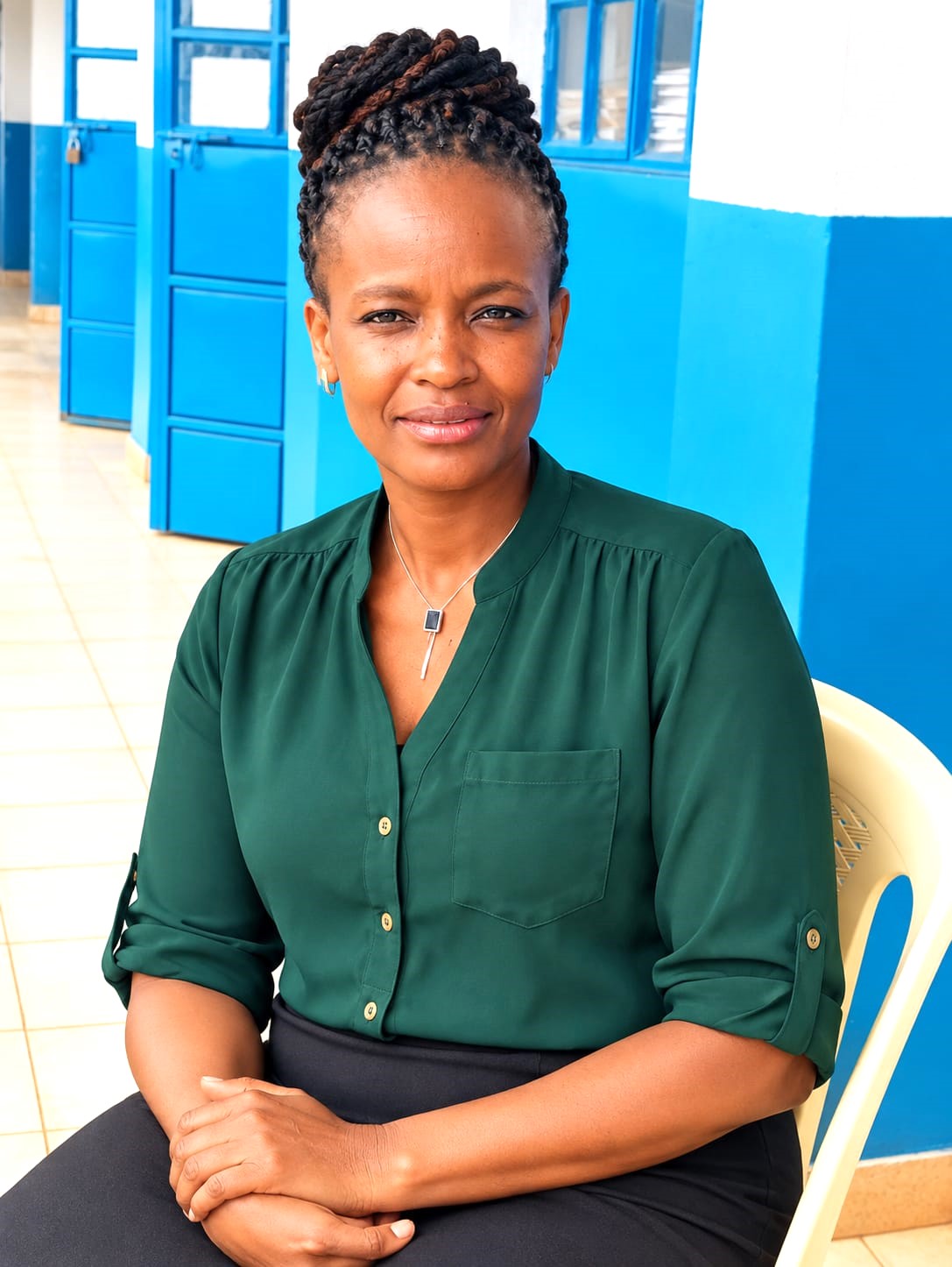
- Astiba Kebong’o examines how unresolved family conflict can place children’s safety and wellbeing at risk.
- She calls for positive discipline, dialogue and early intervention when warning signs emerge within families.
- Schools, churches and government also have crucial roles in strengthening families and protecting vulnerable children.
The reported death of a Form Three student in Iranda, Kitutu Chache South, allegedly at the hands of his father, is a painful reminder that some of the most dangerous conflicts can occur within the very homes where children expect to be safest.
Reports indicate that police are investigating the death, while the father has been taken into custody. There have also been claims by family members that the teenager had allegedly been threatened days before the incident. These claims remain subject to investigation, and the full circumstances surrounding the death have not yet been established.
Nevertheless, the tragedy raises uncomfortable questions for all of us. What happens when anger takes control of a parent? How do we correct our children without destroying the relationship we have with them? When a child is struggling, who notices? And when threats are made within a family, do we take them seriously enough?
These are not easy questions, but they are questions we must ask.
Parenting is demanding. Adolescents can be difficult to understand. They make mistakes, challenge authority, demand independence and sometimes respond to correction in ways that test a parent’s patience.
But a child’s difficult behaviour must never make violence acceptable.
The Constitution of Kenya provides that a child’s best interests are of paramount importance. The Children Act, 2022, reinforces this principle and requires the best interests of the child to be the primary consideration in matters concerning children. It also recognises parental responsibility as including provision, guidance, protection and care.
This means that being a parent is not merely about providing school fees, food and clothing. It also means providing emotional and physical safety.
A parent may discipline a child, but discipline should be directed towards correction and development, not revenge or intimidation.
Anger must not make decisions for us
One of the lessons we must draw from this tragedy is the importance of learning to manage anger.
There are moments when a parent may feel betrayed, disrespected or deeply frustrated by a child’s behaviour. In such moments, the wisest decision may be to postpone the confrontation until emotions have settled.
Walking away from an argument is not weakness. Sometimes it is wisdom.
A parent who says, “We will discuss this when I am calm,” may prevent a situation from escalating. Parents should learn to distinguish between correcting behaviour and reacting emotionally to it.
Children also need to learn patience, respect and responsible communication. Dialogue cannot be a one-way conversation in which an adult speaks and a child merely listens. Adolescents need an opportunity to explain themselves, particularly when the matter concerns their welfare.
Listening does not mean surrendering parental authority. It means seeking to understand before deciding how to correct.
Can schools help bridge the gap?
Schools have an important role in creating healthier relationships between parents and their children.
A school should not only call a parent when a learner has failed examinations, broken school rules or committed an offence. Schools can also become platforms for strengthening families.
Parent meetings can include sessions on adolescent development, positive discipline, anger management, communication and conflict resolution. Guidance and counselling departments can help learners who are experiencing persistent family conflict, fear, withdrawal or emotional distress.
Teachers are often in a unique position to notice changes in learners. A learner who was once cheerful but becomes withdrawn, aggressive, fearful or unusually quiet may be communicating distress without saying it directly.
Schools therefore need safe and confidential reporting and referral mechanisms. Where a learner reports credible threats or violence at home, the matter should not simply be dismissed as a family disagreement.
At the same time, schools should not automatically blame parents. The objective should be to build a bridge.
The conversation should be: How can we work together to help this child?
Parents, too, should be encouraged to see teachers and counsellors as partners rather than people who only call when something has gone wrong.
Kenya’s homicide figures provide a sobering national context. According to the Kenya National Bureau of Statistics, 3,015 homicide cases were reported to police in 2024, compared with 3,031 in 2023, 3,056 in 2022, 3,281 in 2021 and 3,111 in 2020.
The available national statistics do not, however, provide a specific breakdown showing how many of these homicides involved parents killing their children. We should therefore avoid suggesting that the Kitutu Chache case represents a particular national trend without evidence.
The figures nonetheless remind us that violence resulting in loss of life is not an abstract problem. Behind every statistic is a family, a community and a life that cannot be restored.
What does the law say?
Kenyan law is clear that anger does not give anyone a legal licence to take another person’s life.
Under the Penal Code, murder involves unlawfully causing the death of another person with malice aforethought. The law also recognises circumstances of provocation in determining whether an unlawful killing amounts to manslaughter rather than murder. Whether such provisions apply in an individual case is ultimately a matter for the courts based on the evidence.
More importantly for families, threats to kill are themselves a criminal offence under Section 223 of the Penal Code. The law provides for a possible sentence of up to ten years’ imprisonment for a person who, without lawful excuse, threatens to kill another person.
This should make us take threats seriously.
If a child tells a teacher, relative, neighbour or another trusted adult that someone at home has threatened to kill them, it should not automatically be dismissed as an ordinary family quarrel. Appropriate safeguarding and reporting mechanisms should be considered.
A threat may be a moment of anger, but it can also be a warning sign.
The church must strengthen families
The church has an important role in this conversation.
Churches have access to parents, young people and entire communities every week. Beyond preaching, they can organise parenting seminars, youth forums, family counselling and discussions on anger management, communication and conflict resolution.
Men’s fellowships, women’s groups and youth ministries can provide safe spaces where families discuss challenges before they become crises.
The church can also encourage parents to seek professional help when family problems become too difficult to handle alone.
Faith and professional counselling do not have to compete. They can complement each other.
The tragedy also comes at a time when the world is calling for greater openness around suicide prevention and mental health.
World Suicide Prevention Day was observed on September 10, 2026, under the theme “Changing the Narrative on Suicide”, with the call to start the conversation. WHO emphasises open, compassionate conversations, reducing stigma and ensuring that people in distress can seek support.
Although the reported Kitutu Chache death is not a suicide case, the broader mental-health message remains relevant: families need spaces where difficult emotions, conflict and distress can be discussed before they become dangerous.
Government should therefore take mental-health and family-awareness campaigns beyond occasional commemorations. Radio, television, social media, schools, churches, chiefs’ barazas, health facilities and community organisations can all be used to educate the public on emotional regulation, parenting, violence prevention and where to seek help.
WHO’s suicide-prevention approach also emphasises socio-emotional life skills for young people and early identification and support for people affected by suicidal behaviour.
We must learn to listen before we lose lives
Perhaps the most painful lesson from the reported tragedy is the need to recognise warning signs.
If threats had allegedly been made days earlier, one question naturally arises: could someone have intervened?
We cannot answer that question in relation to this particular case until the facts are established. But as a society, we can ask whether we take threats, persistent family conflict and changes in children’s behaviour seriously enough.
Sometimes intervention begins with a simple question:
“What is happening at home?”
A teacher can ask it.
A parent can ask it.
A pastor can ask it.
A neighbour can ask it.
A child can also be taught that seeking help is not betrayal.
Children will make mistakes. Parents will sometimes lose patience. Families will disagree.
But we must learn that disagreement does not have to become destruction.
A parent can be firm without being violent. A child can be corrected without being humiliated. A disagreement can be postponed until tempers cool. A difficult conversation can be handled through listening. Professional counselling can be sought before relationships collapse.
The reported death of the Form Three student should therefore not only leave us mourning. It should challenge parents, teachers, religious leaders, government agencies and communities to examine how we respond to anger, conflict and warning signs.
Schools must strengthen the bridge between the classroom and the home. Churches must strengthen families. Government must sustain public awareness and accessible support services. Parents must learn to manage their emotions and listen to their children. Young people must equally learn responsibility, respect and patience.
Most importantly, we must never allow a moment of anger to determine the value of a child’s life.
A child may disappoint a parent today and still have a future tomorrow.
A heated argument can end.
A mistake can be corrected.
A relationship can be repaired.
But a life once lost cannot be brought back.
READ ALSO: KUPPET pushes for entire Narok to be gazetted as hardship area
Our children deserve correction, guidance, patience and love—but above all, they deserve to be safe.
By Astiba Kebong’o
Email: jackiekebongo@gmail.com
Get more stories from our website: Education News
To write to us or offer feedback, you can reach us at: editor@educationnews.co.ke
You can also follow our social media pages on Twitter: Education News KE and Facebook: Education News Newspaper for timely updates.
>> Click here to stay up-to-date with trending regional stories