


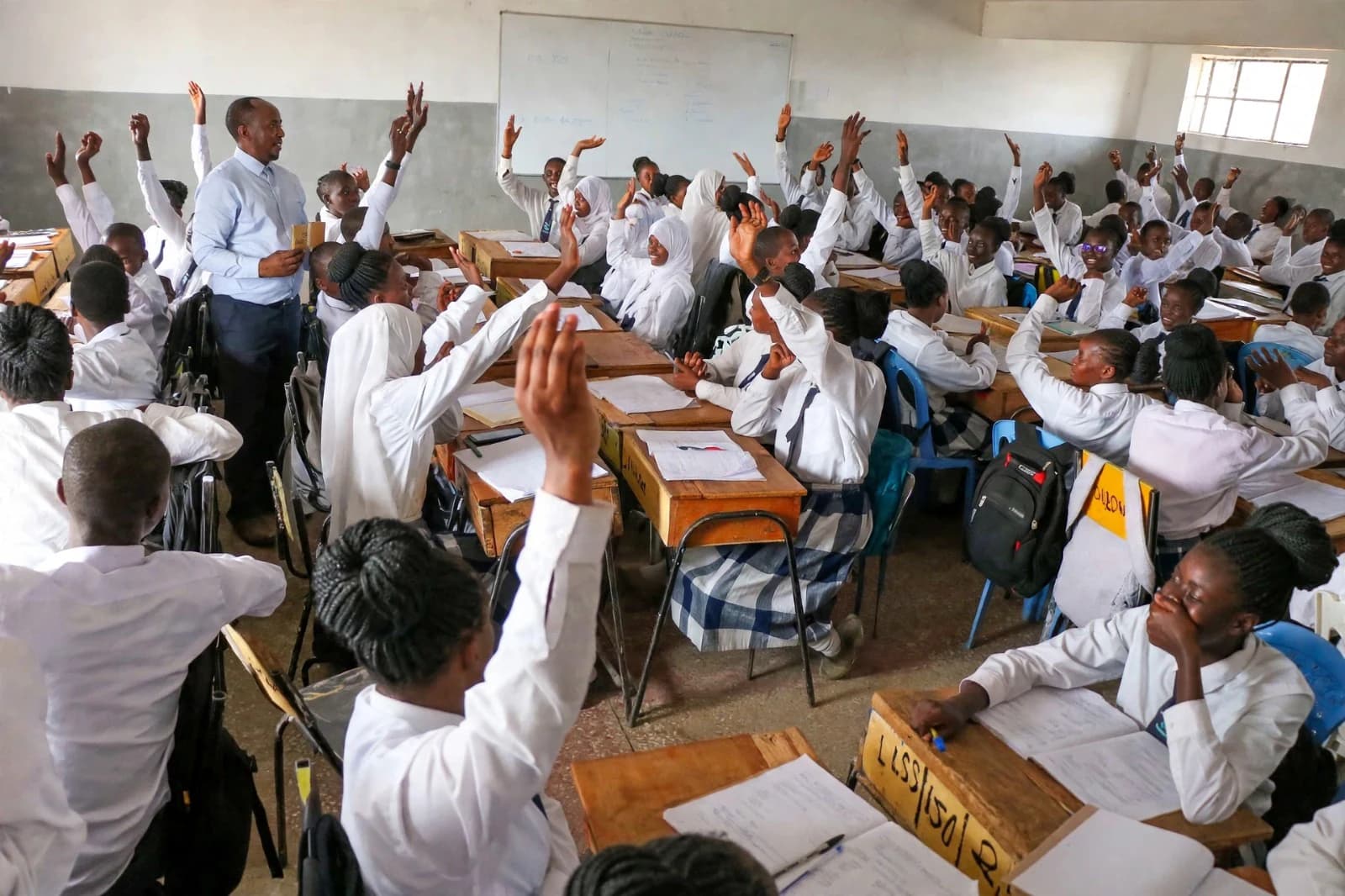



After completing the syllabus, schools focus on intensive revision programmes that help students sit and write exams. As a scribe, I consider a group discussion as an effective study technique. Broadly, a typical group discussion should be a cocktail and dovetail of abilities. No group discussion should include any task outside a well-thought-out framework of scheduled, timetabled activities. Apart from the common group discussions that are ubiquitous in our schools, there are 4 major types of group discussions, which include: Socratic seminar, fish-bowl, jig-saw, think-pair-share and round-robin group discussions.
Group Discussion in Learning Pyramid
Actually, to understand the essence of group discussions, we must keep our eyes peeled on the Learning Pyramid or Cone of Learning or Dale’s Cone of Experience. Therein, we discover that effective group discussions account for 50% of mastery and mastery. The model is called the Cone of Learning, maybe, because it is cone-shaped. It is attributed to Edgar Dale, and it is a marvellous model illustrating how different types of learning activities impact knowledge gain and retention.
Again, the method summarises how knowledge is gained. The pyramid suggests that learners retain information at varying percentages depending on how they engage with the material read in books or content taught. Focusing on its nuts and bolts, the lecture method accounts for 5%, reading is 10%, audio-visual is 20%, demonstration is 30%, discussion is 50%, practice by doing (exams) is 75% and teaching others (peer teaching) is 90%.
The IDEA Concept in Group Discussions
Broadly, group discussion enhances collaborative and interactive learning. It also hones confidence and communication skills. Then, when working in groups, learners generate the IDEA, which, in The Leadership Training Activity, Dr Lois B. Hart and Dr Charlotte S. Waisman contend that it connotes: Innovation, Development, Enthusiasm and Application. Likewise, while working in groups, learners improve Basic Learning Competencies (BLCs). Moreover, aspects of Life Skills Education include negotiation, friendship formation, management of emotions, decision-making, problem-solving and peaceful ways of resolving conflicts.
Back to the Learning Pyramid I chose to allude to, 50% is not a small percentage per se. Therefore, it justifies the formation of effective group discussions. Every group should have an able group leader. Every group must set targets. Then, there should be a group name, group objectives and a set of rules. If possible, reshuffling of group membership should be applicable. Group leaders should have periodic meetings with academic teams to share data collected from the groups. Group leaders should be trained on effective ways of managing group discussions.
Mandate of Group Discussions
Somewhat, effective group discussions should be set aside for guided discussions, group exams, making of marking schemes, peer teaching, consultations and contests. Students should share knowledge through peer teaching. Those who find it difficult should see sense in the wise words: A candle does not lose light by lighting another candle. In fact, more light comes into the room when more candles are ablaze.
Digging deeper, guided group discussions encompass general discussions where teachers move from one group to the other, responding to areas where students are experiencing difficulty. In group exams, students do exams in groups. As they discuss the questions in groups, and one member pens appropriate responses on a piece of paper, mastery of content happens. Group exams should be marked. Results are released, and revision is done.
Consequently, in making marking schemes, students get past papers and use approved textbooks to get appropriate responses. Subject teachers should caution candidates against putting too much faith in every revision book. Some revision books are shallow and contain errors. Group consultation is a stupendous strategy that works well in schools that suffer from a severe teacher shortage. For effectiveness, students should remain in groups. Then, teachers visit groups responding to various areas of concern.
Apart from the common group discussions that are common in our schools, there are 5 major types of group discussions, namely: Socratic seminar, fish-bowl, jig-saw, think-pair-share and round-robin discussion groups.
1. Socratic Seminars Discussion Group
In Socratic Seminars, the teacher, or even group leader, poses several quality questions posed for members to provide appropriate responses. These are open-ended questions, which should encourage members to think critically about the content of the syllabus.
2. Fish-Bowl Discussion Group
Moreover, the Fish-Bowl model is the best for the weekend programme in schools. A few students take turns actively participating in the discussion, while the rest of the class sit back and serve the role of being active listeners. The inner circle is of active participants, but the outer one is of observers. Each one must have assigned roles.
3. Jig-Saw Group Discussion
In Jig-Saw, the student becomes an expert in a certain area and generally shares the requisite knowledge with fellow students. Students are put into small groups. Each group discusses and learns more about a particular topic. There is the reshuffling of students to create new groups with representatives from each previous group. In the new groups, each student becomes responsible for sharing essential aspects of their original discussion.
4.Think-Pair-Share Group Discussion
Furthermore, in Think-Pair-Share, each student works independently on a particular topic, which everyone is handling. Sharing is caring. Therefore, in this method, students meet. They share their readings, research and findings.
5. Round-Robin Group Discussion
In the Leadership Training Activity, Dr Lois B. Hart and Dr Charlotte S. Waisman contend that Round-Robin is a structured discussion where each participant is given equal time and opportunity to contribute, ensuring a collaborative and inclusive environment.
Finally, it’s important to explore a few reasons most group discussions fail. Sometimes, it’s due to a lack of proper orientation pertaining to roles. Poor training of group leaders. Failure to schedule time for group discussions. Lack of defined activities. Groups also fail and fall apart because students do not know what to do. Then, there is a lack of good guidance.
Victor Ochieng rolls out talks and training services in schools. He speaks to students about useful study skills, Methods, habits, and Techniques. vochieng.90@gmail.com. 0704420232

Reader Discussion (0)
Sign in to comment