
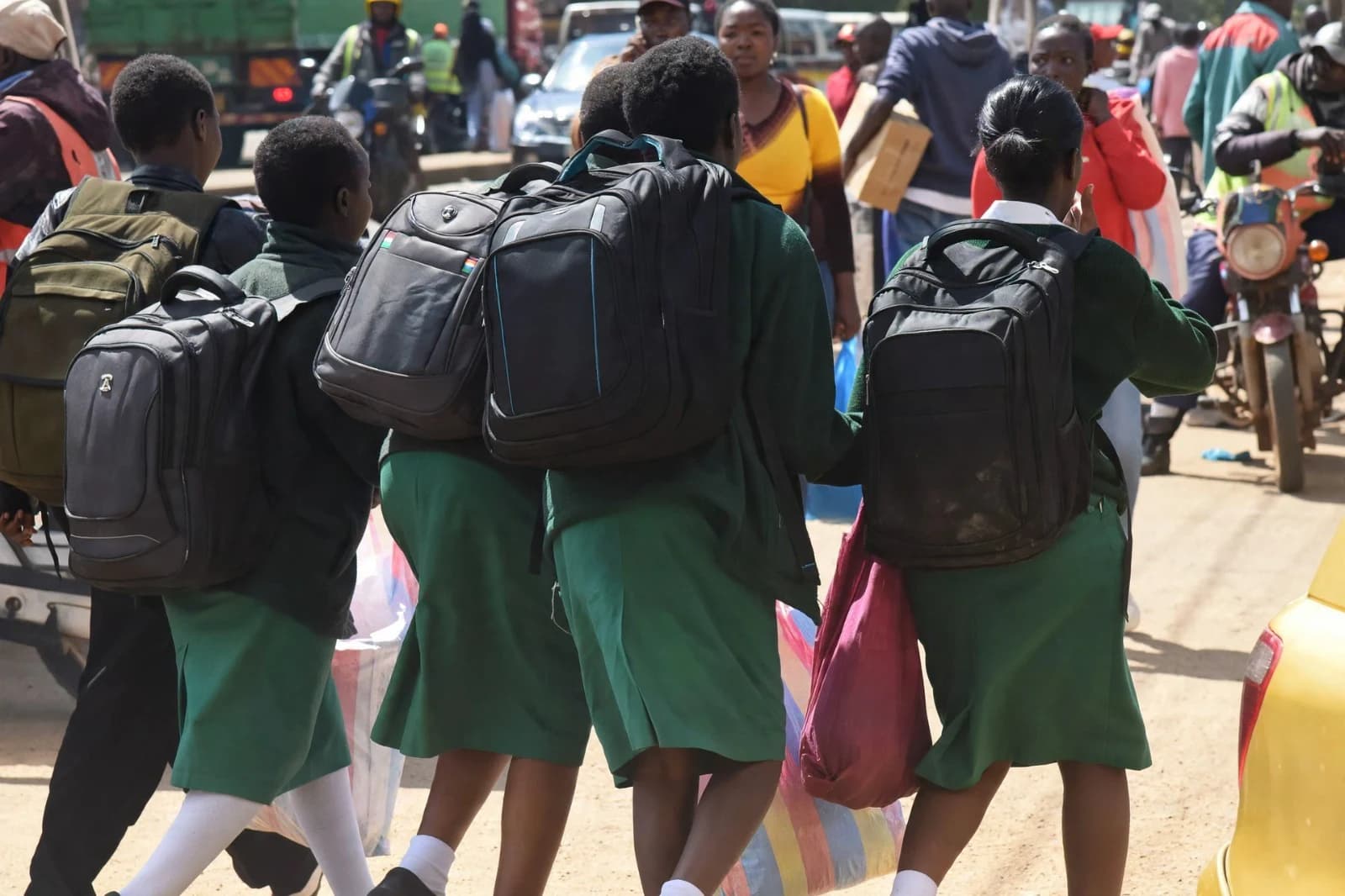
The Elimu Bora Working Group (EBWG) has indicated that 64.9 per cent of day-school learners surveyed were sent home or denied access to school or class because of unpaid school levies, a practice prohibited by law.
In a survey on illegal school levies, EBWG found that 64.9 per cent of day-school learners were sent home or denied access to class because of levies, compared with 40.5 per cent of learners in boarding schools.
“In day schools, the illegal levies which go up Sh20,000 are in the name of lunch programmes and remedial classes, which go against the tenets of compulsory free education,” EBWG official Chris Owalla said in a report the organisation released recently.
The Elimu Bora Working Group may be correct on charges for remedial tuition, motivation, holiday tuition and probably others. But it is wrong to classify all charges for lunch programmes in day secondary schools as illegal.
The truth of the matter is that the Free Day Secondary Education policy does not provide for meals for students in secondary schools. The policy does not provide meals for students in boarding schools or those in day schools.
Instead, it is the parents who pay for food and accommodation expenses for students in boarding schools. Fairness demands that parents also take responsibility for the midday meals of their children in day schools, subject to the applicable education guidelines.
How the school fees guidelines addressed lunch costs
The secondary school fees guidelines introduced in 2015 followed a review initiated by former Cabinet Secretary for Education Prof Jacob Kaimenyi.
In 2014, he constituted a task force to address the runaway secondary school fees. Under the chairmanship of Dr Kilemi Mwiria, the task force recommended three options to the government.
The first option was that the Government of Kenya provide a capitation grant to cater for teaching and learning materials, related operational costs and lunch for students in all public secondary schools in Kenya. The students would have received free tuition and lunch.
Given the fiscal constraints, the government adopted the third option. It recommended that the government meet the cost of teaching and learning materials and related operational costs, excluding lunch. Under the third option, households were to cater for lunch. It was pegged at Sh5,861 at the time.
Clearly, the government could not afford to meet the cost of midday meals for learners in day secondary schools, which, in some schools, include 10 o'clock tea and lunch.
It is therefore misleading to claim that all charges for lunch programmes introduced by Boards of Management of day secondary schools are necessarily illegal. Government capitation does not ordinarily cover the cost of lunch, although any charges must comply with the applicable approval requirements.
Yet the students need meals: 10 o'clock tea and lunch.
Why day-school learners need meals
Why 10 o'clock tea and lunch?
The catchment area of many day schools extends several kilometres. Some students travel long distances to school, leaving home fairly early and often without breakfast. The 10 o'clock tea is therefore a lifeline for many who go to school without breakfast.
For supervisory purposes, it is more convenient to have lunch provided from a centralised point. It is also cost-effective for parents.
I know of day secondary schools which charge between Sh7,500 and Sh10,000 per school year. With that amount, a child can have 10 o'clock tea and lunch throughout the school calendar, with parents paying between Sh2,500 and approximately Sh3,333 per term.
The most distressing reality is that some parents do not pay the lunch fee. They do not pay for it but expect their children to eat while at school.
The school ends up feeding the learners from what the few parents pay, piling up not school fee arrears, but lunch arrears.
The school may face difficulties providing meals where contributions remain unpaid. But administrators are faced with a dilemma.
Hunger affects students' ability to concentrate in school, making it harder to retain information and perform well. The availability of food in school attracts and retains learners. It improves school attendance.
It is painful for many school administrators when learners are sent home or denied access to classrooms over unpaid charges. Some resort to the practice to induce parents to exercise their responsibility to provide food as a basic need for their children while away from home.
However, the Basic Education Act prohibits schools from denying learners attendance because of failure to pay approved additional charges.
It is a paradox. Students sent home over lunch arrears may not return to school.
As I have noted earlier, studies show that feeding programmes contribute to improved attendance in schools. The availability of food improves learners' ability to concentrate, making it easier to retain information and perform well.
Lessons from school feeding programmes
It is one reason the Government of Kenya, through the State Department for Basic Education, provides nutritious midday meals to learners in arid and semi-arid lands and urban informal settlements under the School Meals Programme.
This programme helps attract and retain children in school.
It is also why education systems in other countries have developed school feeding programmes to support universal free education at the basic education level.
For example, Brazil runs one of the world's largest and most comprehensive school feeding initiatives through its National School Feeding Programme, providing millions of meals to learners across the country.
I remember Brazilian authorities who attended an international conference on school feeding programmes in Nairobi in 2017. They surprised the then Cabinet Secretary for Education, Dr Fred Matiang'i, when an official explained the enormous scale of Brazil's school feeding programme.
Similarly, India feeds school-going children under a programme formerly known as the Mid-Day Meal Scheme.
In a special report, School Lunch Program in India: Background, Objectives and Components, Alka Mohan Chutani observes: “The experience so far has shown that Mid-Day Meals have contributed to the wellbeing and future of Indian Children. School lunch Program in India has improved the school enrollment, increased attendance and raised nutrition levels among the children.”
The report also cites historical improvements in school enrolment and reductions in dropout rates associated with school feeding initiatives.
Financial challenges facing day secondary schools
The thrust of this article is the following:
First, the Free Day Secondary Education policy does not ordinarily provide for the lunch that learners in day schools eat.
Second, learners who attend schools with feeding programmes may receive 10 o'clock tea and lunch regardless of whether their parents have paid.
Third, some of the day-school learners affected by exclusion over unpaid charges may come from households with substantial accumulated lunch arrears. However, the EBWG survey does not establish what proportion of the reported 64.9 per cent falls into this category.
Fourth, some parents whose children have completed Form Four owe thousands of shillings in lunch arrears, thereby putting schools in debt.
Fifth, schools face additional expenses in paying non-teaching staff, such as cooks and groundsmen, and teachers employed by Boards of Management because of shortages in certain subjects. These expenses must be met through legally authorised funding arrangements.
The foregoing demonstrates, if there was anything to demonstrate, that the Elimu Bora Working Group should establish the challenges Boards of Management of day schools face in providing education services to learners.
Day schools depend heavily on government capitation for their operations. Capitation is based on enrolment. With fewer than 200 learners in some of these schools, school leaders face enormous challenges.
They have to feed students. Some parents do not cooperate in paying lunch fees.
They have to pay non-teaching staff and meet other operational expenses from the funds legally available to their institutions.
They also have to pay BOM teachers who compensate for the shortage of teachers in some subjects.
You can see the dilemma.
School leaders cannot afford to send away students for non-payment of remedial or holiday tuition when parents are unable or unwilling to pay lunch fees. Yet the law also requires schools to keep learners in class, even where approved additional charges remain unpaid.
The challenge, therefore, is to find a sustainable way of financing school meals without denying children their right to education.
Buhere is Communication Specialist
Email: buhere2003@gmail.com


Reader Discussion (0)
Sign in to comment