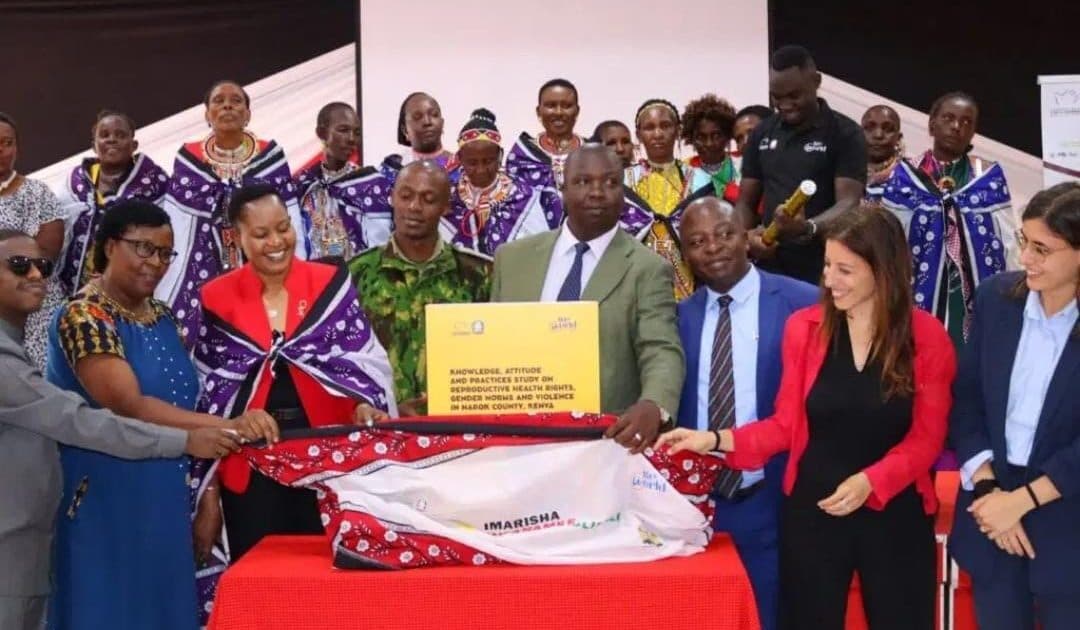
A human rights organisation, WeWorld Kenya, is working with 18 schools in Narok County to promote interventions aimed at ending Female Genital Mutilation (FGM) by 2030.
Through its Imara Project, the organisation is engaging learning institutions in Narok North, Narok Central, Narok East and Narok South sub-counties to involve young people in the fight against harmful cultural practices. The project is also tackling child marriage, teenage pregnancies and gender-based violence (GBV), working with learners, community leaders and government agencies.
Speaking to the press, WeWorld Kenya Programmes Officer Linda Kiogora said achieving the global target of ending FGM required collective action, innovative approaches and more funding.
"To achieve the target of ending FGM by 2030, as set out in the Sustainable Development Goals, evidence-based efforts and innovation must be redoubled," Kiogora said.
She said FGM is deeply rooted in gender inequality and power imbalances, which deny girls and women opportunities in education, healthcare, economic empowerment and equal participation in society. "FGM persists as a grave violation of women's and girls' rights, perpetuating gender inequality and causing severe physical and mental harm. If left unchecked, it could impact another 68 million women and girls by 2030," she said.(Education News Kenya — https://educationnews.co.ke/news/weworld-targets-18-narok-schools-in-renewed-push-to-end-fgm-by-2030)
The project seeks to challenge entrenched social and cultural norms that sustain FGM and child marriage by bringing together National Government Administration Officers, policymakers, young innovators, FGM experts, enterprise coaches and development partners. "With only four years left to reach the global target of eliminating FGM, it is clear that collective, well-funded and innovative action is urgently needed," Kiogora said.
She called for stronger collaboration among government agencies, development partners and communities so that women and girls live free from FGM and child marriage.
According to global estimates cited by the organisation, about 650 million girls and women worldwide were married before the age of 18, including 130 million in Africa. Nearly 200 million girls and women alive today have undergone FGM in 31 countries, with Africa accounting for about 80 per cent of reported cases.
Kiogora said education is a critical intervention, noting that girls whose mothers had primary education were 40 per cent less likely to undergo FGM than those whose mothers had no formal education. She added that girls today are one-third less likely to undergo FGM than three decades ago, which shows the impact of sustained prevention.
She warned, however, that inadequate financing remained a major obstacle. Global estimates indicate that about Sh412.5 billion is needed to eliminate FGM by 2030 in 31 priority countries, leaving a funding gap of about Sh315 billion. She also raised concern over the growing medicalisation of FGM, noting that about 52 million girls and women have undergone the practice at the hands of healthcare personnel.
Kiogora urged duty-bearers to take more responsibility for protecting women and girls and called on the government to increase investment in programmes addressing violence against them, saying public declarations must be matched by action.
"While we appreciate public acknowledgement from senior government officials, including the President of the Republic of Kenya, we believe government actions towards addressing gender-based violence need to match public declarations," she said.
She said the government should allocate adequate resources to implement existing GBV laws and policies, strengthen accountability mechanisms and increase funding for prevention and response. She also called for more budgetary support for shelters, legal aid and psychosocial services for survivors, public awareness campaigns to challenge harmful social norms, and support for grassroots organisations working directly with survivors.
Kiogora said the State has an obligation under the due diligence principle to prevent gender discrimination and protect women and girls from all forms of violence. "The due diligence principle requires states to take reasonable steps to prevent GBV. This means that states must take corrective and positive action in all areas in which GBV exists, such as engaging in community education around violence against women and girls, or passing preventative legislation," she said.
She reaffirmed WeWorld's commitment to advocating for a society where the rights and freedoms of women and girls are respected and protected.
As part of the interventions, the organisation has lined up training for boys and young men to promote gender equality and prevent teenage pregnancies across the four sub-counties. Kiogora said engaging males is essential in addressing the root causes of gender inequality and changing attitudes that perpetuate discrimination.
"By involving boys and young men in these discussions and equipping them with the right tools, we are not only addressing the root causes of gender inequality but also empowering future leaders to advocate for change within their communities," she said.
The training will cover gender norms, sexual and reproductive health, GBV and the role of men in preventing harmful practices. It is also expected to raise awareness of the risks of teenage pregnancy and encourage boys and young men to become allies in promoting gender equality.
The project will also train local administrators, chiefs, religious leaders and other community leaders on handling cases of sexual and gender-based violence (SGBV), including how to support survivors and report offences. Kiogora said the training would give leaders basic knowledge of the law and the responsibilities of different actors in the justice system.
She noted that some cases fail to progress because survivors and those assisting them lack information on court procedures, bail arrangements and the importance of attending court mentions. "Sometimes, it's a matter of people being released on bail; lack of sufficient evidence or ignorance on the part of the victim or the people making a follow-up on their behalf such that they don't end up following up appropriately and sometimes these victims end up missing out on mentions and such cases end up being dismissed," she said.
She urged survivors and their supporters to follow established legal procedures so that cases are pursued and justice is served.
WeWorld will also train police officers and local communities to strengthen child protection and prevent sexual violence. "We will train police officers and elders so that they can also be champions in the community in terms of reporting and learning how to prevent defilement cases among themselves and be agents of sensitisation in the community," Kiogora said.
Kiogora also criticised informal village justice systems, warning that settling sexual abuse cases outside the formal justice system denies survivors justice and lets perpetrators escape accountability. She said some parents of sexually abused girls negotiate with village elders and not report the cases to police or pursue them in court.
In some rural communities, she explained, elders convene village meetings to discuss allegations of sexual abuse, and the girl's family receives money or livestock in what is presented as compensation. Some families had reportedly received as little as Sh10,000, chickens, cows or goats, after which the matter was considered settled without the perpetrator facing criminal proceedings. She warned that such arrangements protect offenders at the expense of survivors, particularly children who need protection and access to justice.
Through the Imara Project, WeWorld is sensitising parents, young people and community leaders on the importance of reporting sexual offences and letting cases be handled through the formal justice system. The programme is also prioritising reproductive health education and awareness of the dangers of teenage pregnancy and early marriage.
"We are reaching out to teenage girls and enlightening them that defilement is listed under the Sexual Offences Act and it is a crime for a man to have sex with a girl under the age of 18," she said. "We are telling the girls that there is only one court, and that is the Judiciary. If there are any other courts, either by elder relatives or village elders and parents, they are not allowed. All these cases of rape, bestiality and incest cannot be solved under a mango tree."
Kiogora said the organisation would continue working with schools, government agencies, law enforcement officers and communities to strengthen prevention, reporting and response. The goal, she said, is safer communities where girls can pursue education and realise their potential without the threat of FGM, child marriage, teenage pregnancy or sexual violence.

Reader Discussion (0)
Sign in to comment