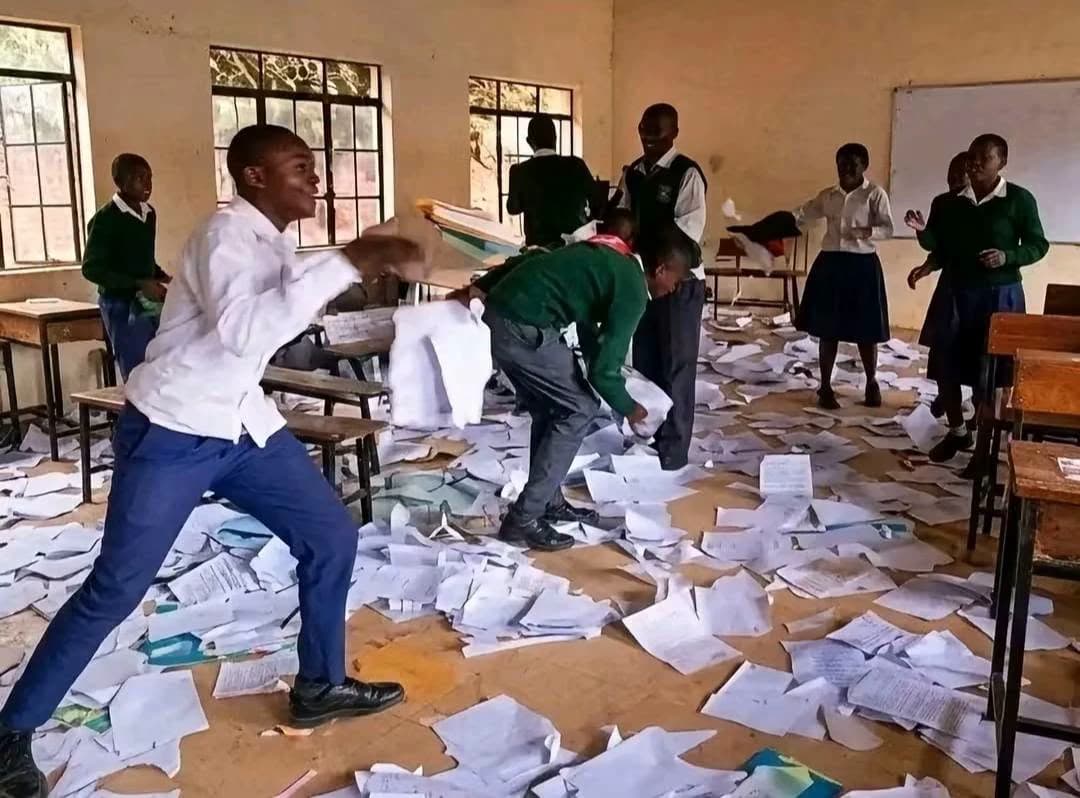
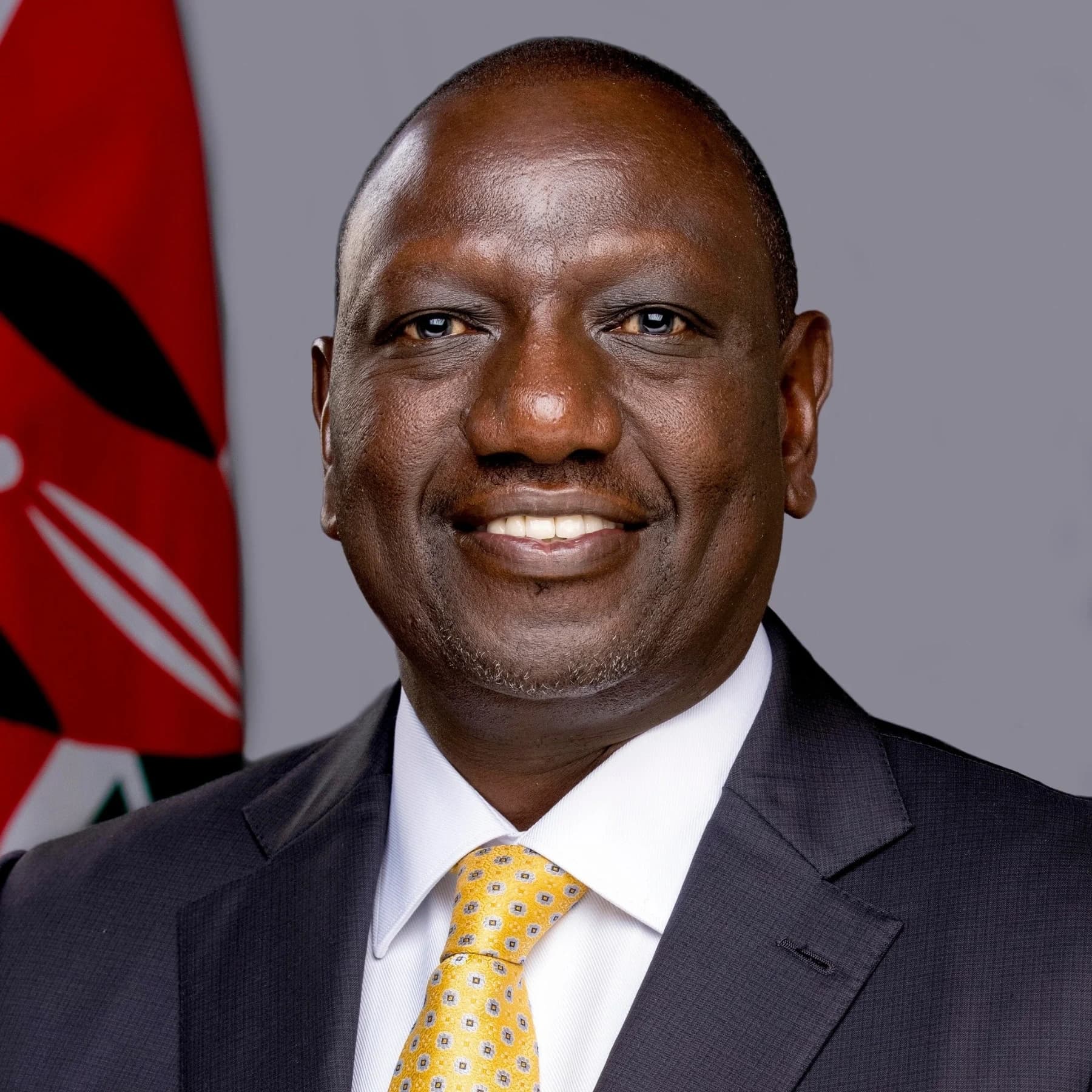




“Let no child leave grade three unable to read, write or count,” the President said. He made the call when he addressed members of the Kenya Comprehensive School Heads Association (KECSHA) during their annual conference in Mombasa.
The President asked members of the association to put the strongest teachers in their schools where, in his words, “the stakes are highest”—Grades One, Two and Three.
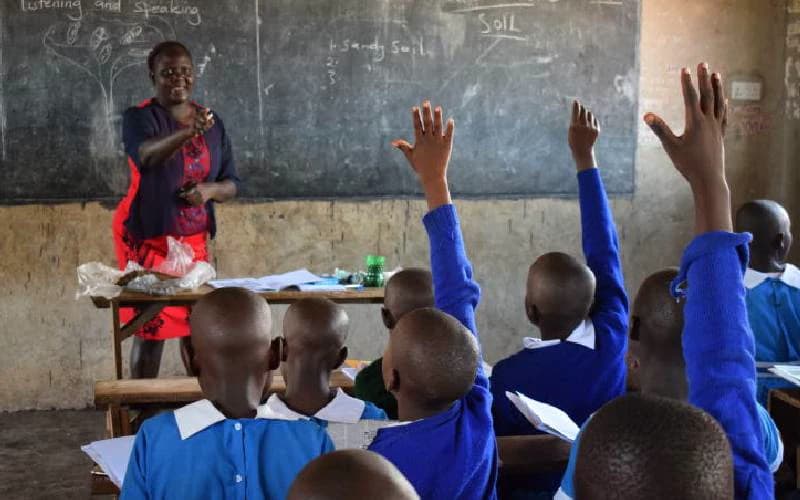
The primary function of primary education—the six years of primary schooling—is to teach literacy and numeracy. It is in Grades One to Three that children are taught how to read, write and count.
A child should be able to read and understand grade-appropriate texts with accuracy, fluency and comprehension. They should also be able to count accurately and with understanding.
Why? Because literacy and numeracy are the gateway to knowledge. That knowledge forms the foundation for the reasoning skills that education is expected to nurture in children.
President Ruto may well have been at his finest on education when he challenged headteachers to address the 3Rs—Reading, wRiting and aRithmetic. He set a target: every child should be able to read, write and count by the end of Grade Three by 2030.
The President’s remarks on reading, writing and counting did not come out of nowhere. They were informed by troubling statistics from several reports. Among these is the Foundational Literacy and Numeracy Assessment Report 2026, which highlights serious gaps in learners’ foundational skills.
This means that large numbers of children are not acquiring the foundational skills they need to understand or master the knowledge and skills prescribed by the school curriculum.
“Reading with fluency is the gateway to almost all learning. Without reading, there is little science, no history, and no geography. So we should champion reading as a vital life skill; reading to learn; reading for advancement; reading to expand horizons; reading for pleasure,” Amanda Spielman, former Chief Inspector of the Office for Standards in Education, Children’s Services and Skills (Ofsted) in England, observed at the Festival of Education in 2022.
With this poor performance, many children in the country’s schools lack the requisite skills to read to learn, read for advancement, read to expand their horizons or read for pleasure.
I sincerely thank the President for bringing this public policy issue to the conference of comprehensive school headteachers. It is at the elementary or primary school level that foundational skills—reading, writing and counting—ought to be established.
When learners fail to master these skills, they face serious challenges in mastering the secondary school curriculum. Officials of the Kenya Secondary Schools Heads Association (KESSHA) have raised concerns about the preparedness of students admitted to secondary schools. This unpreparedness has much to do with poor literacy and numeracy skills.
Strong teachers alone are not enough
Suffice it to say that poor reading and counting proficiency is not a small matter. Headteachers cannot fix it simply by deploying their strongest teachers to Grades One, Two and Three. The problem is bigger than even the strongest teachers in reading, writing and counting in any given school.
A strong teacher can address reading, writing and counting difficulties among learners in Grade One. But what about learners in Grades Two, Three, Four, Five and beyond who did not acquire these skills in Grade One?
These learners need interventions or remediation. In Grades One, Two and Three, children learn to read. From Grade Four onwards, children read to learn. Reading to learn needs strong teachers as well. Weak teachers at these levels can undermine the strong foundations laid in the earlier grades.
It is not enough to have strong teachers in the lower grades to ensure that children learn to read, write and count. A strong teacher cannot compensate for what an expert on beginning instruction called “well-intended, but low-impact reading instruction approaches”.
Our school system is not the only one facing difficulties with learners’ reading, writing and counting skills. Countries with well-established education systems, including the United States, the United Kingdom and Australia, also grapple with foundational learning challenges.
The Australian Federal Government acknowledged this problem and established the Committee for the National Inquiry into the Teaching of Literacy to study it and make recommendations. Its report was published in 2005.
Among its observations was that: “Teaching reading explicitly and systematically requires significant shifts in teacher knowledge and classroom practice, over a three-to-five-year period. This requires staff to overcome some entrenched misconceptions and, in some cases, anxieties about gaps in their own knowledge and skills. These gaps were created by their initial teacher education and impose significant burdens and ultimately unease for teachers.”
Among the recommendations cited was that beginning teachers, particularly those in primary grades, must have a solid repertoire of methods for teaching children to read. It also emphasised the need for teacher preparation institutions to make reading instruction a primary focus for prospective elementary teachers.
Implicit in these observations and recommendations is that poor reading goes beyond the ability or commitment of one exceptional teacher.
Several issues are involved. They touch on the beginning reading approaches recommended for schools, as well as the flexibility and suitability of the scope and sequence of instruction.
They also concern the integrity and accuracy with which curriculum designs are translated into textbooks or coursebooks, and the rigour, coherence and flexibility of those books.
Language and teacher preparation matter
What language of instruction should we use when teaching beginning reading? Many children enter school with little knowledge of English. Teaching reading in English to learners who do not yet understand the language presents a serious challenge.
Can policymakers consider teaching reading, writing and counting to learners up to Grade Three in their mother tongues or the dominant language of the catchment area, as explained in the 1976 Gachathi Report on Education and Training?
A lack of curriculum materials in these languages should be addressed rather than treated as a reason to dismiss the proposal.
Can the government also review teacher training programmes to help prospective teachers master the art and science of beginning reading?
Can it similarly develop a programme to train serving teachers in evidence-based sequences of beginning reading instruction?
Such training could improve teachers’ proficiency in teaching beginning reading and counting at the lower levels. It could also equip them to conduct remedial lessons for learners in Grade Four and beyond who still struggle with foundational skills.
The problem the President referred to is much bigger than teacher deployment alone. The assessment and monitoring he recommended may achieve little unless serious thought is given to addressing the problem from multiple perspectives.
Assessment without addressing these and other underlying issues will be an exercise in futility.
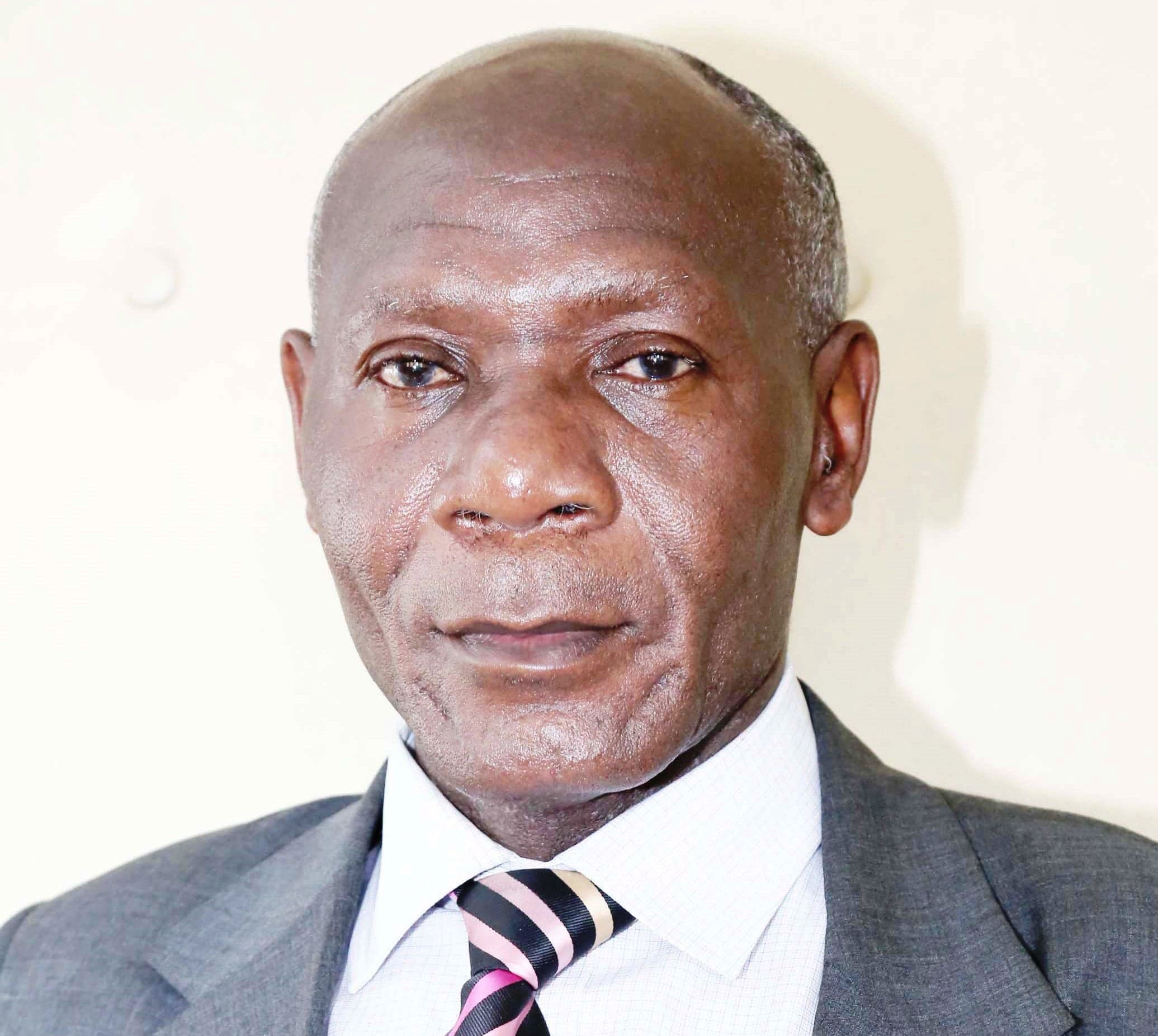
Kennedy Buhere is a communication specialist.
Email: buhere2003@gmail.com
Reader Discussion (0)
Sign in to comment