





Teachers are expected to maintain discipline, shape character, and deliver quality education, yet their authority is increasingly challenged. Can schools restore respect without returning to a culture of fear and intimidation?
A disturbing contradiction is emerging in today's classrooms. Teachers are expected to produce disciplined, responsible, knowledgeable and morally upright learners, yet some are struggling to command the very respect they need to fulfil that task.
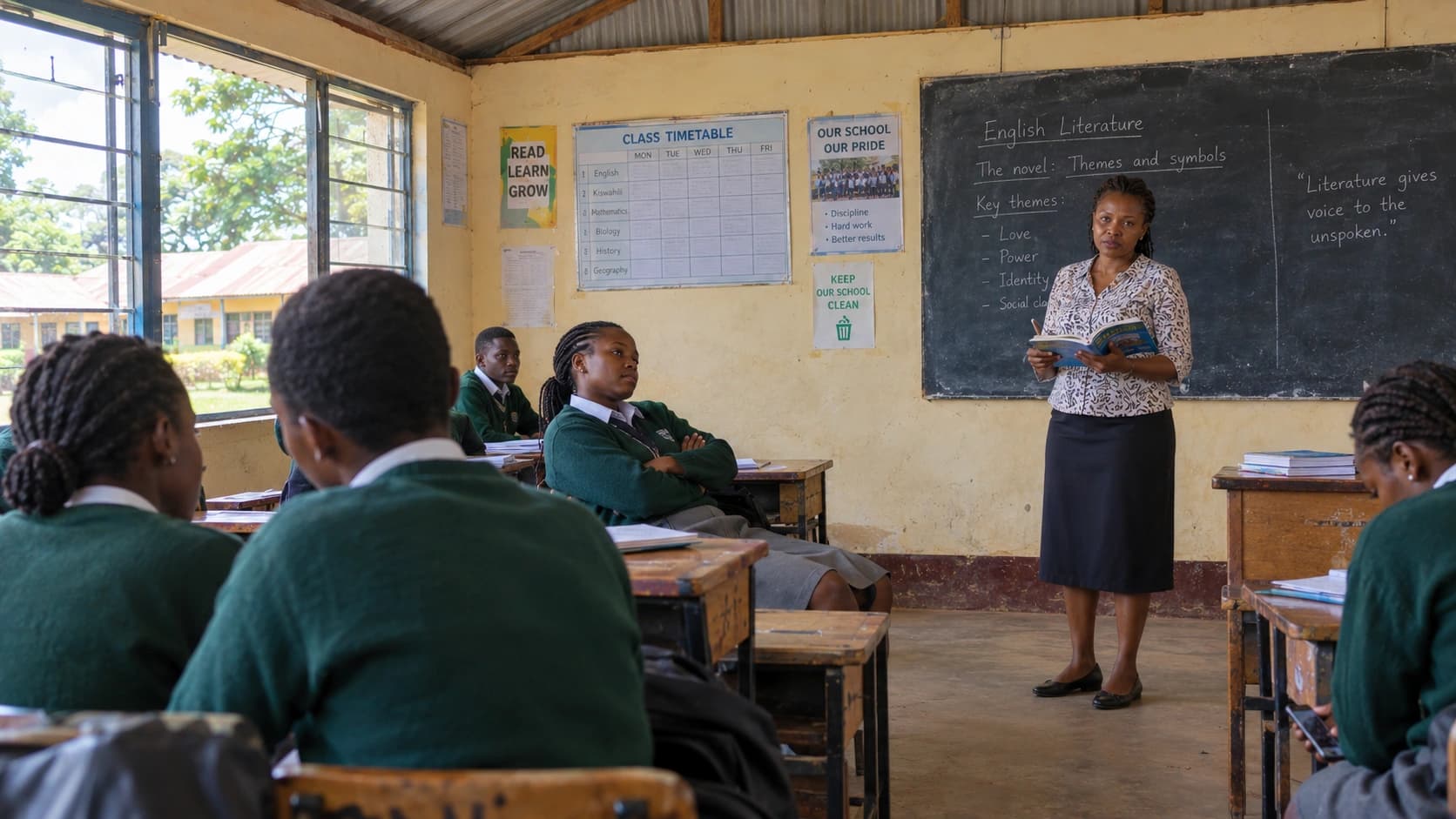
The teacher stands before the class with professional authority, years of training and the responsibility of shaping young minds. But having the authority to discipline learners does not necessarily mean commanding their respect. Some learners openly challenge instructions, disregard classroom rules, disrupt lessons and question disciplinary decisions. In some cases, teachers spend more time managing behaviour than delivering the lessons they were employed to teach.
This raises a fundamental question: have we created an education environment where teachers are expected to take responsibility for everything but are gradually losing the authority to enforce discipline?
The problem goes beyond individual classrooms. It touches on parenting, changing social values, technology, school leadership, children's rights and the changing relationship between society and the teaching profession. Schools cannot produce responsible citizens when the people entrusted with shaping them are constantly undermined.
A teacher can have authority without commanding respect
There is a fundamental difference between authority and respect, and understanding it is essential to resolving the discipline crisis.
Authority is formally granted through the education system. It gives teachers the responsibility to organise learning, set classroom rules, assess performance and maintain order. Respect, however, is earned through knowledge, fairness, integrity, consistency, professionalism and genuine concern for learners.
A teacher may have the authority to punish misconduct and still struggle to earn learners' confidence, while another commands admiration through competence, fairness and the ability to inspire. Effective teaching requires both. Authority sets boundaries, while respect creates trust, and one without the other produces an unstable learning environment.
The greatest teacher is not necessarily the one who frightens learners into silence, but the one whose presence inspires discipline, confidence and a genuine desire to learn.
The home as a battleground for discipline
One of the biggest influences on learner behaviour is the family. Schools do not operate independently of society, and children carry into classrooms the values, attitudes and habits they acquire at home. Where parents fail to set boundaries, teachers may struggle to introduce a discipline that learners have never consistently experienced.
The situation becomes harder when parents automatically defend their children whenever disciplinary concerns arise, sometimes without establishing the facts. Some learners are encouraged, directly or indirectly, to regard teachers as adversaries instead of professionals responsible for their education. When children repeatedly hear parents speak negatively about their teachers, the damage extends into the classroom.
Parents have every right to question unfair treatment, and teachers must be accountable for misconduct. But challenging a teacher's professional decisions should never become an excuse for teaching children to disregard legitimate authority. A parent who undermines every teacher in front of a child may unknowingly be undermining the very education they are paying or sacrificing to provide.
Social media is changing how learners view authority
Today's learners are growing up in a digital environment where information, entertainment and opinions are available instantly. Social media has created opportunities for learning, creativity and self-expression, but it has also exposed young people to online cultures that sometimes celebrate confrontation, ridicule, instant gratification and disrespect for authority.
Teachers increasingly compete for learners' attention in an environment where online personalities can command more influence than classroom professionals. The problem is not technology itself but the lack of enough guidance on how young people should use digital spaces responsibly. Schools and parents must teach digital citizenship, responsible communication and respect for others, including those with whom learners disagree.
When children's rights are mistaken for unlimited freedom
The recognition of children's rights is among the most important developments in modern education. Every learner deserves protection from abuse, discrimination, humiliation and degrading treatment, and the right to learn in a safe and supportive environment.
However, rights must not be read as permission to disregard responsibility. A learner's right to education does not include the right to disrupt lessons, intimidate teachers, bully classmates or ignore reasonable school rules. Equally, a teacher's authority does not permit physical abuse, humiliation, discrimination or arbitrary punishment.
Protecting learners from abuse should never mean protecting indiscipline from accountability. A progressive education system must defend the dignity of learners while also protecting the professional dignity and safety of teachers.
The biggest mistake: using fear in place of respect
For decades, some schools kept order through intimidation and harsh punishment. Learners were expected to stay silent, follow instructions and never question their teachers. But times have changed, and education must change with them.
Fear may produce silence, but silence is not necessarily discipline. A learner who fears making mistakes may avoid asking questions, joining discussions or seeking clarification, and such an environment undermines confidence, creativity and independent thinking. Modern education needs learners who can question ideas, communicate confidently, solve problems and take responsibility for their decisions.
Teachers must therefore abandon intimidation without abandoning discipline. The aim is not classrooms where learners fear their teachers, but classrooms where they understand boundaries, appreciate responsibility and respect the people guiding their education.
Teachers must also examine their own conduct
Restoring respect for teachers cannot be a one-sided campaign. The profession must acknowledge that its own conduct plays a central role in how learners view authority. Favouritism, humiliation, poor communication, unprofessional relationships and inconsistent punishment can destroy trust. Teachers who demand respect must show fairness.
A learner who makes a mistake should be corrected without being permanently labelled, and a struggling student should receive guidance, not ridicule. Professional competence also matters. Teachers must prepare adequately, understand their subjects, use suitable teaching approaches and show commitment to learners' progress. Respect grows when learners see that their teachers are knowledgeable, dependable and genuinely interested in their success.
Firm teachers, not fearful teachers
The growing tension between strictness and friendliness has left some teachers unsure how to manage their classrooms. Some fear that enforcing discipline will expose them to complaints, accusations or confrontation with parents. Others believe that becoming too friendly will weaken their authority.
Neither extreme is sustainable. Teachers can be approachable without being permissive, firm without being abusive, and able to listen to learners without surrendering their responsibility to maintain order. The most effective classroom combines clear expectations, predictable consequences, respectful communication and professional boundaries. Discipline should correct behaviour, not destroy dignity.
What teachers can do to reclaim respect?
Teachers should begin by setting clear expectations and communicating them consistently, so that learners understand the rules, acceptable behaviour and the consequences of misconduct from the start. Fairness matters too: similar offences should attract comparable responses, since favouritism and selective punishment weaken credibility.
Subject mastery and engaging lessons strengthen authority far more sustainably than intimidation. Communication must stay calm even when learners are difficult, because listening does not mean surrendering control. It shows confidence and emotional maturity. Positive behaviour, improvement and effort should be recognised, since learners respond better when they feel their contributions are valued. Most importantly, teachers should work collectively, so that no individual teacher has to face serious behavioural challenges without institutional support.
School leadership must stop leaving teachers to fight alone
School administrators have a responsibility to create an environment where teachers can do their jobs with confidence. Clear disciplinary policies must be set, communicated and applied fairly. When conflicts arise between teachers, learners and parents, leaders should investigate objectively instead of automatically taking sides.
Teachers must be protected from intimidation, harassment and unreasonable interference with their legitimate duties. At the same time, administrators must make sure that teachers uphold professional standards and respect learners' rights. Professional development should equip teachers with practical skills in classroom management, conflict resolution, child protection and positive discipline. A school cannot demand excellent performance from teachers while denying them the institutional support needed to achieve it.
Rebuilding the partnership between parents, teachers and schools
Responsibility for discipline cannot be passed entirely to teachers. Parents must reinforce respectful behaviour at home, teach children to value responsibility and avoid making negative remarks about educators in front of them. Teachers must keep to professional standards and raise concerns constructively. Administrators must provide consistent leadership and fair disciplinary procedures. Learners, too, must understand that rights come with responsibilities.
Disagreement with a teacher is not misconduct in itself, but it must be expressed respectfully and through appropriate channels. The relationship between home and school should rest on cooperation, not suspicion and confrontation.
The future of education depends on restoring teachers' dignity
Kenya's education ambitions cannot be achieved through curriculum reforms, infrastructure, digital learning and assessment changes alone. The human relationship at the centre of education must also work. Teachers remain central to the development of knowledge, skills, values, discipline and responsible citizenship, and they are expected to prepare learners for a competitive world while handling increasingly complex social and professional demands.
Society must ask itself whether it is giving teachers the respect, support and professional recognition needed to meet these responsibilities. A teacher should not have to choose between enforcing discipline and protecting their professional reputation, and a learner should not have to endure humiliation in the name of classroom authority.
The solution lies in restoring balance. Teachers must lead with competence and fairness, parents must reinforce discipline, school leaders must protect professional dignity and learners must embrace responsibility. The classroom should never be a battlefield between teachers and learners. It should be a partnership built on knowledge, trust, discipline and mutual respect.
Authority may compel obedience, but genuine respect inspires cooperation. Fear may silence a classroom, but it cannot produce confident, independent thinkers. The goal is not learners who tremble when a teacher walks in, but young people who value education, respect those who guide them and show discipline even when nobody is watching.
When teachers lose respect, education loses one of its strongest foundations. When teachers and learners respect one another, the whole education system stands to gain.




Reader Discussion (0)
Sign in to comment