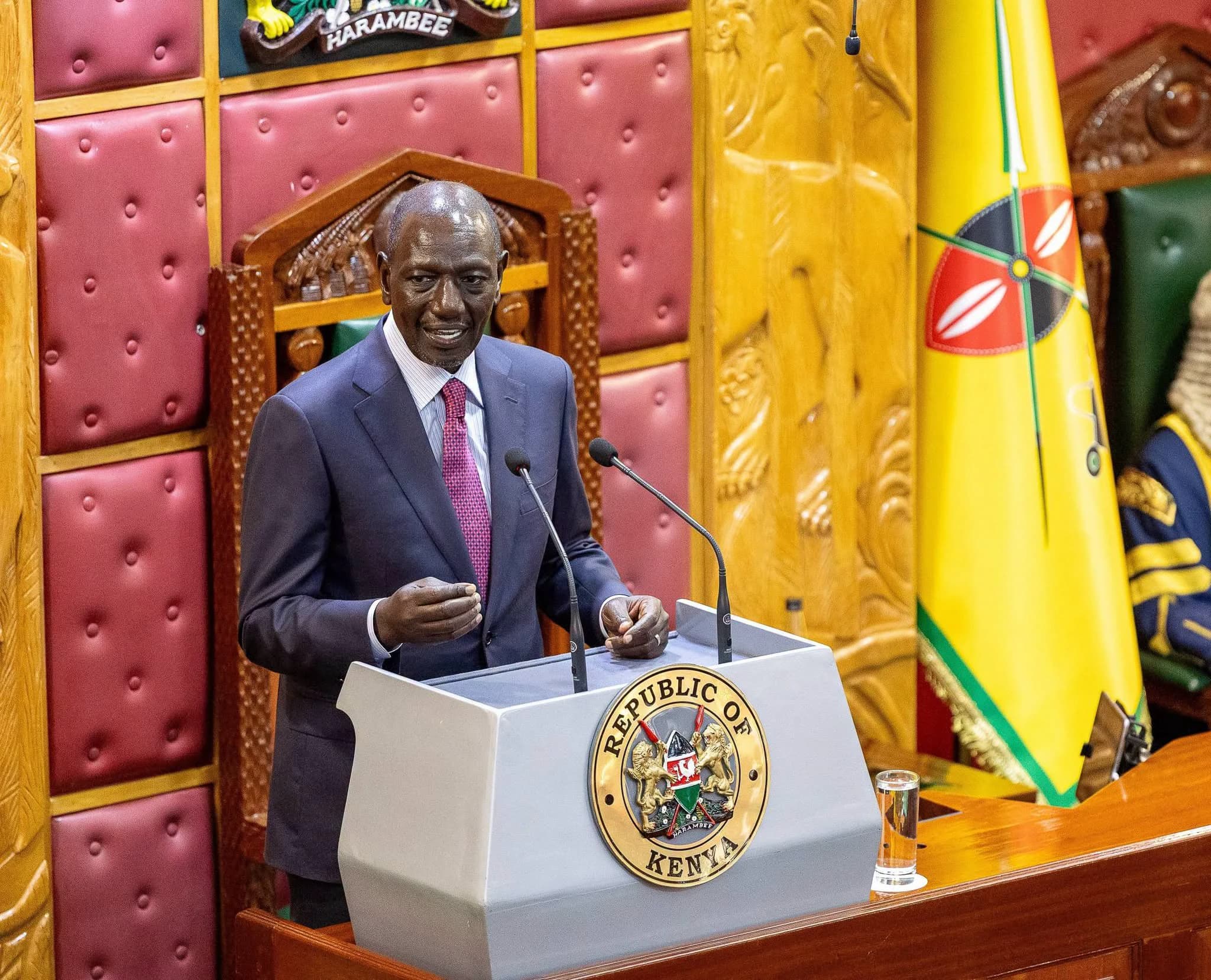

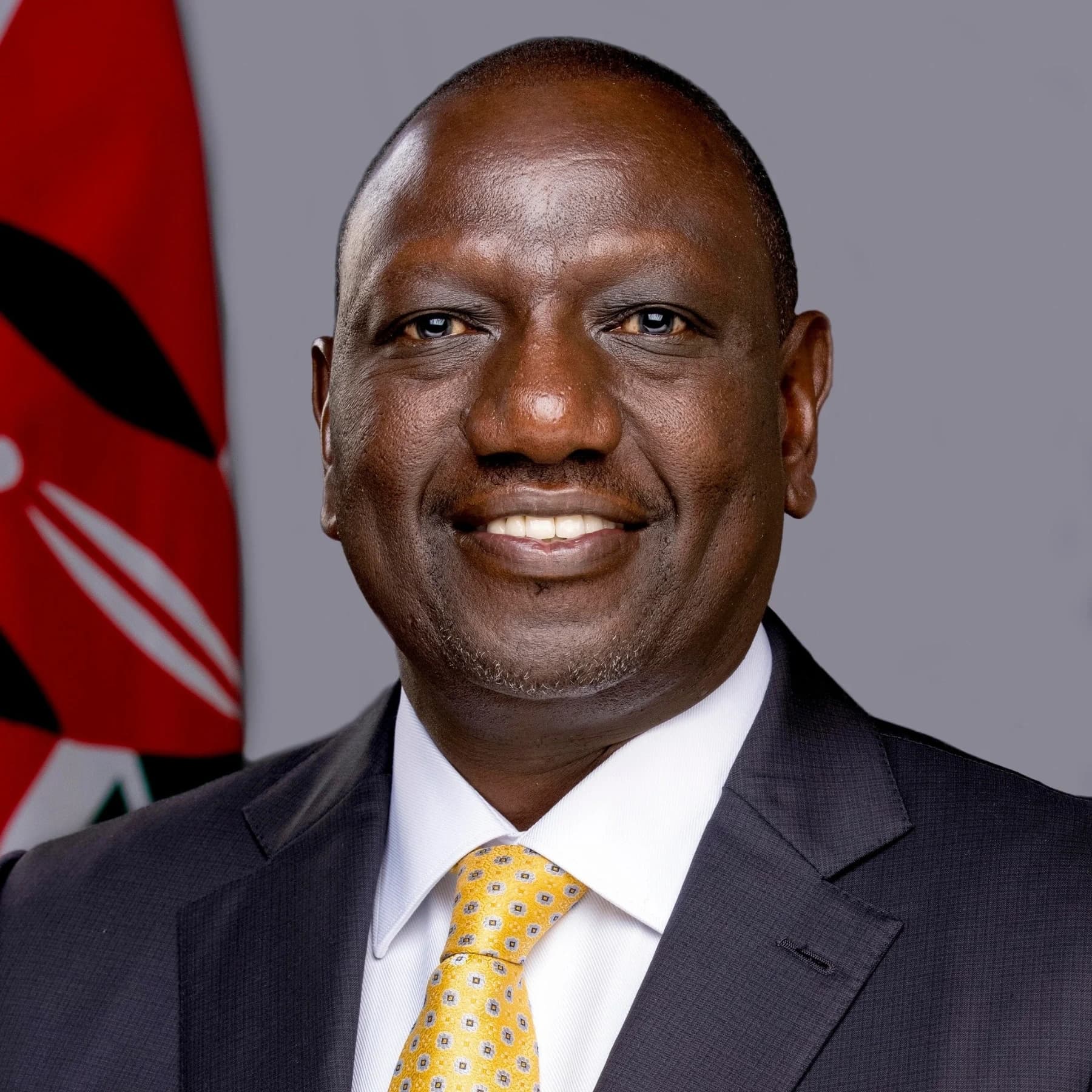
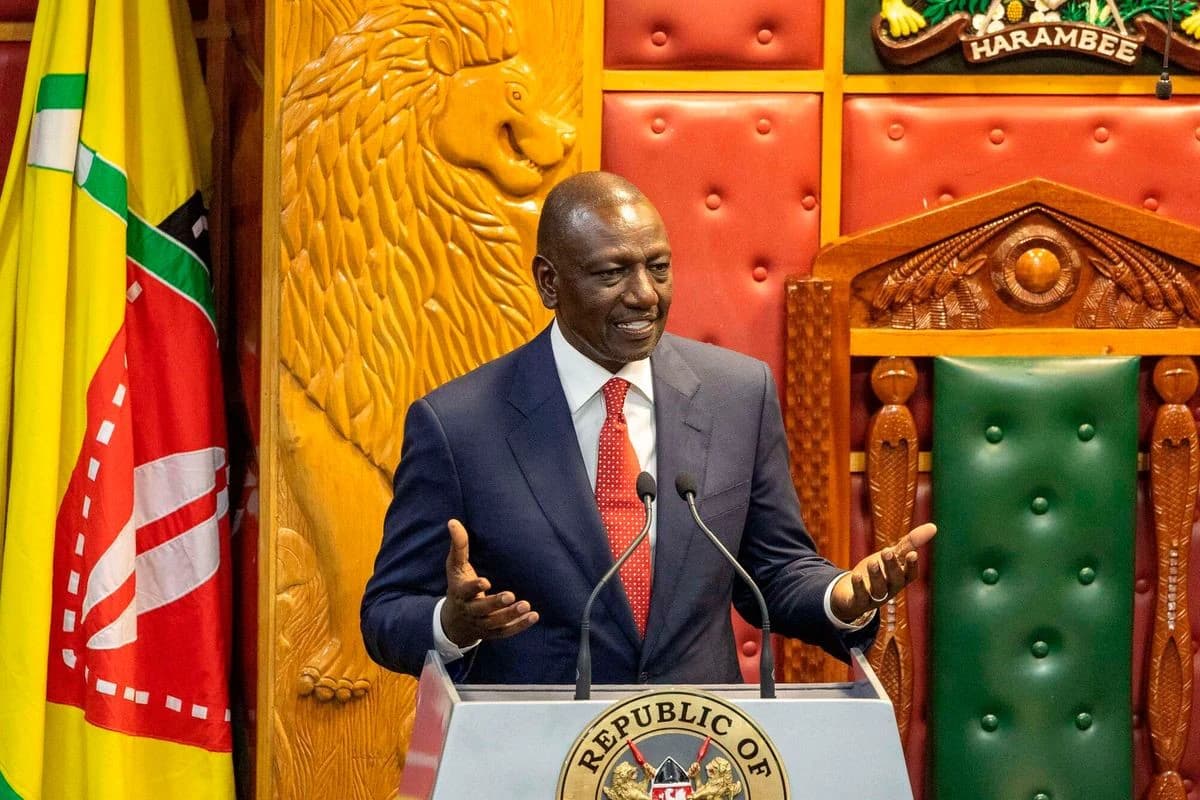
Ruto said the government was seeking to move the country beyond economic stabilisation towards an economy capable of creating millions of productive jobs, supported by major investments in infrastructure, agriculture, energy, water, healthcare, education and manufacturing.
“Our economic proposition was simple: Reduce the cost for families and increase the income from what they do,” Ruto said during his State of the Nation Address to Parliament.
He said the government had pursued measures to lower the cost of essential goods and services while increasing productivity, creating employment and expanding opportunities for businesses.
The President cited the stability of the Kenyan shilling, which he said had recovered from nearly Sh162 to about Sh129 against the US dollar, while average commercial bank lending rates declined from 17.2 per cent in November 2024 to about 14.4 per cent in September 2026.
He said inflation, which reached 9.6 per cent in 2022, averaged 4.1 per cent in 2025, although renewed food and energy pressures pushed it higher in October this year.
Foreign exchange reserves, he added, had risen from US$7.37 billion in 2022 to a peak of US$15.3 billion this year, while the government honoured a US$2 billion Eurobond obligation that fell due in June 2024.
“These achievements matter not because they make impressive financial statistics, but because a stable currency, manageable inflation and more affordable credit help businesses plan, farmers produce, investors create jobs and families protect their purchasing power,” he said.
Agriculture and household incomes
On agriculture, Ruto said the government had reduced the price of a 50-kilogramme bag of fertiliser from Sh7,500 in 2022 to Sh2,000 this year, distributing 38.5 million bags of subsidised fertiliser and registering nearly nine million farmers.
He said national maize production had increased from 44.3 million bags in 2022 to 71 million bags last year, while imports declined from 9.9 million to 3.3 million bags.
The national average price of a two-kilogramme packet of sifted maize flour, he added, had fallen from a high of Sh230 in September 2022 to Sh152 in September this year.
Ruto cited the experience of Laban Cheptarus, a maize farmer in Rongai, Nakuru County, whose harvest from five acres increased from 75 bags in 2022 to 125 bags last year following access to affordable fertiliser, improved seeds and extension services.
The President also reported improved earnings in the coffee, tea, dairy and sugar sectors, saying the reforms were intended to ensure farmers retained more value from their produce.
He said coffee cherry prices had risen from Sh69 to as high as Sh130 per kilogramme, while national coffee export earnings doubled from Sh26 billion to Sh52.1 billion.
The Cherry Advance Revolving Fund had disbursed Sh15.07 billion to 684,000 farmers, while tea export earnings increased from Sh163 billion in 2022 to Sh187 billion in 2025.
In the dairy sector, milk production rose from 4.5 billion to 5.52 billion litres, with export earnings more than doubling to Sh11.2 billion. Average farm-gate prices increased from Sh32 to a high of Sh60 per litre last month.
Sugar production also improved, with cane crushed increasing by 57 per cent and sugar production rising by 60 per cent between January and October this year. The industry is projected to produce more than 900,000 tonnes by the end of the year, which Ruto described as the highest annual production in the country’s history.
He announced a Sh1.2 billion bonus package for sugarcane farmers, saying disbursement would begin the following week.
“For pastoral communities, livestock insurance is protecting household assets against drought,” he said, adding that more than 245,000 pastoralists had accessed insurance and savings incentives under the DRIVE programme, protecting more than 3.3 million animals.
In the blue economy, the President said investments in landing sites, cold storage, markets and fishing equipment had improved earnings for fishing communities.
He cited the Shanga Ishakani Fishers Women Group in Lamu, whose average octopus selling price had doubled following access to improved preservation equipment.
The government had invested Sh8.5 billion in 34 counties for County Aggregation and Industrial Parks, with 15 parks completed, while 600 modern markets were being developed at a cost of Sh57 billion.
Ruto said the markets would provide traders with better trading spaces, storage and cold-room facilities, while the industrial parks would support processing, manufacturing and employment within counties.
Healthcare, education and employment
Ruto also cited the expansion of healthcare financing, saying 33.7 million Kenyans had registered with the Social Health Authority (SHA), compared with approximately eight million under the former National Health Insurance Fund (NHIF) in 2022.
He said 53,465 cancer patients were receiving treatment, 24,468 were undergoing dialysis and 89 patients had received kidney transplants under SHA.
The President acknowledged that the transition to SHA had faced initial challenges, saying the government had been addressing concerns raised by Kenyans.
“Our undertaking is to progressively and eventually remove the crushing burden of medical expenses from Kenyan households, protect family savings and ensure that illness does not become a sentence to poverty,” he said.
He cited the case of Veronica Wambui, a small-scale farmer and mother of three from Gatundu, Kiambu County, who underwent a kidney transplant at Kenyatta University Teaching, Referral and Research Hospital in May 2025.
Ruto said Wambui contributed Sh840 monthly to SHA, but her investigations, transplant and medication cost more than Sh966,000, excluding dialysis, with the authority covering the bill in full.
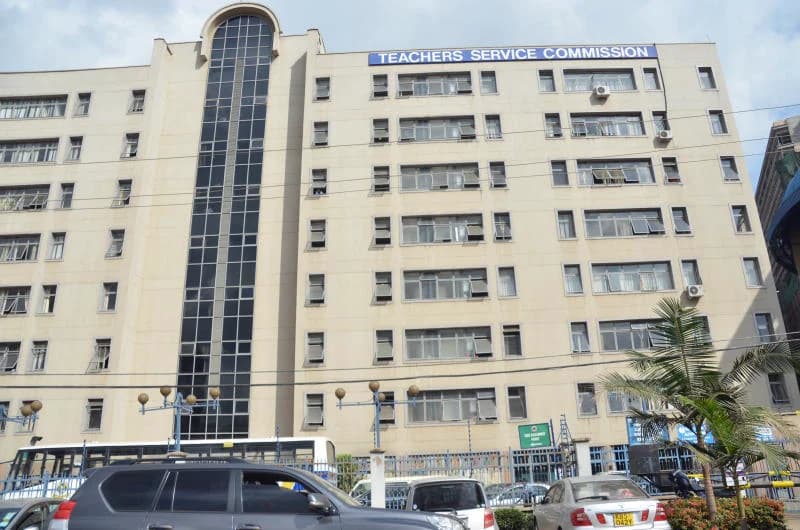
On education, he said the government had employed 100,000 teachers in four years and was preparing to recruit another 20,000 to address a teacher shortage estimated at 116,000 when he assumed office.
The government had also built 23,000 classrooms and was constructing and equipping 1,600 laboratories, while the annual education allocation had increased from Sh521 billion in the 2022/23 financial year to Sh784 billion this financial year.
He said 3.6 million learners were sitting national examinations this year, the largest cohort in the country’s history, and that examination papers had been printed locally for the first time in 65 years.
In housing, Ruto said more than 313,000 homes were at various stages of construction across the 47 counties, with more than 1.37 million Kenyans registered on the Boma Yangu platform and over 18,000 allocated houses.
He said households could begin the journey towards homeownership under social housing arrangements with monthly payments of as little as Sh4,000.
The programme, he added, had generated more than 1.1 million employment opportunities, while more than Sh61 billion in orders had been reserved for Jua Kali artisans.
On jobs, the President said 350,000 Kenyans had secured work in the digital economy, while 707,000 had obtained employment abroad through international labour mobility.
More than seven million Kenyans had established credit records through the Hustler Fund, with cumulative borrowing reaching Sh94 billion. Of these, 700,000 were established borrowers with credit limits of up to Sh150,000 without collateral.
Under the NYOTA programme, more than 133,000 young entrepreneurs had received training, mentorship and Sh50,000 each in start-up capital.
The government was working with partners to support another 200,000 beneficiaries with similar grants.
Ruto said the NYOTA-AGPO Digital Training Programme, a free 10-week initiative, was also targeting 600,000 Kenyans, including young people, women and persons with disabilities, to equip them with digital and business skills and facilitate business registration and access to government procurement opportunities.
He announced proposals to exempt workers earning Sh32,333 a month or less from Pay As You Earn tax, remove stamp duty on land transactions valued at Sh1 million or less and eliminate the 25 per cent import duty on mobile phones.
The government had also approved the settlement of Sh27.8 billion in pending bills involving 28,726 verified claims dating back to 2005, with individual claims of Sh50 million and below.
Ruto said another Sh18 billion owed to public universities and Sh16 billion owed to public and private hospitals under the former NHIF had been approved for payment and were undergoing Treasury processes.
“These payments are undergoing due process in the National Treasury for payment in the coming weeks,” he said.
On regional equity, the President said the government had disbursed Sh1.55 trillion in equitable share to county governments over the past four financial years, with another Sh428 billion allocated in the current financial year.
He said Sh16.8 billion had been appropriated through the Equalisation Fund for projects in marginalised areas, including water, roads, healthcare and electricity.
Ruto also reported that nearly 1.8 million title deeds had been issued since August 2022, including more than 400,000 at the Coast, and said the government had ended discriminatory identification requirements in Northern Kenya and other border counties.
He said the government was seeking to correct historical inequalities in resource distribution and ensure communities in marginalised regions had equal access to development opportunities.
“Not that every part of Kenya has identical needs, but that every Kenyan deserves equal consideration, equal chance and a fair opportunity to advance,” he said.
Infrastructure, accountability and long-term development
The President said the next phase of the country’s economic transformation would require Sh5 trillion over the next decade, with the National Infrastructure Fund already capitalised with Sh340 billion.
The fund, established through legislation signed on March 9, 2026, is financed through proceeds from the divestiture of mature public assets and is expected to mobilise additional resources from pension funds, institutional investors, development finance institutions and other partners.
Ruto said the Sovereign Wealth Fund would also provide a framework for saving, investing and preserving national wealth for future generations.
“These financing instruments must operate under transparent governance, rigorous project appraisal and clear accountability. Every investment must be justified by the economic and social value it creates,” he said.
The government plans to tarmac 28,000 kilometres of roads and dual 2,500 kilometres of highways over the next decade, with about 7,000 kilometres currently under construction.
Among the projects are the more than 750-kilometre Isiolo-Wajir-Mandera corridor, the 700-kilometre Mau Mau roads, the Kenol-Marua dual carriageway and the Lake Victoria Ring Road linking Busia, Siaya, Kisumu, Homa Bay and Migori.
Other priority roads include Rironi-Naivasha-Nakuru-Mau Summit, Kamandura-Maai Mahiu-Naivasha and the proposed dualling of the Nairobi-Mombasa highway.
The President also listed Mau Summit-Kericho-Kisii-Awendo-Kisumu, Kisumu-Busia and Mau Summit-Eldoret-Malaba among the strategic corridors.
In a development expected to benefit the Mt Kenya region, the government is prioritising the dualling of Makutano-Embu-Chuka-Maua and Marua-Nanyuki-Isiolo roads, alongside Bomas-Ongata Rongai-Ngong-Karen, Kitengela-Isinya, Pangani-Muthaiga-Ndumberi, Malindi-Mtwapa and Likoni-Ukunda-Msambweni-Lunga Lunga roads.
Ruto said construction of the Nithi Bridge was ongoing.
He said the government was also advancing the extension of the Standard Gauge Railway from Naivasha through Narok and Bomet to Kisumu and onwards to Bugoma and Malaba, alongside modernisation of the ports of Mombasa and Lamu.
The ongoing Sh154.2 billion development and modernisation programme at Jomo Kenyatta International Airport would expand passenger and operational capacity and strengthen Kenya’s position as a regional aviation hub.
Energy is another priority, with the government seeking to mobilise investment for an additional 10,000 megawatts of electricity generation capacity using geothermal, hydro, wind and solar resources.
The expansion will be accompanied by investment in transmission lines, substations and distribution infrastructure to improve the reliability and affordability of power.
On water security, Ruto said the government planned to construct at least 50 mega dams, 200 medium and small dams and thousands of water-harvesting structures, supporting a target of putting at least 2.5 million acres under irrigation.
He said the three infrastructure priorities—roads, energy and water—would strengthen production, connect farmers to markets and improve the country’s competitiveness.
The President also outlined plans to grow the service economy through tourism, sports, culture and international business.
He said the Raila Odinga International Stadium at Talanta Sports City, the upgrading of Nyayo and Kasarani stadia and preparations to co-host the 2027 Africa Cup of Nations with Uganda and Tanzania would position Kenya as a destination for international sporting events.
The Bomas International Convention Complex would also strengthen the country’s capacity to host international conferences, exhibitions and business events.
Ruto said the projects should create opportunities for hotels, transporters, artisans, musicians, farmers and other businesses.
On security and protest-related violence, the President acknowledged the deaths, injuries and destruction witnessed during demonstrations in June 2024 and subsequent protests.
He said Article 37 of the Constitution protected the right of Kenyans to assemble, demonstrate, picket and present petitions peacefully and while unarmed.
“Kenyans must remain free to express disagreement and criticise their Government,” he said.
The government had allocated Sh2 billion for compensation of victims of protest-related violations, including cases dating back to 2017. By July this year, the Compensation Panel had reported payments of Sh1.2 billion to 1,476 verified beneficiaries.
Ruto said compensation would not replace accountability and that investigations and prosecutions should continue wherever evidence warranted.
He said the government was strengthening public order management through improved police training, professional standards, officer welfare, equipment, operational command, de-escalation procedures and oversight.
On corruption, the President said the digitisation of government services through eCitizen had helped eliminate middlemen and close loopholes, while the Electronic Government Procurement system was intended to make suppliers, prices and government contracts transparent and traceable.
He said the Conflict of Interest Act would strengthen accountability and prevent the abuse of public office for private gain, while implementation of the Treasury Single Account would improve payroll controls and public financial management.
Ruto also said the Government Owned Enterprises law had made appointments to public boards more transparent and based on competence and integrity rather than political patronage.
“Board positions will no longer be political rewards to be distributed. They are positions of trust to serve,” he said.
He called for a national development charter to guide the country beyond Vision 2030, saying a national conversation launched in August 2026 should bring together young people, workers, farmers, entrepreneurs, professionals, scholars, political and religious leaders and communities across all 47 counties.
“We must forge a national development charter that reflects our shared aspirations, identifies the investments required to achieve them and establishes commitments capable of enduring beyond electoral cycles,” he said.
Ruto said the country needed a serious national debate on the cost of electricity, infrastructure financing, employment, healthcare and education, urging leaders to test proposals against evidence and promises against results.
Our political choices will differ, as they should in a democracy. But our determination to build a prosperous, equitable and secure Republic must remain a common national purpose,” he said.
Reader Discussion (0)
Sign in to comment