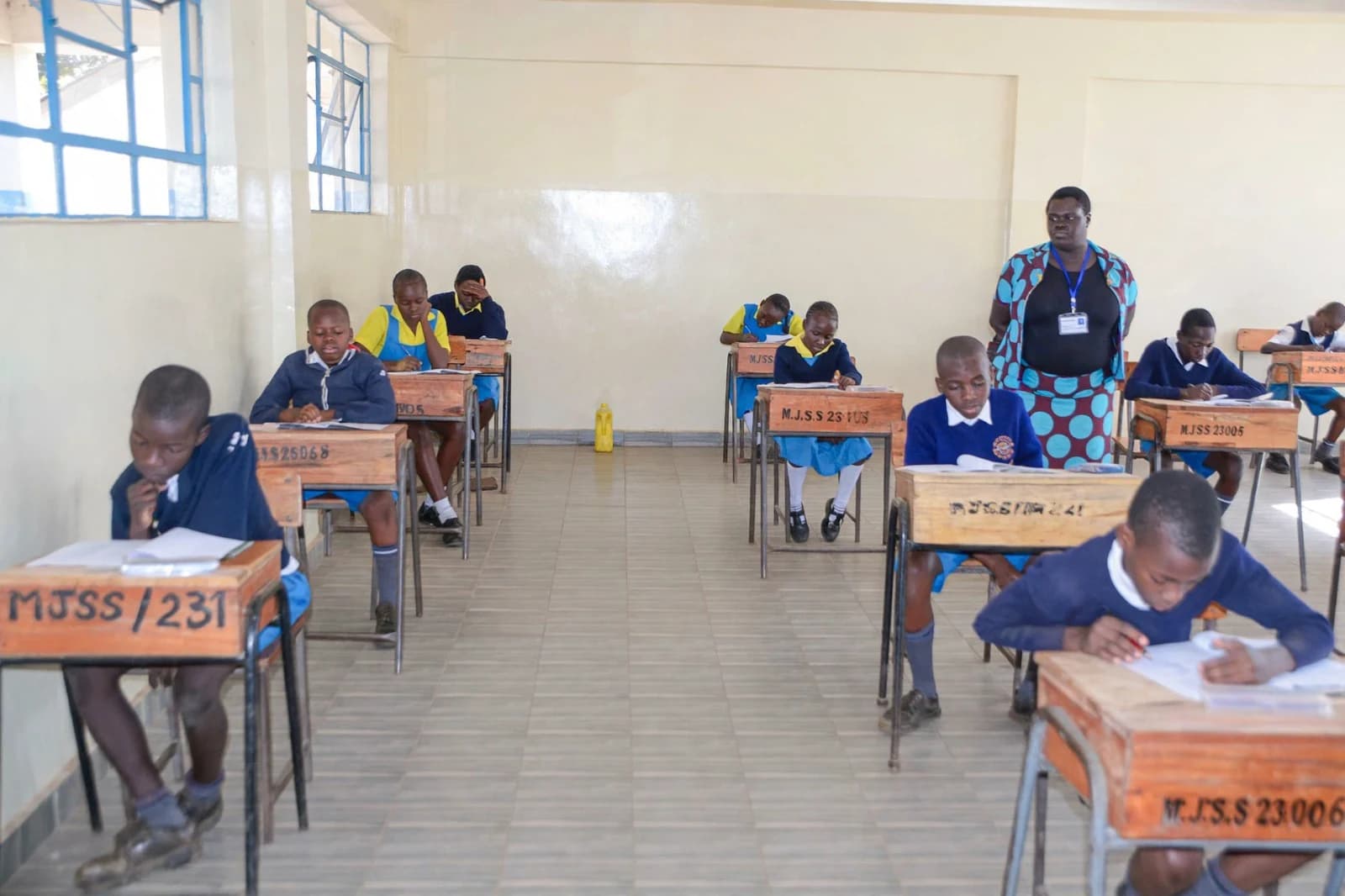
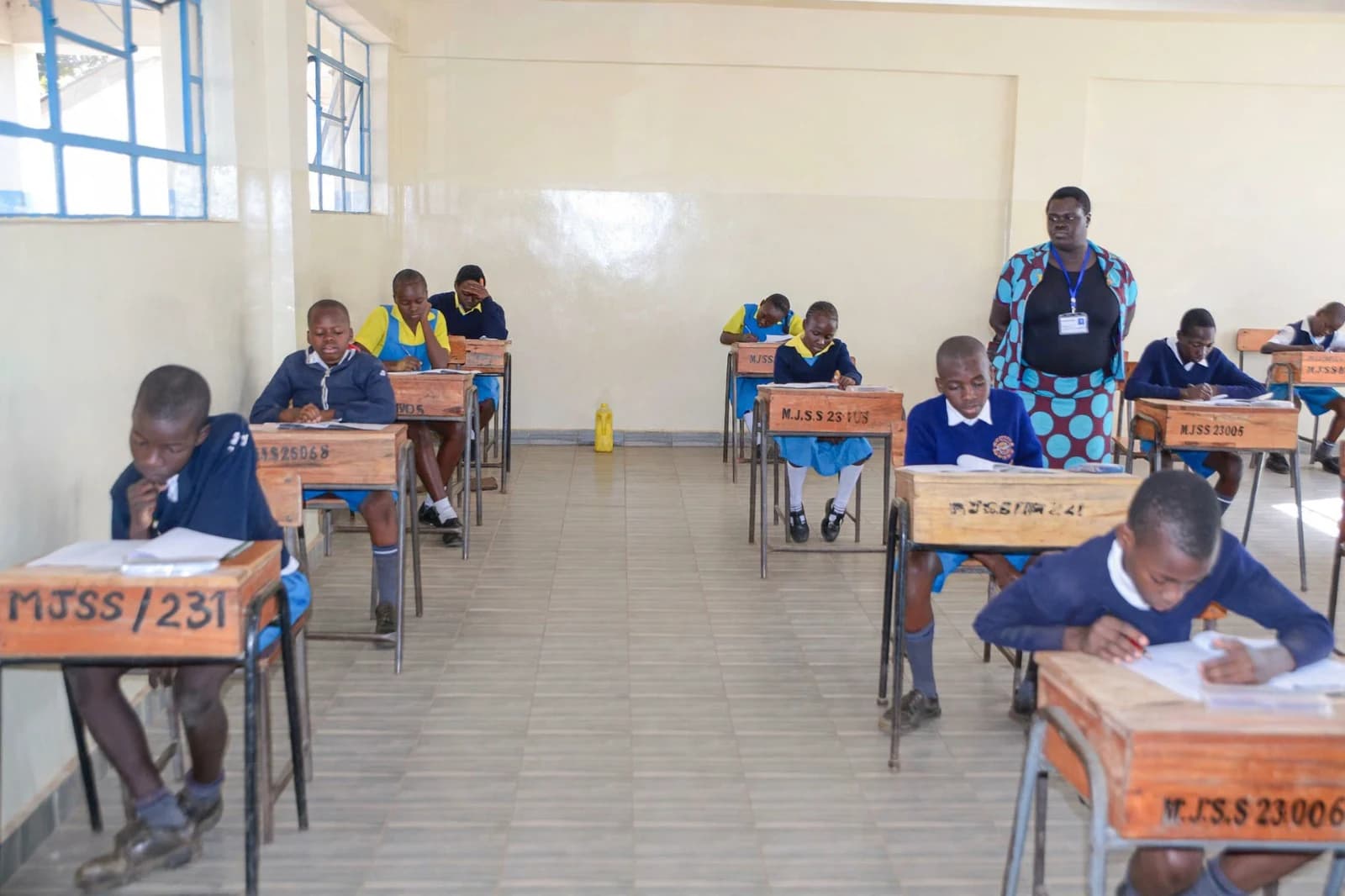
County governments have recruited registered Early Childhood Development and Education (ECDE) teachers to help invigilate the Kenya Primary School Education Assessment (KPSEA) in areas facing shortages of examination personnel.
The Teachers Service Commission (TSC), working with the Kenya National Examinations Council (KNEC), is expanding the pool of personnel overseeing national assessments as millions of learners prepare to sit their examinations. It marks a significant expansion of the role played by county-employed ECDE teachers, who traditionally focus on laying the foundation for children's learning during their earliest years in school. Under the arrangement, only registered ECDE teachers employed by county governments are eligible for the assignment, and those contracted will be expected to observe the same examination security, professional conduct and integrity requirements governing other authorised examination personnel. The development was highlighted during KNEC sensitisation sessions held ahead of the national examination period, where personnel were briefed on their responsibilities and changes in examination administration.
A Major Logistical Undertaking
Kenya's 2026 national examination season is a major logistical undertaking, with approximately 3.4 million candidates expected to sit KPSEA, the Kenya Junior School Education Assessment (KJSEA) and the Kenya Certificate of Secondary Education (KCSE). The reported candidature figures are 1,303,913 for KPSEA, 1,145,585 for KJSEA and 996,078 for KCSE, and KNEC has indicated that 342,005 professionals will be contracted to support the administration of the examinations and assessments, including centre managers, supervisors and invigilators. With more than 1.3 million learners sitting KPSEA, the demand for examination personnel is particularly significant at the primary school level, and shortages in remote and densely populated sub-counties can complicate deployment. Recruiting eligible county-employed ECDE teachers provides additional personnel to help bridge these gaps, with the arrangement targeted at areas facing shortages rather than a blanket deployment to all examination centres.
The involvement of ECDE teachers brings experience in handling young learners into an examination environment where patience, vigilance and clear communication are essential, since KPSEA candidates are still developing the confidence and independence needed to navigate formal assessments. However, their experience with young learners does not exempt them from examination regulations, and their authority at examination centres derives from formal recruitment and deployment under the established examination management structure.
Strict Rules Govern Examination Personnel
KNEC has outlined specific qualifications and experience requirements for supervisors and invigilators serving different examination categories. For KPSEA, supervisors must meet the stipulated requirements for serving primary school teachers, including at least three years of teaching experience and previous experience supervising national examinations and assessments, with invigilators also required to satisfy applicable teaching and experience requirements. Requirements for KJSEA and KCSE differ according to the examination category and the responsibilities assigned. The guidelines also address the needs of candidates with disabilities, requiring centres hosting blind candidates who use touch-reading methods to have at least one invigilator conversant with Braille. Centre managers are responsible for examination materials and must observe procedures governing their collection, storage and return, with hosting and hosted examination centres each required to have their own centre managers.
One key issue highlighted during the sensitisation sessions concerns the correct completion of Optical Mark Reader (OMR) answer sheets. Candidates must shade the designated circles correctly rather than cross them, and invigilators are expected to ensure learners understand the instructions to avoid mistakes that could interfere with processing. Where a candidate is unable to shade the answer sheet, the prescribed procedure requires the supervisor to ensure the candidate's answers are recorded on the question paper and that the OMR sheet is attached to it before the materials are returned in the designated envelope, a procedure that requires particular care at the primary school level.
Examination Room Rules and Access Controls
The guidelines prescribe strict procedures for handling candidates' papers, attendance records and other examination materials. Sitting plans must be prepared and handled according to the stipulated requirements, candidate counterfoils must not be detached prematurely, and absent candidates must be marked appropriately on nominal rolls and return documents. Only permitted non-programmable calculators may be used where applicable, calculator covers and wristwatches are prohibited, and centres must provide wall clocks. Phones and visitors' books must be secured outside the examination room in a lockable desk.
KNEC has also defined who may be present at examination centres during assessments. Authorised personnel include centre managers, supervisors, invigilators, cooks, gatekeepers and KNEC monitoring officers, while school directors, boards of management chairpersons, bursars, accounts clerks, secretaries, groundsmen and unauthorised teachers are not permitted to enter the examination administration process without the required authority. For ECDE teachers, formal appointment and deployment are therefore essential, as they cannot assume examination duties simply by reporting to a centre. Supervisors, centre managers and invigilators must wear their KNEC identification badges and carry their national identity cards and appointment letters, while invigilators may stand at the back of classrooms while candidates complete their assessments.
Examination materials remain subject to strict controls from collection to return, and personnel must follow the prescribed chain of custody and report any suspected misconduct or irregularity. According to the examination briefing, security personnel will not routinely be deployed to KPSEA and KJSEA centres except in porous or high-risk areas, meaning supervisors, centre managers and invigilators must remain vigilant. The monitoring framework includes the Independent Policing Oversight Authority (IPOA) and the Ethics and Anti-Corruption Commission (EACC), and KNEC has provided reporting channels for examination malpractice, including its offices, written complaints and social media platforms. IPOA's toll-free line is 1559, while KNEC's examination-period call centre numbers are 0800 721 410 and 0800 724 900.



Reader Discussion (0)
Sign in to comment