The approval of school textbooks in Kenya follows a structured process designed to ensure that learning materials meet curriculum requirements, provide accurate information and support effective teaching and learning before reaching classrooms.
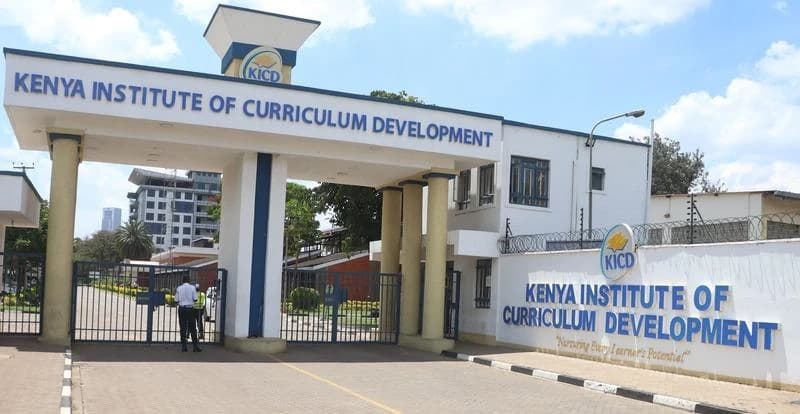
Under the Competency-Based Education (CBE) system, textbooks are expected to align with prescribed curriculum designs, learning outcomes, competencies, skills and values. The Kenya Institute of Curriculum Development (KICD) oversees the evaluation and approval of curriculum-support materials in accordance with the applicable guidelines.
The process begins with the identification of curriculum requirements. Curriculum designs establish the content and learning outcomes that textbooks should support at each grade and learning area. Publishers use these requirements as the foundation for developing materials intended for classroom use.
The second step involves the preparation and submission of manuscripts. Publishers develop textbooks for specific subjects and grades and submit them to KICD in accordance with the applicable guidelines and calls for submissions. The manuscripts must meet the prescribed technical and administrative requirements before they can proceed to evaluation.
The third stage is preliminary screening, during which submissions are checked for compliance with the required documentation, format and eligibility conditions. Manuscripts that fail to satisfy the applicable requirements may not proceed to detailed assessment.
Technical evaluation and quality assessment
The fourth step is technical and curriculum evaluation. Eligible manuscripts are examined by appointed evaluators with relevant subject and curriculum expertise. They assess whether the content reflects the prescribed curriculum, covers the required learning outcomes and presents information accurately and clearly.
The fifth stage focuses on the quality and suitability of the learning materials. Evaluators examine the language, illustrations, exercises, assessment questions, teaching approaches and activities included in the textbooks. They also consider whether the materials are age-appropriate, inclusive, culturally sensitive and capable of supporting critical thinking, creativity, problem-solving and the practical application of knowledge.
The sixth step involves compiling the evaluation findings. The assessment results are documented and submitted through the prescribed review structures. The findings establish whether a manuscript meets the required standards or has weaknesses that need to be addressed before it can qualify for approval.
The seventh stage is correction and revision, where necessary. Publishers may be required to address factual errors, curriculum gaps, inappropriate illustrations, language problems or weaknesses in learning activities. Revised manuscripts are handled according to the applicable procedures, and submitting corrections does not automatically guarantee approval.
Formal approval and publication of approved titles
The eighth step involves scrutiny of the evaluation report by the relevant KICD review and governing structures. The findings are considered through the prescribed decision-making process before a final determination is made. The precise committee arrangements and approval procedures depend on the applicable guidelines for the category of instructional material being evaluated.
The ninth step is the formal approval decision. Materials that satisfy the established requirements may receive approval, while those that fail to meet the standards may not qualify. Publishers must follow any further directions issued under the applicable procedures before a title can be represented as approved.
The tenth step is the publication or inclusion of approved titles in the relevant official KICD list or catalogue. This enables schools, teachers and other education stakeholders to verify the approval status of particular textbooks. A publisher's advertisement or claim that a book supports CBE is not, by itself, proof of formal approval.
Procurement, distribution and continued quality assurance
The eleventh stage involves procurement and distribution. Once approval has been established, schools, government agencies and other authorised procuring bodies may acquire textbooks through the applicable purchasing and distribution arrangements. Approval does not automatically mean that a title will be purchased or supplied to every school.
The final stage is post-approval quality assurance. Published textbooks should correspond to the approved manuscripts and comply with the applicable production requirements. Where concerns arise over factual errors, unauthorised alterations or inconsistencies between approved and published editions, the relevant authorities may need to investigate and take appropriate action.
The process demonstrates that textbook approval is not simply a matter of a publisher submitting a book and receiving permission to print it. It is a quality-control mechanism intended to ensure that learning materials are accurate, curriculum-compliant and suitable for their intended users.
Under CBE, the integrity of textbook approval is particularly important because teachers rely on instructional materials to interpret curriculum requirements, prepare lessons and guide learners through activities and assessments. Inaccurate or poorly aligned textbooks can undermine classroom delivery, while well-designed materials can strengthen understanding and support the development of essential competencies.
Ultimately, effective textbook approval depends on rigorous evaluation, transparent decision-making, formal authorisation and continued quality assurance. Ensuring that only properly approved materials are presented as authorised instructional resources is an important safeguard for learners, teachers, parents and Kenya's wider education system.
KICD-approved textbooks displayed for use in Kenyan schools. The institute evaluates instructional materials to ensure they meet curriculum requirements, quality standards and learners' educational needs before approval.



Reader Discussion (0)
Sign in to comment