A school should be a place where children learn respect, discipline and peaceful coexistence. Yet when parents and teachers turn against one another, sometimes in full view of learners and colleagues, an uncomfortable question arises: what lessons are we teaching the children entrusted to our care?
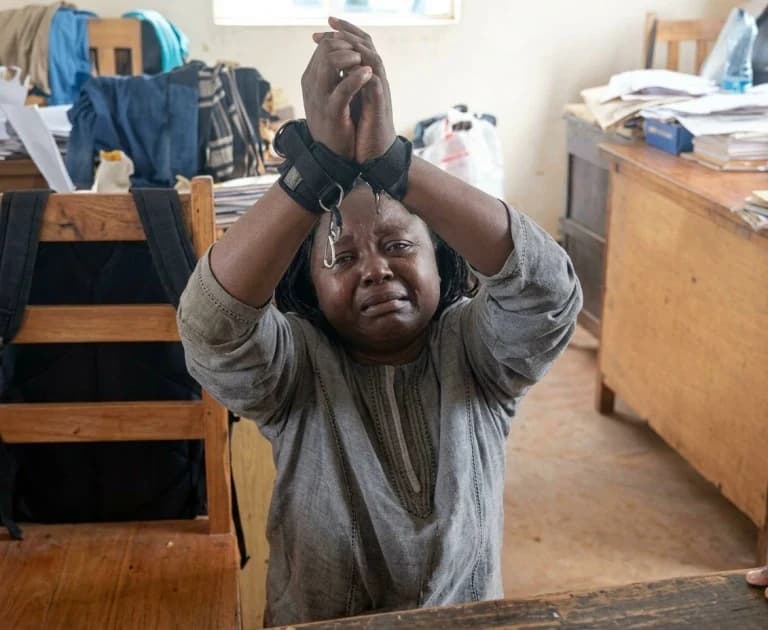
Recent reports of confrontations between parents and teachers have sparked heated debate on social media. A confrontation at a primary school in Kiminini, Trans Nzoia County, alongside accounts of teachers sustaining injuries in disputes involving parents, has drawn attention to the fragile relationship between home and school. Although the circumstances of individual incidents must be established through proper investigations, the broader issue deserves serious reflection. Parents and teachers are essential partners in a child's education, and when that partnership breaks down, learners risk becoming the unintended casualties of adult conflict.
When Disagreement Becomes Hostility(Education News Kenya — https://educationnews.co.ke/news/parent-teacher-conflicts-children-pay-the-price)
Disagreements between parents and teachers are inevitable. A parent may question a disciplinary decision or raise concerns about school charges, while a teacher may feel undermined while trying to fulfil professional responsibilities. Such concerns deserve a fair hearing: parents have a legitimate right to seek explanations and demand accountability, while teachers deserve dignity, personal safety and the freedom to perform their duties professionally. The problem arises when disagreement becomes a contest of power. Insults, threats, intimidation and physical attacks do not resolve school matters; they deepen mistrust and make constructive engagement more difficult. Social media has made these confrontations more visible, but visibility does not always produce understanding, as incomplete accounts can circulate rapidly and encourage public condemnation before all the facts are established. Neither a parent's authority over a child nor a teacher's professional position gives either party the right to intimidate or assault another person.
Perhaps the most troubling consequence of these confrontations is the example they set for learners. Children learn from what adults do as much as from what they say, and the contradiction is difficult to explain when they witness a parent attacking a teacher or a teacher responding to a parent with hostility. Witnessing adult conflict may leave a learner frightened, confused or anxious; some may become reluctant to approach the teacher involved, while others may begin to regard aggression as an acceptable way of settling disputes. Schools are not merely centres of academic instruction but also environments where children learn how to relate to others and handle differences, and adults must model the very values they expect learners to practise.
What the Law and Research Say
Kenya has a foundation for parental engagement through the Kenya Institute of Curriculum Development's Guidelines on Parental Empowerment and Engagement, though such guidance is effective only when translated into everyday school practice. Every school needs clear procedures for handling complaints before they escalate, with parents knowing whom to approach when dissatisfied with a teacher's decision, and school leaders prepared to listen impartially. Schools should establish written parent-school engagement charters outlining the responsibilities of parents, teachers and administrators, promoting respectful communication and accessible complaint channels without silencing parents or shielding teachers from scrutiny.
Kenyan law protects the dignity and security of both parents and teachers. Article 28 of the Constitution of Kenya, 2010, protects human dignity, while Article 29 safeguards the right to security of the person, including protection from violence, and the Penal Code addresses assault and related offences. Teachers are also subject to professional standards under the Teachers Service Commission's Code of Conduct and Ethics, while parents have a legitimate role in questioning school decisions, provided it is exercised through lawful and respectful channels. A school dispute does not place anyone above the law, and professional authority must never be used to intimidate parents or dismiss genuine concerns.
Anger is a normal human emotion, and the challenge lies in managing it before it dictates behaviour. When people feel ignored, embarrassed or unfairly treated, they may respond defensively rather than rationally, making active listening, emotional regulation and respectful communication essential. Research published in School Mental Health in 2022, which examined 23 studies of family-school engagement interventions, found a small but statistically significant positive effect on parent-teacher relationships, suggesting that deliberate efforts to strengthen engagement can improve matters, although no single intervention can eliminate every conflict. Where tempers rise, administrators should intervene early, pause an unproductive discussion and arrange a more appropriate meeting.
Rebuilding trust requires school administrations to establish reliable communication channels, acknowledge complaints and respond within reasonable timelines, as unanswered questions and unexplained decisions can deepen mistrust. Teachers and administrators need practical training in conflict resolution and de-escalation, while parents should be sensitised on constructive ways of engaging schools. School leaders must apply rules consistently and assess complaints impartially, neither dismissing every concern as interference nor assuming a teacher is automatically at fault. Where threats or violence occur, the immediate priority must be the safety of learners and staff, followed by appropriate reporting and investigation, and mediation must never be used to conceal violence or evade accountability.
The relationship between parents and teachers should be founded on a shared commitment to the learner, not suspicion or hostility. Teachers cannot replace parents, and parents cannot assume the professional responsibilities of teachers, but both influence a child's development and future. Kenya needs more than public outrage whenever another confrontation attracts attention; it needs stronger parent-school partnerships, consistent professional standards and a culture in which grievances can be raised without fear or aggression.
The true measure of a strong school community is not the absence of disagreement but the ability to resolve differences without sacrificing dignity, safety or the best interests of the learner. Let parents be heard, let teachers be protected and let school leaders be accountable, for children deserve adults who can disagree without becoming enemies.


Reader Discussion (0)
Sign in to comment