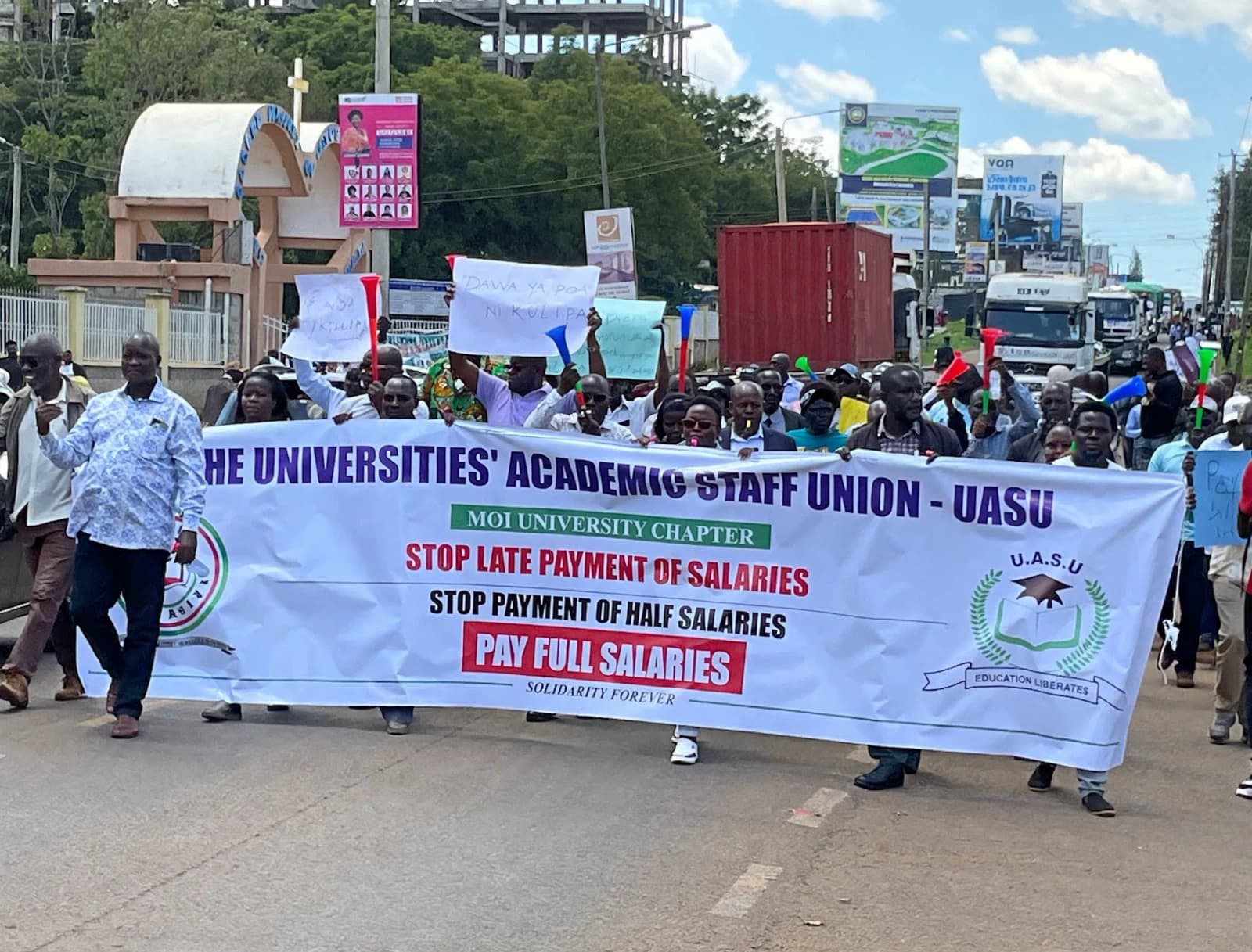
Moi University lecturers have demanded the settlement of more than Sh4.2 billion in outstanding salary-related and pension obligations, warning that unresolved institutional grievances could keep them on strike even if the nationwide university lecturers' boycott is called off.
The lecturers, through the Universities Academic Staff Union (UASU) Moi University branch, say the university and the government must honour outstanding Collective Bargaining Agreement (CBA) commitments and clear pension-related liabilities to restore industrial stability at the institution.
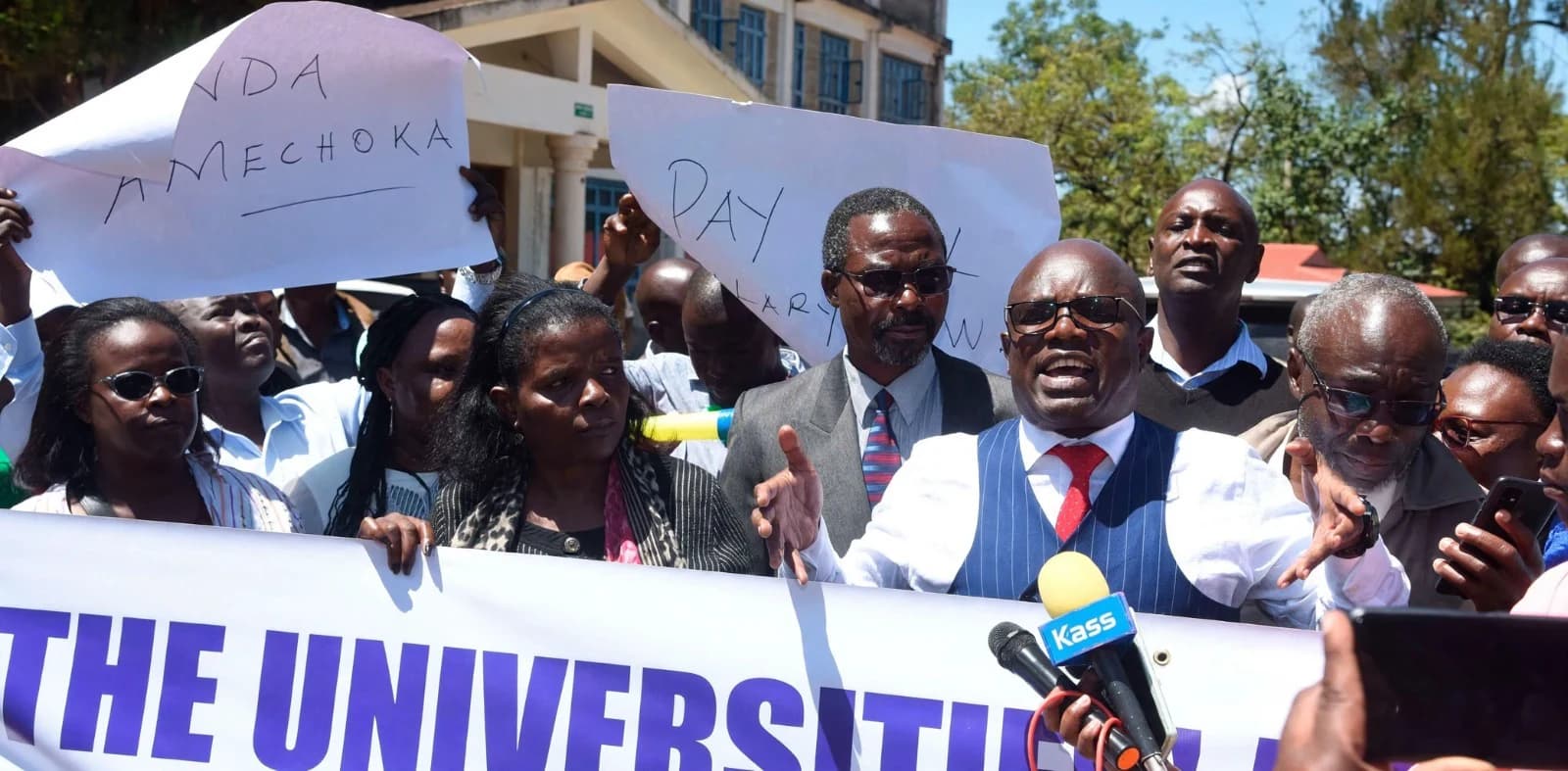
Branch secretary Robert Oduori said approximately Sh1.2 billion remained outstanding under the 2017 and 2021 CBAs, while more than Sh3 billion owed to the university's pension scheme was yet to be settled.
The lecturers insist that resolving the national dispute alone will not be enough to guarantee their return to classrooms unless Moi University's specific grievances are also addressed.
"We are part of the national strike, but we insist the pending issues at Moi University should be sorted out so we do not remain on strike once the national boycott is called off," Oduori said.
The dispute adds another layer of pressure to the ongoing nationwide university lecturers' strike, which is centred on the implementation of the 2025–2029 CBA and improved remuneration for academic staff.
Lecturers reject promises without implementation
Oduori accused university management of failing to honour previous agreements, saying repeated disputes had forced lecturers to spend valuable time pursuing employment rights instead of teaching, conducting research and supporting students. He said lecturers were weary of recurring industrial action because it disrupts learning, inconveniences parents and threatens the academic calendar.
The union official urged national UASU leaders not to suspend the strike on the strength of promises alone, insisting that negotiations must produce concrete and enforceable commitments.
The lecturers also rejected a proposed three per cent annual increase in basic salaries, arguing that the offer was inadequate against the rising cost of living. UASU national trustee Jane Michaels said inflation exceeding six per cent made the proposed increment unacceptable. The union's position is that any salary review must offer meaningful relief rather than leave university staff struggling to meet basic household expenses.
Treasury funding row deepens dispute
The lecturers have also opposed suggestions that universities should finance academic staff salaries from fees collected from students. Michaels argued that lecturers employed by public universities should be remunerated through government funding rather than being placed in direct financial dependence on students and their families.
She questioned what she described as an inconsistent approach to public service, arguing that workers should not be treated as public servants when statutory deductions are collected but excluded from that consideration when salaries and benefits are due.
The funding debate exposes a broader challenge facing public universities: how to sustain teaching, research and staff welfare amid mounting financial obligations. Universities must meet payroll commitments, fund academic programmes, maintain facilities and support students, while lecturers demand that previously negotiated employment agreements be implemented in full.
The continuing standoff threatens to prolong uncertainty for students whose lectures, assessments and academic progression depend on the resumption of normal university operations. At Moi University, the lecturers' warning that local grievances could survive a national strike settlement raises the possibility of a separate institutional dispute even after a broader agreement is reached.
For the government and university management, the challenge is therefore twofold: resolving the national CBA dispute and addressing institution-specific liabilities that could trigger further industrial action. The lecturers maintain that strikes are not their preferred route but argue that repeated failure to implement agreements leaves them with limited options.
A durable settlement will require more than a return-to-work announcement. It will depend on credible negotiations, clear payment commitments and an implementation framework capable of restoring trust between university management and academic staff. Until the outstanding obligations are addressed, the prospect of a full return to teaching at Moi University remains tied to both the national negotiations and the institution's unresolved financial grievances.

Reader Discussion (0)
Sign in to comment