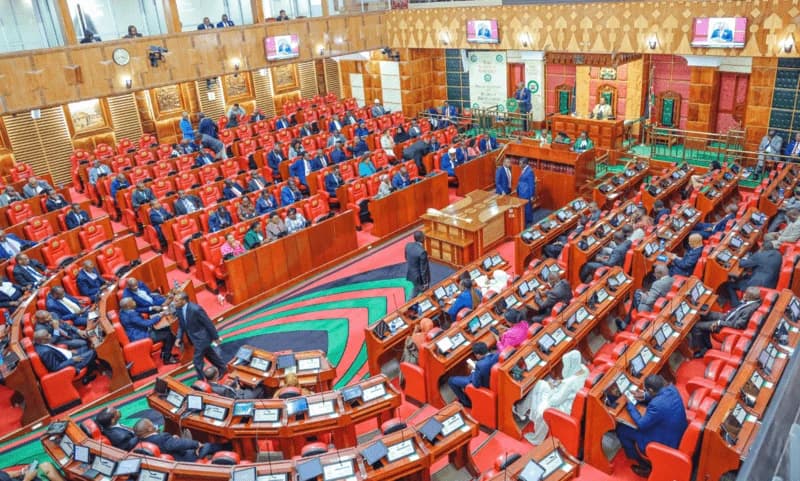
The National Assembly has opened public participation on the Teachers Service Commission (Amendment) Bill, 2026, inviting teachers, education stakeholders and members of the public to submit their views on proposed changes to the law governing the teaching profession.
The Bill, listed as National Assembly Bill No. 64 of 2026, seeks to amend the Teachers Service Commission Act on the administration of the Commission, registration and regulation of teachers, professional development and disciplinary procedures. The invitation comes as the proposed legislation attracts growing attention among teachers because of provisions that could significantly alter professional conduct and disciplinary requirements if enacted.
Among the proposed changes are expanded grounds for disciplinary action, including cyberbullying, chronic absenteeism, negligence of duty, falsification of official records, exposing learners to illicit drugs or inappropriate material, and engaging in other gainful employment while serving under the Commission.
The Bill also proposes stronger measures against sexual exploitation of learners, including situations where teachers abuse their position by exchanging sexual acts for grades, school fees, gifts, food, shelter or other benefits.
Other proposals touch on teacher registration, continuous professional development, practising certificates, staffing and promotion, as well as mechanisms for reviewing disciplinary decisions.
The legislation was listed for First Reading in the National Assembly on September 29, 2026, and has yet to become law. The current parliamentary process allows stakeholders to influence its final form before further consideration.
Parliament has set Friday, October 30, 2026, at 5 pm as the deadline for submission of memoranda. The public has been invited to submit written views through the Clerk of the National Assembly at cna@parliament.go.ke. The Bill is among the legislation currently listed on the National Assembly's official Bills portal.
The public participation process is expected to provide teachers and their representatives with an opportunity to scrutinise the proposed disciplinary framework and raise concerns or suggest amendments before the Bill proceeds through the remaining stages of the legislative process.
Until Parliament completes the process and the proposed amendments are enacted, the provisions contained in the Bill remain proposals and should not be treated as changes to the current law.




Reader Discussion (0)
Sign in to comment