

An audit of public secondary schools across several counties has flagged unapproved school fees, millions of shillings in expenditure lacking adequate documentation, procurement irregularities and enrolment discrepancies that affect the accuracy of government funding.
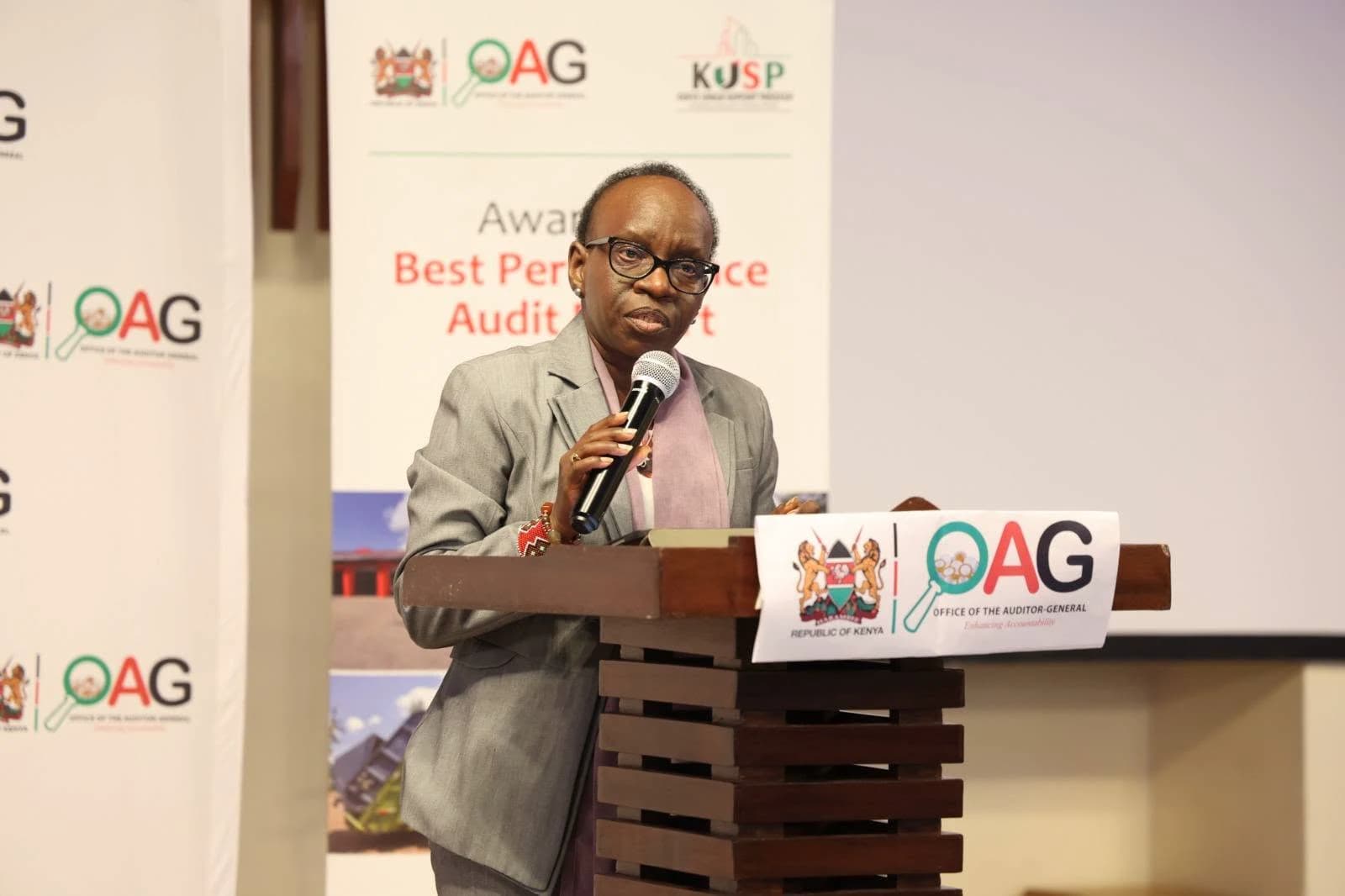
Auditor-General Nancy Gathungu's reports for the 2024/2025 financial year raise questions about financial accountability and compliance with education regulations in about 15 institutions. The findings put school financial management under renewed scrutiny, particularly over charges imposed on parents, payments to external associations, procurement procedures and the accuracy of student records used to determine government capitation.
Among the schools cited are Ndathi Secondary School in Nyeri County, Maraa Girls Secondary School in Meru County, Lanet Secondary School in Nakuru County, MCK Kisima 78 Secondary School in Isiolo County, Mungore Girls Secondary School in Bungoma County and Igwanjau High School in Tharaka Nithi County.
Unapproved fees
At Ndathi Secondary School, auditors found that boarding students were charged Sh57,185 annually against an approved fee of Sh40,535, an excess of Sh16,650 per learner. The school collected Sh5.3 million from parents under a fee structure that had not received the required Ministry of Education approval.
The audit also questioned the charging of Sh22,500 to each of 54 day scholars, as no approved fee structure existed for that category of learners.
Spending under scrutiny
At Maraa Girls Secondary School, auditors questioned a Sh262,545 transfer to the Kenya Secondary School Heads Association (KESSHA). The report also identified procurement weaknesses, including the lack of a properly staffed procurement unit and missing professional opinions on awarded tenders.
At Lanet Secondary School, officials could not provide key procurement records supporting expenditure of Sh54.96 million. A separate transfer of Sh1.47 million to KESSHA also drew questions on accountability.
Missing documentation does not automatically mean money was stolen or misused. However, without adequate supporting records, auditors cannot verify whether expenditure was properly authorised, procured and accounted for.
Missing payment records in Isiolo
At MCK Kisima 78 Secondary School, auditors could not verify Sh552,600 reportedly spent on tuition because supporting payment documents were missing. They also found that the school had no library, leaving 334 surplus textbooks vulnerable to damage.
Enrolment discrepancies
At Igwanjau High School, the National Education Management Information System (NEMIS) recorded 1,091 learners, against 1,174 in the school's own records, a difference of 83 students. The discrepancy was associated with an estimated Sh1.85 million shortfall in government funding.
Accurate enrolment data is critical to capitation planning, since inconsistencies between official systems and school records can affect allocations and the supply of teaching materials and other services. Schools and education authorities need to reconcile enrolment records regularly.
Governance concerns
Taken together, the findings point to weaknesses in the collection of fees, management of procurement, documentation of expenditure and verification of enrolment. They raise questions about the effectiveness of internal controls and the capacity of school management teams to meet public financial management requirements.
For parents, unapproved fees are a particular concern because extra charges raise the cost of education and strain household budgets. Education authorities are expected to strengthen oversight, ensure schools keep proper accounting systems and follow up on audit queries with corrective measures.
Audit queries and documentation gaps are not conclusive evidence of fraud or deliberate wrongdoing. They identify matters requiring clarification, verification and, where necessary, further investigation or corrective action.

Reader Discussion (0)
Sign in to comment