









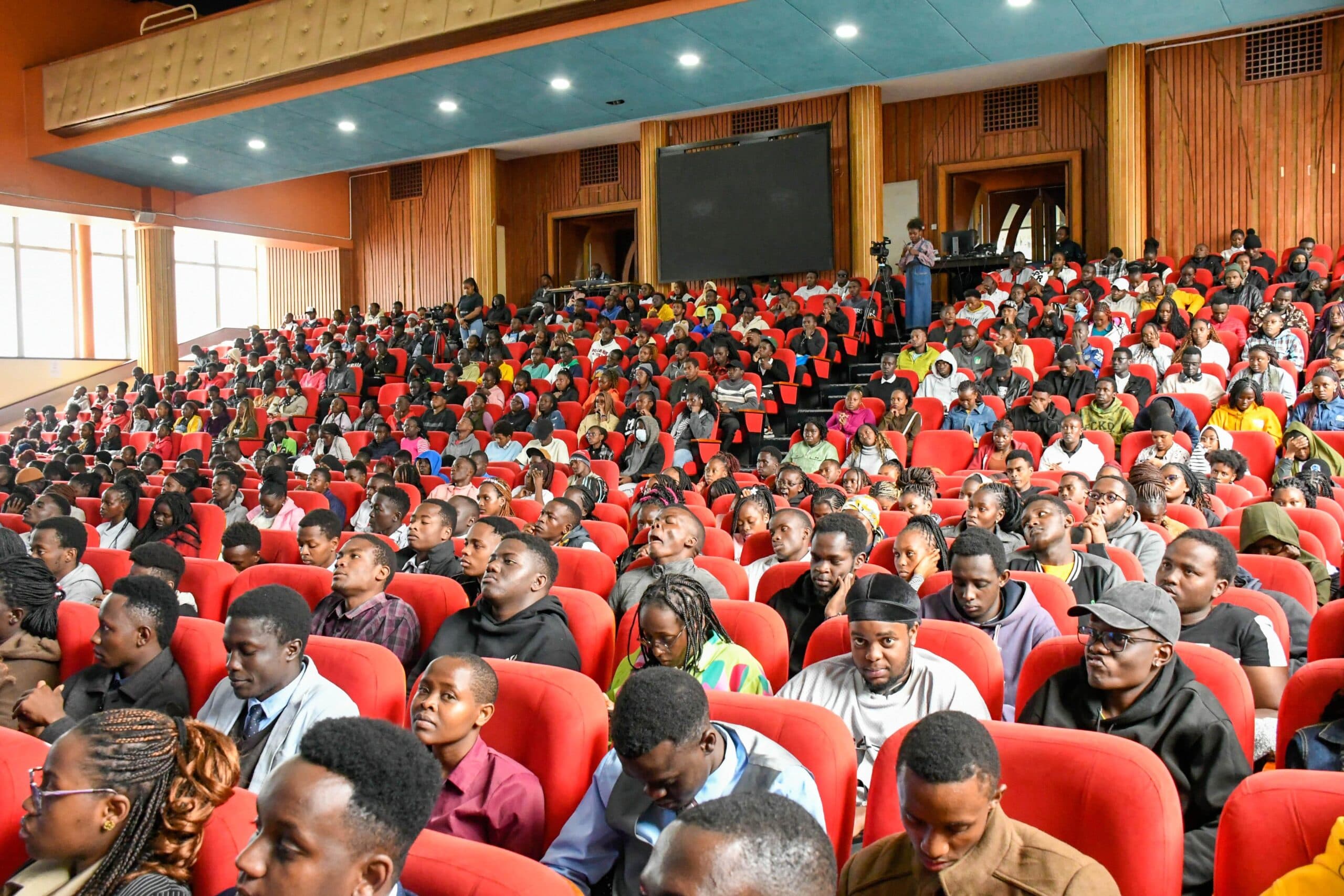
- Bodo Simon argues that universities should remain spaces where knowledge, wisdom and inclusivity transcend political and ethnic divisions.
- He says academics carry a responsibility to exercise restraint and avoid rhetoric capable of alienating learners.
- The writer maintains that universities should promote intellectual freedom while safeguarding dignity, diversity and responsible discourse.
Knowledge has often been associated with civilisation, which is mostly implied to be, but is not necessarily, wisdom. On the other hand, wisdom is the judicious application of that knowledge combined with experience, empathy and good judgement, as etymologists would want us to understand.
This means that, even though knowledge is a subset of wisdom, the two are mutually inclusive. The crux of it is that knowledge applied without wisdom may turn out to be disastrous.
Whereas wisdom may be inborn or learned through experience, empathy and good judgement, knowledge is entirely acquired through systematic learning. The peak of this systematic learning is poised in university institutions.
A university institution is, therefore, the citadel that oozes wisdom and knowledge through a process called education, and one who has attained this peak is expected to espouse both wisdom and knowledge.
Education, therefore, remains the harmonious development of the physical, mental, moral and social faculties for a life of dedicated service to mankind regardless of race, origin or political affiliation.
This evokes Indira Gandhi’s description of education as a liberating and democratising force that cuts across barriers of caste and class and helps smooth out inequalities imposed by birth and other circumstances.
Universities should transcend political divisions
Thus, it is in bad taste for a purportedly “learned” lecturer to make remarks suggesting that young learners from Western Kenya and Mount Kenya should not return to the institution if President William Ruto loses the 2027 General Election.
The remarks that prompted this article were attributed to a part-time lecturer at the University of Eldoret during a class on September 24, 2026. The university subsequently distanced itself from the remarks and announced disciplinary proceedings, saying they did not represent its position, policies or official views.
Such rhetoric risks projecting a university, albeit unfairly, as an institution divided along ethnic lines regardless of the universal character that accompanies the name “university”.
On the same stride, the motto of the University of Eldoret is “Flame of Knowledge and Innovation”. Knowledge and innovation are universal and cannot be synonymous with only one community.
By and large, the name university is tied to the word universal. This means it carries a global appeal and encompasses every scholar: learners and the learned alike.
The University of Oxford, for instance, is a paragon of knowledge that has been built over centuries by people from different parts of the world, their geopolitical affiliations notwithstanding. Such world-acclaimed universities attract scholars and research from across geographical and cultural boundaries.
Lessons from university leadership
A decade ago, the appointment of Professor Laban Ayiro as acting Vice-Chancellor of Moi University attracted opposition from some political leaders in the North Rift, some of whom argued that Professor Isaac Kosgey should instead be appointed. Contemporary reporting indicates that Kosgey, rather than Ayiro, had led the interviews for the substantive Vice-Chancellor position.
Ayiro later moved to Daystar University, where he currently serves as Vice-Chancellor. The institution describes itself as having more than 8,000 students, including more than 500 international students from over 30 nationalities.
These experiences should remind academia of the importance of building institutions in which scholarship, competence and intellectual exchange transcend ethnic, regional and political considerations.
READ ALSO: Teachers press TSC over promotions, healthcare and union membership at Eldoret celebrations
From this discourse, academia should appreciate that the least appropriate place to encourage partisan political undertones is a learning institution of the calibre of a university. Doing so risks undermining civility and respect for academia.
By Bodo Simon
Bodo Simon is a commentator on education and social issues.
Get more stories from our website: Education News
To write to us or offer feedback, you can reach us at: editor@educationnews.co.ke
You can also follow our social media pages on Twitter: Education News KE and Facebook: Education News Newspaper for timely updates.
>> Click here to stay up-to-date with trending regional stories



Reader Discussion (0)
Sign in to comment