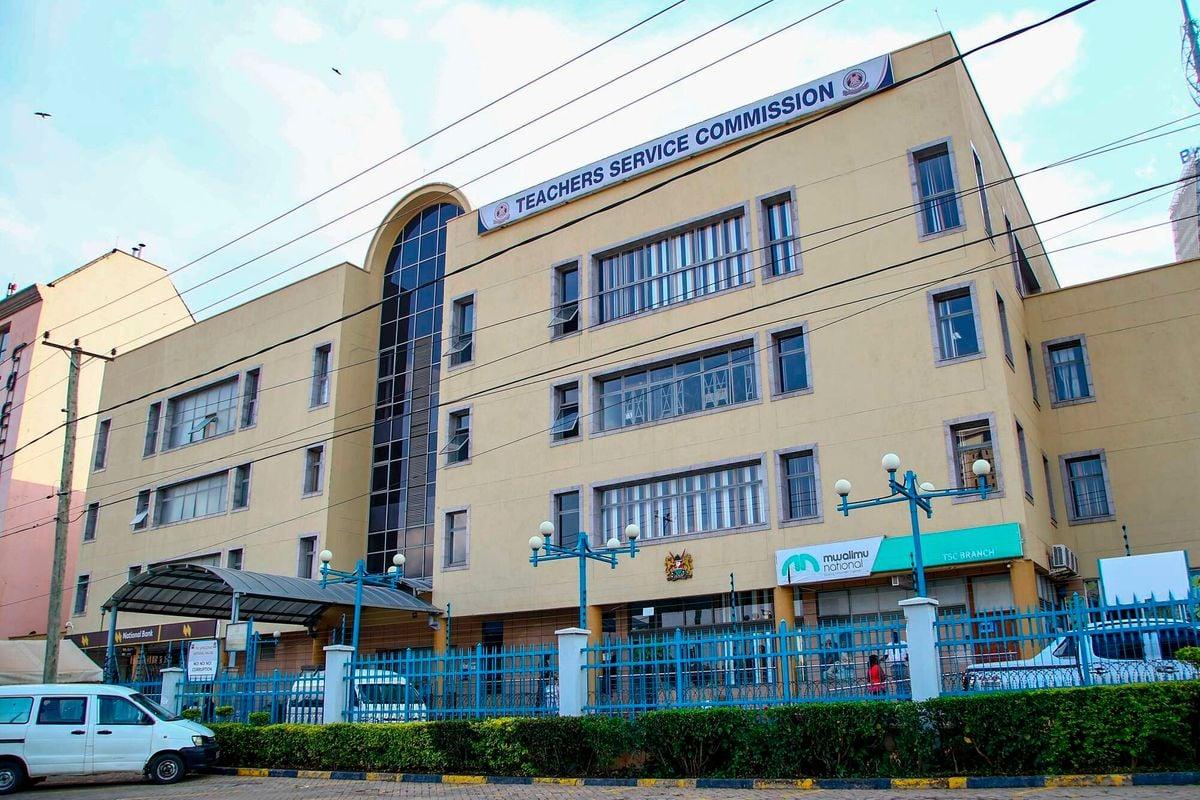
The Teachers Service Commission (TSC) has stepped up its presence in schools through the deployment of monitoring teams tasked with strengthening oversight, ensuring compliance, and reinforcing the standards expected under the current education reforms.
While the phrasing of “nationwide alert” has sparked attention and even concern in some quarters, the underlying development is best understood as part of an ongoing and structured effort to tighten supervision within the education system rather than a sudden or extraordinary intervention.
At the centre of this development is the growing complexity of managing education delivery under the Competency-Based Education (CBE) framework. Unlike the previous 8-4-4 system, which relied heavily on examinations as the primary measure of learner achievement, CBE places strong emphasis on continuous assessment, skill development, and consistent documentation of learner progress.
This shift has introduced new expectations for teachers, school administrators, and education officers, all of whom are now required to maintain higher levels of coordination, record-keeping, and instructional alignment.
The deployment of monitoring teams, therefore, is closely tied to the need to ensure that schools are not only implementing the curriculum but doing so in a manner that is consistent, standardised, and verifiable.
These teams are generally drawn from quality assurance and standards departments, alongside regional and county education offices, and their role is largely evaluative and supportive in nature. Their work cuts across a wide range of areas that define effective schooling.
One of the key areas they monitor is curriculum implementation. Officers check whether teachers are following approved schemes of work, whether lessons are properly planned, and whether classroom delivery aligns with national curriculum expectations.
ALSO READ:
Lewa Wildlife Conservancy links poor education to insecurity and poaching in Meru region
Under CBE, this has expanded further into checking how competencies such as critical thinking, creativity, communication, and problem-solving are being developed among learners, rather than simply focusing on content coverage.
Closely linked to this is lesson preparation and delivery. Monitoring teams often review lesson plans, lesson notes, and classroom engagement to determine whether teachers are adequately prepared. They observe whether teaching methods are interactive, learner-centred, and responsive to different learning needs. The emphasis is not only on what is taught, but how it is taught and how learners respond during instruction.
Another major area of focus is learner assessment and record-keeping. Schools are expected to administer school-based assessments (SBAs), mark them accurately, and maintain clear records of learner performance. These results must be uploaded or submitted within strict timelines. Officers check for consistency, accuracy, and completeness of these records, since assessment data forms a key pillar in the CBE structure and directly influences learner progression.
Attendance and teacher deployment also fall under close scrutiny. Monitoring teams verify whether teachers report to school regularly, adhere to timetables, and carry out assigned duties. They also assess whether staffing levels match subject requirements and whether workload distribution is fair and effective. This ensures that no learning area is left underserved due to staffing imbalances.
Professional conduct and ethics form another critical dimension of monitoring. Teachers are expected to uphold professionalism in their interactions with learners, colleagues, and parents. Officers look at discipline, adherence to the code of conduct, and overall behaviour within the school environment. This aspect reinforces the idea that education is not only academic but also ethical and character-driven.
In addition, learner progress tracking is a key concern. Schools are expected to monitor individual learner development over time, identify gaps in understanding, and provide remedial support where necessary. Monitoring teams assess whether schools have systems in place to ensure that no learner is left behind, especially in the transition to competency-based learning.
ALSO READ:
Teach with passion, serve with honour, West Pokot CSO tells teachers
School administration and documentation are also heavily reviewed. This includes admission registers, attendance records, lesson attendance logs, schemes of work, and academic progress reports. Proper documentation is essential in ensuring transparency, accountability, and continuity in school operations.
Classroom environment and availability of learning resources are equally important. Officers assess whether classrooms are conducive for learning, whether learners have adequate seating and materials, and whether teachers are effectively using available teaching aids. A supportive learning environment is considered central to effective curriculum delivery.
Implementation of government policies and circulars is another area of monitoring. Schools are expected to comply with directives issued by the Ministry of Education and the Teachers Service Commission, especially those relating to CBE implementation, assessment procedures, and staffing guidelines. Compliance ensures uniformity and consistency across the education system.
Co-curricular activities also fall under the broader monitoring framework. Schools are expected to provide opportunities for holistic learner development through sports, clubs, and talent development programs. These activities are viewed as essential in nurturing well-rounded learners under the current education model.
All these areas of focus demonstrate that monitoring is not a narrow or punitive exercise. Instead, it is a structured system designed to ensure that teaching and learning remain aligned with national goals, professional standards, and evolving curriculum demands.
However, while these monitoring processes are essential, they also place additional pressure on schools, particularly in terms of documentation, reporting, and compliance demands. This has created a delicate balance between accountability and workload, especially as schools adapt to continuous reforms in the education sector.
Ultimately, the deployment of monitoring teams reflects a broader effort to strengthen quality assurance, improve consistency in implementation, and ensure that education reforms translate into real classroom practice. The effectiveness of this system will depend not only on oversight but also on support, training, and collaboration between officers and schools.
As the education system continues to evolve, the success of these monitoring efforts will be measured by how well they enhance learning outcomes, support teachers, and maintain fairness and consistency across all schools.
By Hillary Muhalya
You can also follow our social media pages on Twitter: Education News KE and Facebook: Education News Newspaper for timely updates.
>>> Click here to stay up-to-date with trending regional stories
>>> Click here to read more informed opinions on the country’s education landscape