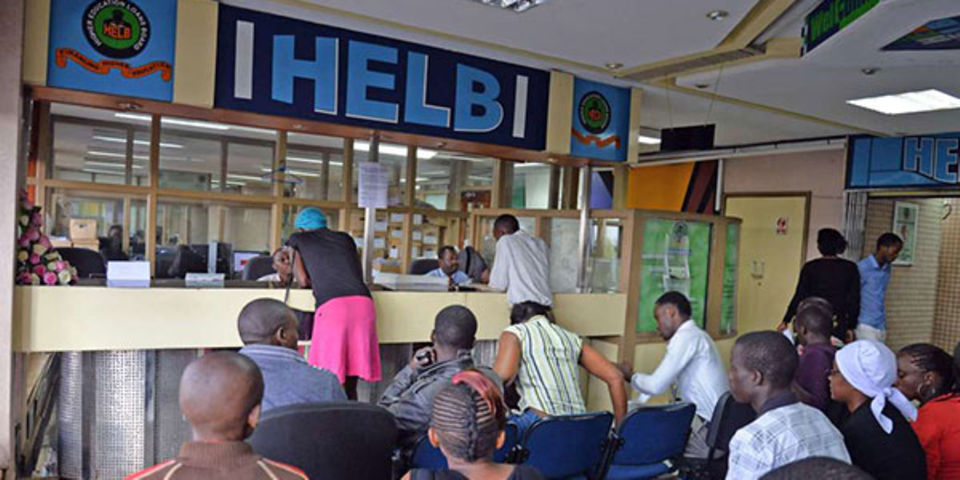
- Kenya’s new 5 per cent penalty on employers who fail to remit student-loan deductions has drawn criticism as an inadequate centrepiece for reform.
- The writer has cited Singapore’s CPF Education Loan Scheme as a model, with features such as advance notification, flexible instalments and deferment options for borrowers.
- A single digital student-finance system linking education, tax and employment records has been proposed, alongside income-sensitive repayment in place of blanket enforcement.
Kenya’s decision to impose a 5 per cent penalty on employers who fail to remit student-loan deductions should trigger a much bigger national debate. Not: how do we punish employers? But: why does a modern economy still need employers to become debt-collection agents for the state?
That is the tough lesson from Singapore. Singapore does not have a perfect education-financing system, but it has built something Kenya urgently needs: an integrated system in which financing, identification, repayment, digital administration and enforcement work together. Under Singapore’s CPF Education Loan Scheme, repayment begins one year after graduation or leaving studies. Borrowers receive advance notification, can choose monthly instalments, use online repayment systems and can defer in certain circumstances, with the loan generally required to be cleared within 12 years.
That is the philosophy Kenya should embrace: make compliance easy, make repayment predictable, make enforcement credible. The Kenyan temptation is always to start with the penalty. Singapore starts with the system. That distinction matters.
If an employer deliberately fails to remit money already deducted from a worker, enforcement should indeed be tough. But an employer struggling with a confusing system, incorrect records or delayed government data should not be treated like a criminal enterprise. Punishment is not governance. Effective systems are governance.
ALSO READ: 25 per cent salary cap proposed for student loan repayments under new tertiary funding Bill
Kenya should therefore build a single digital student-finance architecture connecting the relevant education-financing agency, tax and employment records, universities and payroll systems, with proper privacy safeguards. A graduate should not disappear from the system simply because they change jobs. The government should know when a borrower graduates, whether they are employed, their broad repayment status and when their circumstances change.
There is another Singapore lesson Kenya must take seriously: repayment must reflect reality. Singapore provides mechanisms for deferment in certain circumstances, including financial difficulty, while its repayment system allows borrowers to manage instalments and repayment periods. Kenya should distinguish between a graduate who refuses to pay and a graduate who cannot pay. A young person earning KSh25,000 should not face the same repayment pressure as someone earning KSh500,000. The first needs a sustainable pathway back into repayment. The second needs enforcement. That is how a serious human-capital system works.
Here is the most provocative point: student loans should not be designed primarily as a revenue-recovery programme. They should be designed as a national investment in skills. Kenya lends today so that tomorrow’s graduates can become doctors, engineers, teachers, entrepreneurs, scientists and taxpayers. The objective should be to create a virtuous cycle — education, skills, employment, higher incomes, repayment, and financing for the next generation. If repayment becomes so punitive that graduates avoid formal employment, move into the informal economy or regard government as an adversary, Kenya will undermine its own investment.
Vision 2060 must therefore demand a different model: one borrower, one digital account, one national record. Automatic, transparent repayment. Income-sensitive instalments. Easy deferment when genuinely justified. Tough enforcement against fraud and deliberate evasion. And for employers, the government should provide a simple digital mechanism and clear liability only where money has actually been deducted, or compliance has deliberately been ignored.
Proposed law introduces savings scheme for parents planning for children’s tertiary education
The 5 per cent penalty should not be the centrepiece of reform. The centrepiece should be a system that makes the penalty almost unnecessary. That is the Singapore lesson Kenya should absorb. Singapore did not become efficient because it accumulated more penalties — it became efficient because it built institutions that make the right behaviour simple, predictable and enforceable. Kenya needs to do the same.
Stop designing government around punishment. Start designing government around performance. Because if Vision 2060 is serious about building a knowledge economy, the question is not how aggressively Kenya can chase graduates for money. The question is: can Kenya finance education, produce skills and recover its investment without turning the employer into a policeman and the graduate into a permanent debtor? That is the test of serious governance. Build the system first. Then enforce it.
By Yabesh Onwong’a
You can also follow our social media pages on Twitter: Education News KE and Facebook: Education News Newspaper for timely updates.
>>> Click here to stay up-to-date with trending regional stories
>>> Click here to read more informed opinions on the country’s education landscape