The reinstatement of Jensen Huang as NVIDIA's chief executive raises a fundamental question about corporate governance: can a company afford to overlook the misconduct of a powerful executive simply because he is considered indispensable?
There is a dangerous moment in the life of any successful institution when the individual who helped build it begins to appear bigger than the institution itself. The founder becomes a legend, the chief executive becomes untouchable, and the board of directors gradually loses the courage to exercise its oversight responsibilities. Decisions that would attract immediate disciplinary action against ordinary employees suddenly become matters for negotiation when the person involved occupies the corner office.
The unfolding leadership drama at NVIDIA, one of the world's most influential technology companies, offers an important lesson about power, accountability and institutional integrity.
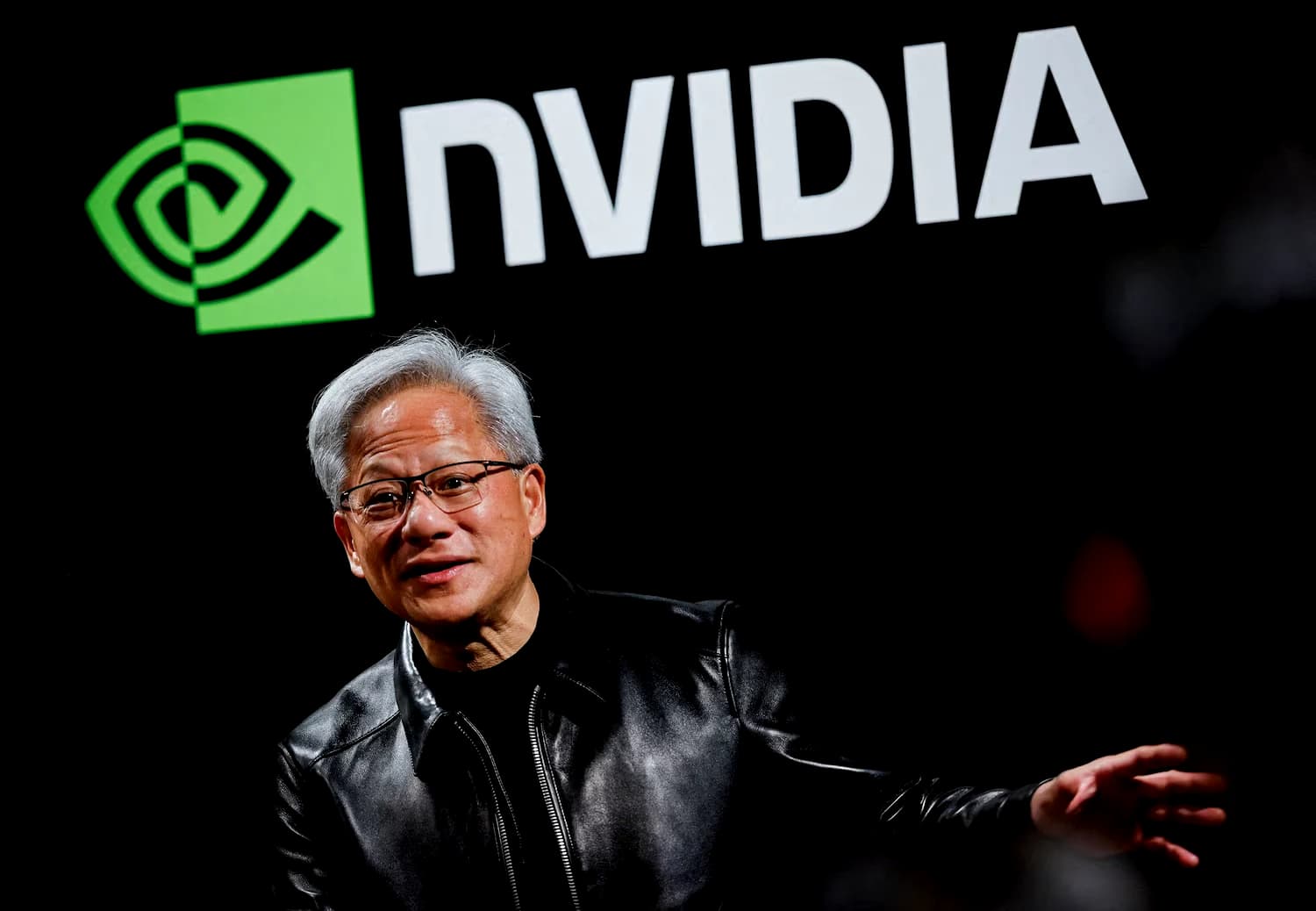
Huang, the company's co-founder and celebrated chief executive, resigned on November 12, 2026, amid revelations and allegations concerning personal relationships, possible conflicts of interest and national security concerns. His departure sent shockwaves through the technology industry and financial markets. Yet, in an extraordinary reversal, NVIDIA's board reinstated him on November 23, barely eleven days after his exit.(Education News Kenya — https://educationnews.co.ke/news/when-the-ceo-becomes-bigger-than-the-company-the-nvidia-lesson-on-corporate-accountability)
The board maintained that it had regained confidence in his leadership following discussions and consultations, including input from senior United States government officials. It also announced that investigations into the national security concerns would continue.
Huang's return was celebrated by many investors and technology industry figures. NVIDIA shares reportedly surged by more than 30 per cent following the announcement, demonstrating just how much financial markets associate the company's fortunes with his leadership.
But that market reaction exposes the very dilemma at the centre of this controversy: should an institution prioritise the immediate financial value of a celebrated executive or defend the principles and standards that protect its long-term credibility?
Michael Nalick, a management scholar at the University of Denver, makes an important observation in his article published by The Conversation: corporate boards often perform worse when they ignore executive misconduct than when they take decisive action.
His argument is informed by research into cases of chief executive misconduct dating back to 1995. His conclusion is that misconduct by a chief executive is rarely just a private matter. It can expose an organisation to reputational damage, governance failures, shareholder litigation and declining employee confidence. More importantly, failing to act can send a dangerous message throughout an organisation: that rules are flexible when the person breaking them is sufficiently powerful.
This is where the NVIDIA case becomes particularly interesting. Huang is not an ordinary executive hired to manage an established business. He co-founded NVIDIA in 1993 and has been central to its transformation into a global powerhouse in graphics processing and artificial intelligence. His technical knowledge, industry relationships and leadership have made him an extraordinary corporate figure. But does extraordinary performance confer immunity from accountability?
A company that cannot discipline its most powerful employee because it fears losing him has a serious governance problem.
Nalick draws attention to the experience of Hewlett-Packard and its former chief executive, Mark Hurd. In 2010, Hurd resigned following an investigation into allegations involving his relationship with a contractor and expenses that raised questions about his compliance with company policies. His departure was controversial because he had overseen a successful period for the company. Hewlett-Packard's shares reportedly fell by more than 10 per cent following his exit, reflecting investors' concerns about the loss of a highly regarded executive.
The immediate financial reaction, however, was not necessarily a reliable measure of whether the board had made the right decision. A company's responsibility extends beyond protecting its share price on a particular trading day. The important question is whether its leadership decisions strengthen or undermine the institution over time.
This distinction is central to corporate governance. A board exists not merely to celebrate a successful chief executive but also to supervise, question and, when necessary, remove that executive. The moment directors become cheerleaders rather than watchdogs, their independence becomes questionable.
The NVIDIA controversy also raises questions about the relationship between corporate power and political influence.
President Donald Trump reportedly intervened in efforts to secure Huang's return. He subsequently acknowledged speaking directly and indirectly to the company's board about the matter. His support, alongside that of prominent technology industry figures, strengthened the campaign for reinstatement.
This creates an uncomfortable governance question: was the board exercising independent judgment or responding to pressure from influential political and business personalities? The board insists that its decision followed deliberations and consultations. Nevertheless, the perception that a powerful external figure could influence the fate of a company's chief executive raises questions about board independence. A board must be capable of making unpopular decisions without being intimidated by the personalities involved. That is precisely why independent directors exist.
Perhaps the most significant lesson concerns organisational culture.
Imagine an ordinary employee who violates a company's code of conduct. The employee is investigated, subjected to disciplinary proceedings and potentially dismissed. Now imagine the chief executive commits an equivalent violation. If the organisation suddenly discovers reasons to overlook the offence because the executive is exceptionally talented, it creates two classes of employees: those who must obey the rules and those who can negotiate their way around them. Such an arrangement eventually destroys institutional trust.
Employees observe what happens to those at the top. They notice whether senior managers are held to the same standards as junior staff. They also learn whether loyalty to the organisation is more important than loyalty to powerful individuals. A company cannot convincingly demand integrity from its employees while treating its most influential executive as an exception.
NVIDIA's board has indicated that investigations will continue and that the company is strengthening its national security and export-control oversight. It has also announced plans to appoint a chief compliance officer. These measures will need to demonstrate that accountability is more than a public relations exercise.
There is a particularly relevant lesson here for African businesses, educational institutions, churches, political organisations and public agencies. We have a tendency to confuse institutional success with the personal achievements of the individual leading the institution.
A school principal who produces excellent examination results may begin to believe that ordinary administrative procedures do not apply to him. A politician who commands a large following may consider criticism an act of disloyalty. A church leader who attracts thousands of worshippers may become practically immune to questions about financial accountability and personal conduct. In businesses, founders sometimes surround themselves with directors who are more interested in pleasing them than providing independent oversight.
This is how institutions become personal empires.
The problem is not celebrating successful leaders. It is allowing their success to become an excuse for abandoning accountability. Indeed, the more powerful an individual becomes, the greater the need for independent oversight. Success should increase responsibility, not diminish it.
The NVIDIA story is still unfolding, and the allegations surrounding Huang should not be treated as established findings of guilt. Investigations must be allowed to establish the facts, and every individual deserves fair treatment. However, the broader governance question remains regardless of the eventual outcome.
What happens when an institution becomes so dependent on one individual that it cannot confidently imagine its future without him? A properly governed organisation should have succession plans, independent directors, enforceable codes of conduct and mechanisms for addressing misconduct without fear or favour. Even the most gifted executive should understand that the institution is bigger than the individual.
Nalick's central argument deserves serious consideration: doing nothing in the face of executive misconduct is itself a decision, and often a costly one.
NVIDIA may have regained a celebrated chief executive, and its shareholders may have welcomed his return. But restoring a company's share price is not necessarily the same as restoring confidence in its governance.
The ultimate measure of a great institution is not whether it can survive without its most celebrated leader. It is whether it can uphold its principles even when that leader appears indispensable. No individual, however brilliant, should be bigger than the institution that gave him the platform to shine.
Ashford is a teacher of English and Literature and comments on education and social affairs











Reader Discussion (0)
Sign in to comment