




Kenya's prolonged public university lecturers' strike remains a major concern for students, parents and university administrators, amid claims circulating online that a KSh20 billion financial agreement has been reached to resolve the dispute.
The claim, which has circulated through social media and online news platforms, suggests that the government and university staff unions have agreed on a financial package to address outstanding pay demands and facilitate the resumption of learning.
However, the reported agreement and the proposed return-to-class dates had not been independently confirmed as of October 28, 2026. Recent reporting instead indicates that negotiations remain unresolved.
Dispute over 2025–2029 collective bargaining agreement
The nationwide strike began on October 2, 2026, after negotiations over the 2025–2029 Collective Bargaining Agreement (CBA) failed to produce a settlement acceptable to the unions.
The Universities Academic Staff Union (UASU), Kenya Universities Staff Union (KUSU) and the Kenya Union of Domestic, Hotels, Educational Institutions, Hospitals and Allied Workers (KUDHEIHA) have been pushing for an agreement covering remuneration and other employment-related concerns.
The unions have also called for a clear, binding government commitment to finance the agreement through the National Treasury, arguing that assurances without guaranteed funding cannot resolve the dispute.
Negotiations have been complicated by a substantial gap between the unions' demands and the government's proposed financial commitment.
On October 26, the government presented a revised offer of approximately KSh11.96 billion, which the unions rejected.
The unions maintained that the proposal did not adequately address their demands under the new CBA. Their position has underscored the difficulty of reaching a settlement that satisfies staff representatives while taking account of the financial pressures facing public universities.
Against this background, the circulating claim of a KSh20 billion agreement has generated interest. Nevertheless, confirmation from the negotiating parties, together with the signed terms of any settlement, would be necessary to establish whether a new agreement has been reached.
Students await official confirmation of strike settlement
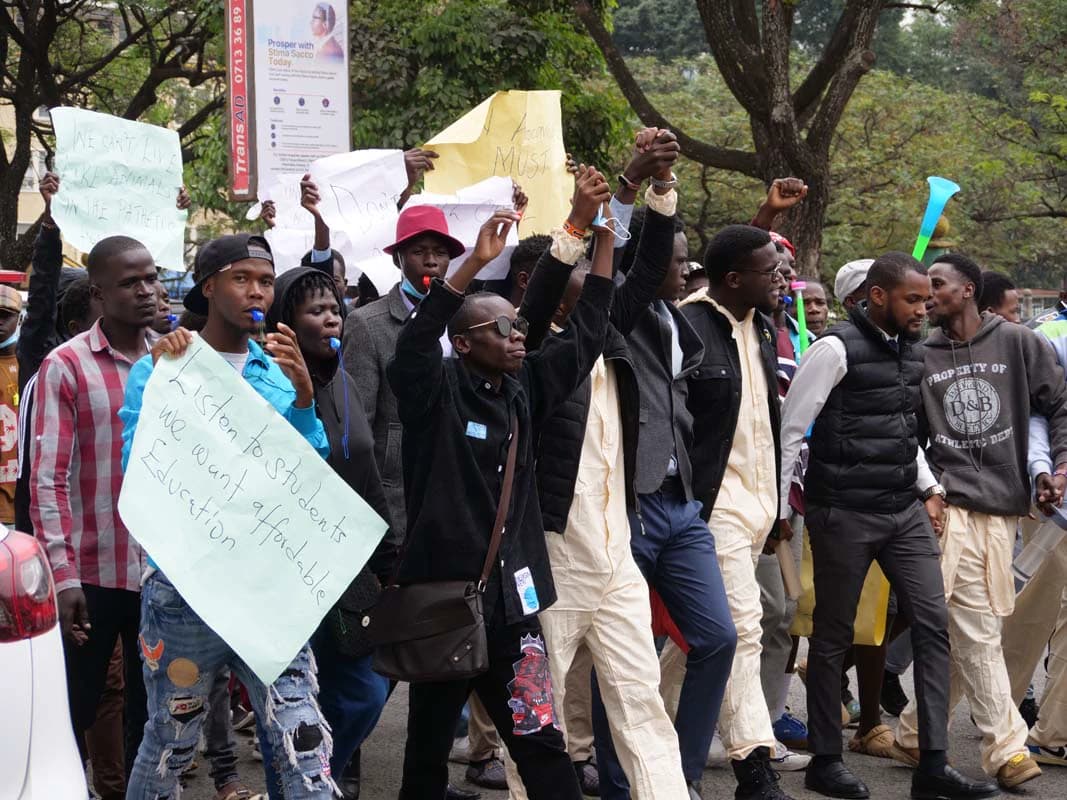
The disruption has left students uncertain about the resumption of lectures, the scheduling of examinations and the completion of academic programmes.
Parents and guardians also face the financial implications of prolonged interruptions, particularly where students continue to incur accommodation, transport and other living expenses without attending regular classes.
Universities must contend with the challenge of adjusting academic calendars once teaching resumes, including determining how missed lectures, assessments and examinations will be accommodated.
For the reported breakthrough to be considered established, the public needs confirmation of several key details:
- Whether the government and the three unions have signed a binding financial agreement.
- Whether the reported KSh20 billion represents a new settlement, a revised proposal or a figure covering multiple obligations.
- How the funds will be distributed and the dates on which the proposed instalments will be paid.
- Whether the unions have formally called off the strike.
- Whether individual universities have issued official notices confirming the resumption of lectures.
Until these details are confirmed, students should rely on announcements from their respective universities and official communications from the unions rather than unverified social media posts.
A settlement would provide a route towards restoring teaching and stabilising academic calendars. For that to happen, however, the financial terms must be agreed upon, formally documented and accompanied by an official return-to-work arrangement.


Reader Discussion (0)
Sign in to comment