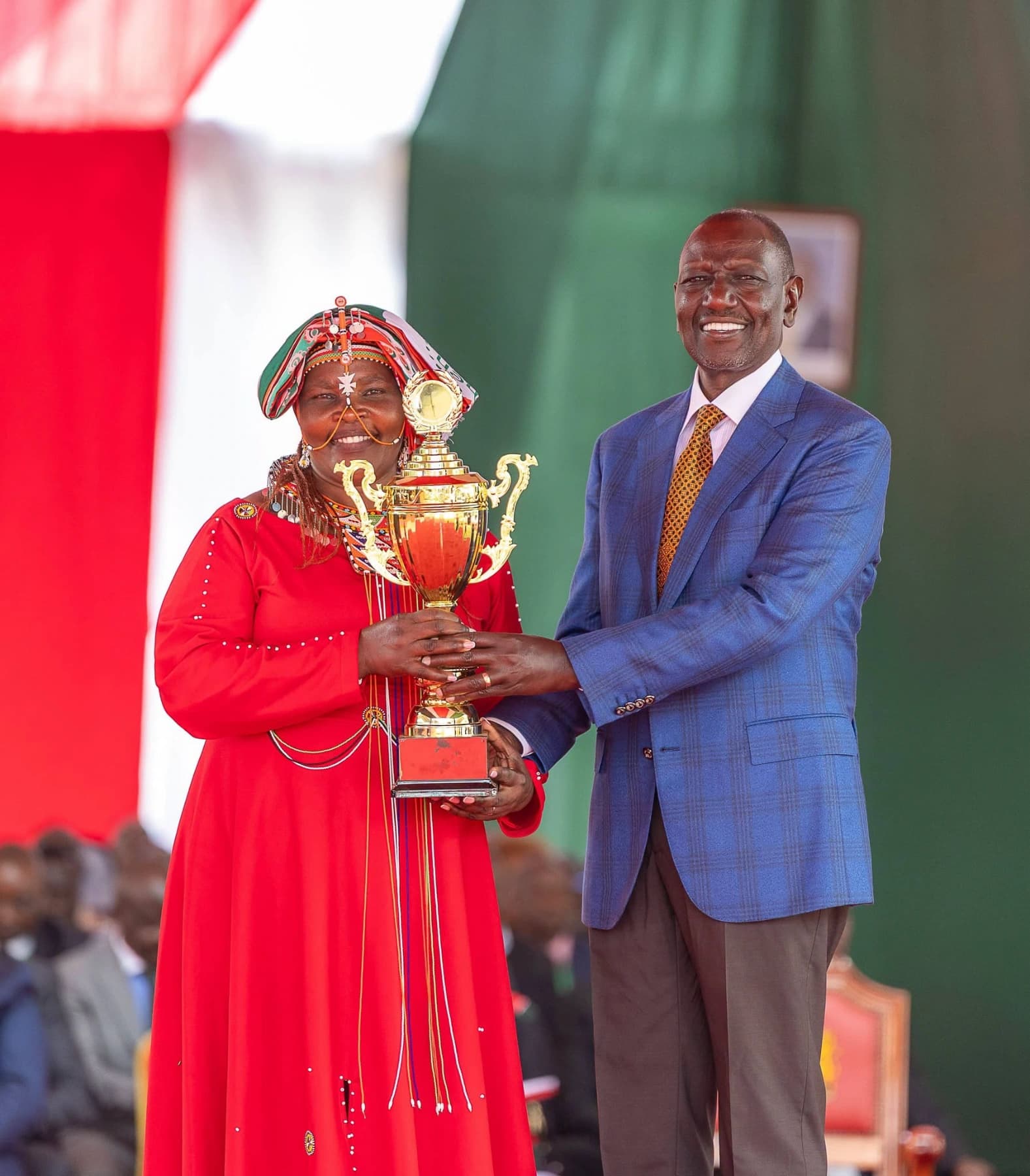
When President William Ruto stood at the Agriculture and Food Systems Transformation Summit at Jamhuri Park on October 9, 2026, he did not just give a directive to a Principal Secretary. He threw a national research challenge to our universities and scientists.
He said it plainly: “I had directed the Agriculture PS to help us bring in a better breed of camel and bring another buffalo breed. Buffaloes also produce a lot of milk. In India, there are buffaloes... So PS Mueke, do as we had agreed. Bring in buffalo and also bring in a better breed of camel because we need to diversify our milk sources.”
And then he asked the question that should keep our Vice-Chancellors awake: “I hear buffaloes also produce a lot of milk. If others are milking them, why can't we do the same? What is wrong with that?”
That question is not for Principal Secretary Jonathan Mueke alone. It is for Egerton University, the University of Nairobi, the Kenya Agricultural and Livestock Research Organisation (KALRO), Kisii University and the Open University of Kenya. It is a call for research to become food.
For too long, we have treated the African buffalo as untamable, dangerous, a member of the Big Five to be photographed. Yet Asia domesticated a different species, the water buffalo, thousands of years ago and built a major dairy industry around it.
India today is the world's leading buffalo milk producer. Buffalo milk accounts for a substantial share of the country's dairy output. Its river buffalo breeds, including Murrah, Nili-Ravi and Jaffarabadi, are valued for their milk yields and high butterfat content, commonly around 6 to 8 per cent, compared with the lower fat content of typical cow milk.
That fat is what makes ghee, butter, cheese and mozzarella.
The distinction matters. The African buffalo (*Syncerus caffer*) is a wild species, while the domesticated Asian water buffalo (*Bubalus bubalis*) is a different animal. Kenya's research challenge is therefore not simply to tame its wild buffaloes, but to investigate whether suitable dairy water buffalo breeds can be introduced and managed safely and productively.
Universities must turn the proposal into scientific research
Kenya needs that science urgently. Fluctuations in formal milk deliveries, drought, rising production costs and pressure on conventional dairy systems underline the importance of diversifying milk sources.
Our Friesians struggle when heat, inadequate feed and water shortages become severe. Camel milk commands premium prices in some urban markets partly because of its distinctive supply chain and production conditions, while camels remain important to livelihoods in arid and semi-arid regions.
Water buffaloes also have characteristics that make them worth investigating. They can utilise relatively coarse fodder, although they require adequate water, shade, cooling and appropriate husbandry. Their performance in Kenya's varied environments cannot be assumed without local trials.
This is where our savannah becomes a laboratory. Narok, Kajiado, Samburu, Laikipia, Tana River and Galana-Kulalu offer different ecological conditions in which researchers could assess the feasibility of dairy water buffalo production.
The research agenda is clear, and it should be owned by our universities.
Our animal science departments should lead adaptation and husbandry trials. How does the Murrah perform at Narok's altitude? Which breeds offer the best combination of productivity, disease tolerance and suitability for local feed resources?
Our veterinary schools should develop quarantine, disease surveillance, breeding and artificial insemination protocols. They should investigate whether importing semen and embryos, where technically and legally appropriate, offers advantages over importing live animals.
Our food science departments should research buffalo milk value chains. Because buffalo milk generally contains more fat and total solids than cow milk, it can offer advantages in cheese and other dairy processing. The precise economic benefit, however, must be established through production trials and market studies.
That is an industrial advantage waiting for research papers to become products.
Kenya–India cooperation offers a research opportunity
This opportunity also connects with Kenya's existing relationship with India.
During President Ruto's State Visit to India in December 2023, the two countries discussed cooperation in agriculture, trade, education, information and communication technology, renewable energy and research.
An agreement involving the Open University of Kenya and India's Indira Gandhi National Open University also formed part of the wider cooperation agenda.
Kenya and India share historical ties and have expressed interest in strengthening trade, investment, education and research.
Let that cooperation move into practical agricultural research.
Universities could explore partnerships with Indian dairy scientists and institutions such as the National Dairy Development Board (NDDB), drawing on India's experience in buffalo breeding, milk processing, veterinary services and cooperative dairy development.
Appropriately selected research farms could become demonstration centres co-managed by Kenyan and Indian scientists, subject to regulatory approval, environmental assessment and biosecurity requirements.
Why universities? Because food security without research is charity. Employment without research is casual labour.
President Ruto's Bottom-Up Economic Transformation Agenda emphasises agricultural productivity, investment, value addition and job creation. That ambition must be anchored in knowledge.
If Egerton University establishes a carefully designed buffalo research herd in Njoro, if the University of Nairobi develops a Buffalo Dairy Research Unit at Upper Kabete, and if Kisii University undertakes adaptation studies in Transmara, we could create a new curriculum and a new economic opportunity at once.
Such projects would require rigorous feasibility studies before herd sizes, land requirements and commercial production targets are determined.
Research can create employment and new dairy industries
A viable dairy buffalo industry could create opportunities for herders, fodder growers, milkers, laboratory technicians, extension officers, veterinary professionals and processors.
Add indirect employment in transport, cold chains, packaging and potentially the export of value-added dairy products, including mozzarella, to regional and international markets.
Add women-led cooperatives inspired by India's Amul dairy model, which has demonstrated the economic importance of organised smallholder milk production.
We could call them Maziwa ya Nyati Saccos.
But these opportunities must be measured rather than merely announced. Universities should establish the likely employment potential, production costs, environmental impacts and commercial viability before Kenya commits to large-scale introduction.
Our researchers have developed maize varieties suited to challenging environments. They have advanced aquaculture technologies that allow fish such as tilapia to be raised in controlled systems.
They can investigate how dairy water buffaloes might contribute to milk production under Kenyan conditions.
India did not become a dairy giant simply by importing milk. It invested in animal breeding, research, extension services, cooperative structures, processing and market development.
The President has thrown the ball. He said bring the buffalo.
It is now upon our professors, PhD students and KALRO scientists to catch it.
Let the challenge move from Jamhuri Park to the laboratory, from the podium to the savannah, and from a speech to food security and employment for Kenya.


Reader Discussion (0)
Sign in to comment