
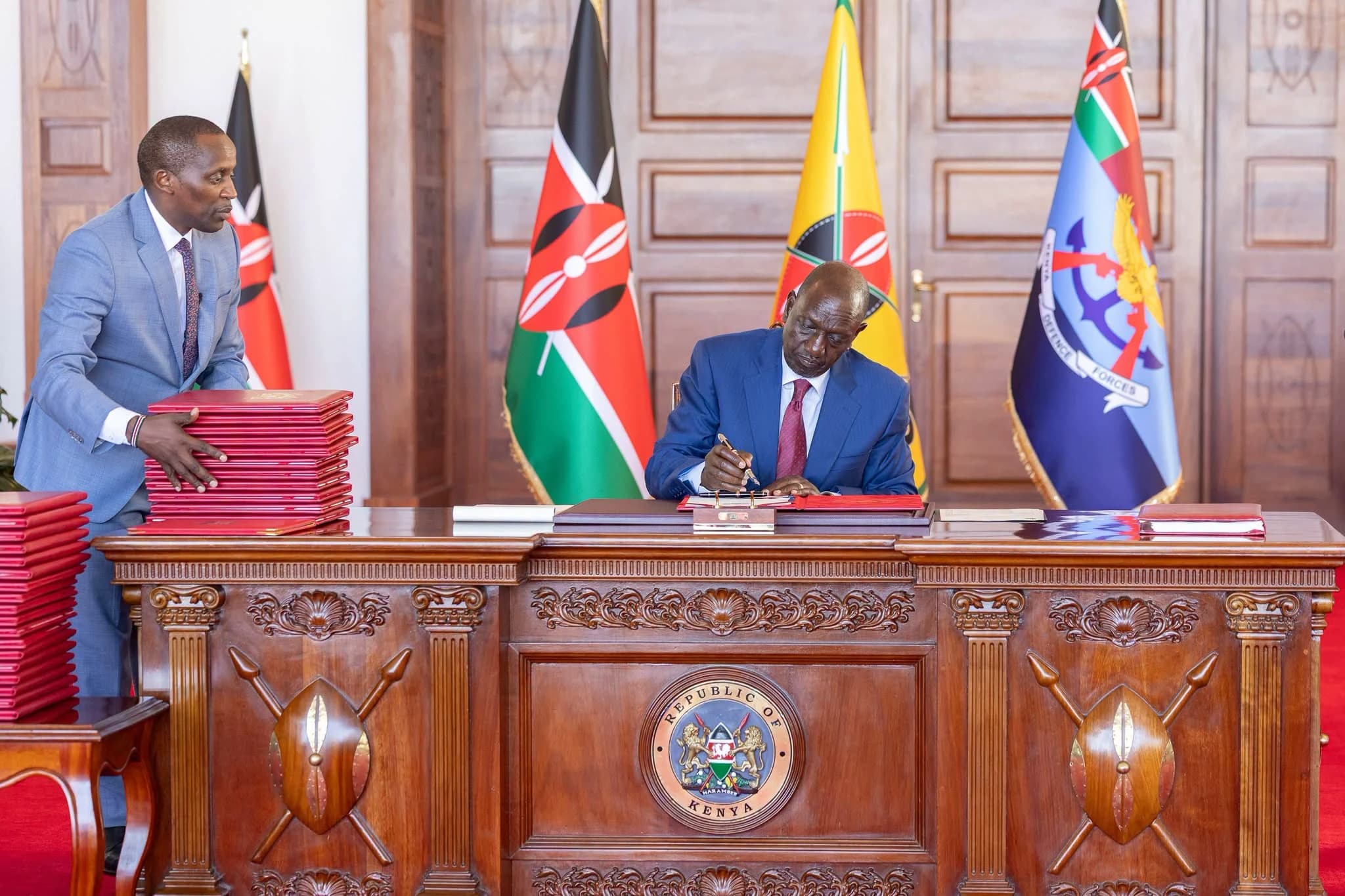







President William Ruto has assented to six National Assembly Bills covering workplace protection for breastfeeding mothers, retirement savings for public servants on contract, regulation of environmental professionals, parliamentary oversight of public funds and the handling of sexual offence cases.
The new laws introduce statutory obligations for employers, extend retirement savings to contractual public servants, establish a regulatory body for environmental professionals and strengthen legal protections for victims of sexual offences.
The Breastfeeding Mothers law makes workplace accommodation a legal obligation for employers. They are required to establish clean, private and properly equipped lactation facilities where mothers can breastfeed or express and store breast milk.
The law also provides for reasonable breastfeeding breaks and protection against discrimination linked to pregnancy, childbirth and breastfeeding.
It covers mothers with children aged up to 36 months, who may also request flexible working arrangements. Employers must communicate their decisions in writing within 14 days and give reasons where a request is declined. Public buildings and other qualifying premises accessible to the public must also provide baby-changing facilities.
The Public Service Superannuation Scheme (Amendment) law converts the existing retirement framework into the Public Service Superannuation Fund and extends eligibility to contractual public servants.
Eligible employees can request that their accrued monthly gratuity be transferred directly into a retirement savings account, instead of waiting for a lump-sum payment when their contracts expire.
The Environmental Professionals Institute of Kenya law establishes a statutory institution to register, license and regulate environmental practitioners. The institute is expected to provide professional oversight, promote standards and strengthen accountability among practitioners in public and private institutions.
The East African Development Bank (Amendment) law requires parliamentary approval before public funds from the Consolidated Fund are committed to the bank.
Two separate amendments to the Sexual Offences Act address victim protection, access to justice and the handling of cases.
The first requires government-led campaigns to inform citizens about sexual offences, their consequences and available legal remedies. It also promotes measures to protect the continued access to education of victims, including teenage mothers.
The second introduces a framework to ensure that cases are concluded within six months from the date of plea. It adds safeguards on the withdrawal of proceedings and seeks to address intimidation, coercion, threats and inducements intended to influence complainants into abandoning cases.



Reader Discussion (0)
Sign in to comment