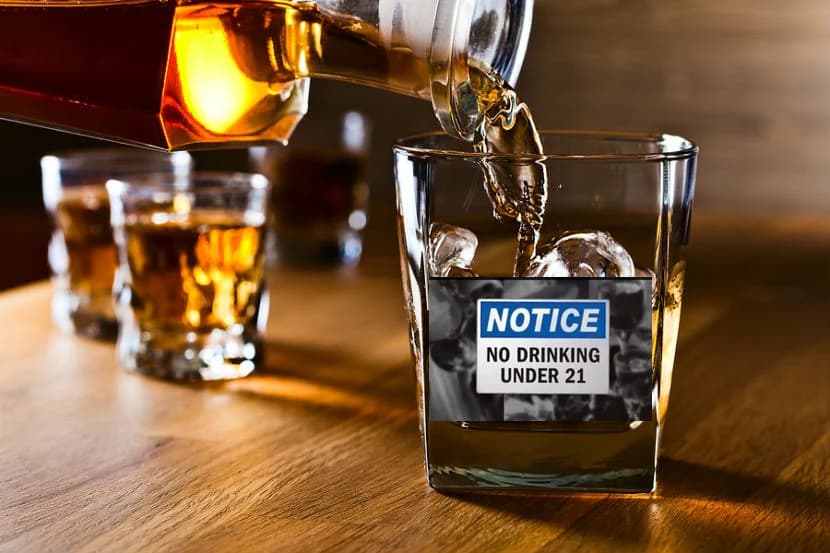









A proposed law seeking to raise Kenya's minimum legal drinking age from 18 to 21 has sparked concern among university students and hospitality industry players over its potential impact on employment and business operations.
The Alcoholic Drinks and Drugs Control Laws (Amendment) Bill, 2026, has drawn opposition over provisions that could restrict young adults aged between 18 and 20 from working in establishments that sell or serve alcoholic drinks.
The proposed changes have raised fears that thousands of young Kenyans could lose access to entry-level jobs, internships and industrial attachment opportunities, particularly in the hotel, tourism and hospitality sectors.
In a memorandum submitted to the National Assembly on November 22, the Chuka University Students Association (CUSA) warned that the proposed restrictions could undermine the practical training of students pursuing courses in hospitality, tourism and hotel management.
The association argued that hotels, restaurants, bars and entertainment establishments provide essential opportunities for students to gain professional experience while earning an income to support their education. It cautioned that excluding young adults from such workplaces could create additional barriers for graduates seeking to enter an already competitive labour market.
The concerns have been echoed by the Pubs, Entertainment and Restaurants Association of Kenya (PERAK), which has warned of possible economic consequences for businesses.
In its submission to Parliament on November 23, the association estimated that 5,643 hospitality outlets could face closure under the cumulative impact of the proposed restrictions. It projected that about 28,213 jobs and Sh8.46 billion in annual salaries could be at risk. The estimates, which represent the industry's assessment of the potential impact, have not been independently verified.
PERAK maintained that young workers form an important part of the hospitality industry's workforce, particularly in entry-level positions, and that restricting their participation could place additional pressure on businesses.
Beyond the economic concerns, CUSA has questioned the constitutional implications of the proposed changes. The students' association cited Article 260 of the Constitution, which defines an adult as a person who has attained the age of 18, and Article 55, which requires the State to take measures to ensure young people have access to relevant education, training and employment.
It argued that raising the drinking age while limiting employment opportunities for adults aged 18 to 20 could create a contradiction between legal adulthood and access to economic opportunities.
Proponents of the Bill maintain that the proposed age limit is intended to protect young people from the dangers associated with alcohol consumption.
During its First Reading in the National Assembly on November 5, Majority Leader Kimani Ichung'wah argued that many young people aged 18 were not sufficiently mature to make informed decisions about alcohol use.
Public health advocates have also backed stronger measures to protect young people from alcohol-related harm. Adrian Njenga of the National Authority for the Campaign Against Alcohol and Drug Abuse (NACADA) described alcohol and tobacco as entry points into substance abuse among young people. Catherine Karekezi of NCD Alliance Kenya warned that exposure to alcohol during adolescence and young adulthood increases the likelihood of dependency.
A 2024 NACADA study cited during the discussions found that alcohol use among university students stood at 18.6 per cent, compared with 3.8 per cent among secondary school students and 2.6 per cent among primary school pupils. The study also reported severe alcohol use disorder among 8.7 per cent of university students.
The competing concerns have placed Parliament at the centre of a debate on how to balance public health protection with the constitutional rights and economic interests of young adults.
As lawmakers consider the proposed amendments, students and hospitality operators are calling for an approach that addresses alcohol abuse without unnecessarily shutting young people out of training and employment opportunities.
Reader Discussion (0)
Sign in to comment