The real significance of the Kenya Inter-County Sports and Cultural Association (KICOSCA) is not who wins the trophies, but the possibility of creating a Kenya where a person from Wajir feels equally at home in West Pokot, a Pokot professional can build a career in Mombasa, and a young Kenyan can pursue opportunities in any of the 47 counties without feeling like a stranger in their own country.
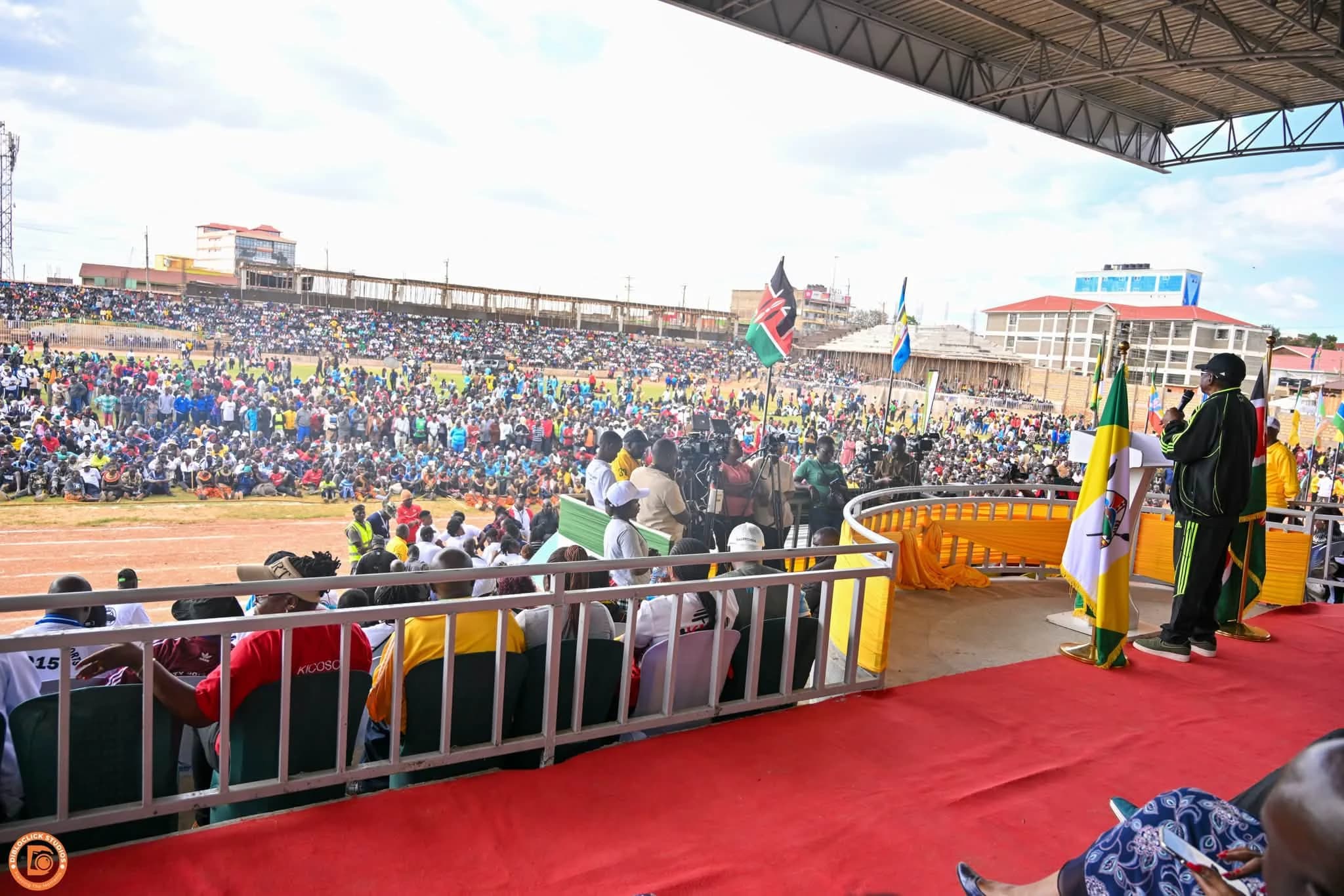
Something important is happening at the 2026 KICOSCA Games in West Pokot that deserves attention beyond the usual sporting headlines. For a few days, Kenya is experiencing a different understanding of itself. Public servants from counties separated by hundreds of kilometres, different languages, cultural practices and historical experiences are meeting on common ground. They are competing, celebrating, sharing meals, exchanging ideas and forming friendships that would otherwise take years to develop.
The participation of Wajir and other counties making their maiden appearances gives the gathering a particularly powerful dimension. It is not simply an expansion of a sporting competition. It is an expansion of the national family. The deeper question is whether Kenya can take the spirit being demonstrated in West Pokot and translate it into how the country distributes opportunities, manages public institutions, recruits employees and treats citizens from different communities.
Kenya has 47 counties, but geographical boundaries should never become psychological or cultural boundaries. A Kenyan should not feel that their opportunities, identity or sense of belonging are restricted to the county where they were born.(Education News Kenya — https://educationnews.co.ke/news/beyond-47-county-flags-how-kicosca-is-slowly-building-cohesion-across-kenya)
National integration requires more than constitutional declarations. It requires everyday experiences that allow citizens to recognise one another as fellow owners of the same country. Imagine a professional from Wajir working comfortably in West Pokot, a teacher from Turkana serving in Kisii, a nurse from Bungoma building a career in Garissa and an administrator from Samburu contributing to development in Mombasa. Such interactions would make national unity a lived experience rather than an occasional political slogan.
KICOSCA offers a glimpse of that possibility. When participants meet outside their familiar environments, they begin to understand that the people they previously knew through stereotypes are colleagues, competitors, friends and fellow Kenyans. The sporting field becomes a meeting point where unfamiliar communities discover common interests, an important foundation for a country seeking to strengthen national consciousness.
One of the unintended challenges of devolution is the possibility of interpreting county identity as exclusive ownership of local opportunities. Devolution was intended to bring government closer to citizens, promote equitable development and strengthen participation. It was never intended to divide Kenyans into communities that can only belong or work within particular geographical boundaries. A county is an administrative and development unit, not an ethnic possession.
KICOSCA should therefore provoke a national conversation about whether Kenyans genuinely regard all 47 counties as parts of one shared home. The answer should be reflected in employment, business opportunities, professional mobility, leadership and access to public services. A Kenyan should be able to settle, work, invest and contribute to any county without encountering discrimination because of their ethnic background.
Perhaps the most practical legacy KICOSCA could inspire is a change in how county governments approach ethnic diversity in public employment. It is not enough for counties to invite one another to sporting competitions and cultural celebrations while failing to reflect the country's diversity in their workplaces.
Article 232 of the Constitution requires representation of Kenya's diverse communities in the public service and equal opportunities for appointment, training and career advancement across ethnic groups. Section 65(1)(e) of the County Governments Act provides for at least 30 per cent of vacant entry-level county public service positions to be filled by candidates who are not from the dominant ethnic community. The employment equity provisions introduced through the 2020 amendments further require counties to address underrepresentation and develop appropriate employment equity plans.
These are not symbolic recommendations. They form part of the legal framework governing public employment. The challenge is implementation. County Public Service Boards should demonstrate that recruitment is open, competitive, merit-based and consistent with constitutional requirements on ethnic representation.
A person from Wajir should not feel like an outsider when applying for an advertised position in West Pokot, and a person from West Pokot should not feel unwelcome when seeking an opportunity in Wajir. The objective is not to displace local communities but to ensure that the public service genuinely reflects the diversity of Kenya. KICOSCA could become a catalyst for a national conversation on employment diversity, challenging counties to examine their workforce composition and remove unnecessary ethnic barriers.
The people meeting at KICOSCA are not only athletes. They are public servants with different professional experiences, technical skills and institutional knowledge, which presents an opportunity to establish lasting networks between county administrations. A health professional from one county can exchange ideas with colleagues from another, agricultural officers can share successful practices, and education officers can learn from different approaches to service delivery.
KICOSCA could inspire structured inter-county professional exchange programmes that allow public servants to learn from one another and improve service delivery. The sporting competition would then become the starting point for broader institutional cooperation.
West Pokot's hosting of the 13th edition adds another dimension to the integration conversation. When a county hosts participants from across Kenya, it assumes a responsibility beyond providing sporting facilities. It becomes a temporary national home. Visitors experience the county, its people, traditions, hospitality and economic potential, while the host community interacts with people whose backgrounds and experiences may be very different from its own.
National unity cannot be built by expecting citizens to understand communities they have never encountered. People must meet, interact and discover one another, and develop relationships that make discrimination and prejudice increasingly difficult to sustain.
The ultimate measure of national integration should be whether a Kenyan feels a sense of belonging wherever they travel within the country's borders. A citizen from Wajir should feel at home in West Pokot, a resident of Turkana should feel welcome in Mombasa, and a professional from Kisii should be able to pursue opportunities in Garissa without ethnic suspicion.
That is the Kenya KICOSCA should inspire: one where county identity enriches national identity rather than competes with it, where cultural differences are celebrated rather than weaponised, and where employment and development opportunities are determined by fairness, merit and constitutional principles. The 2026 games should not be remembered only for their champions and sporting records. Their greater legacy should be the relationships established between communities that might otherwise have remained strangers.
Perhaps the most important trophy at KICOSCA is one that cannot be placed in a cabinet. It is the friendship between a participant from Wajir and another from West Pokot, the professional relationship between public servants from different regions, and the realisation that a Kenyan does not need to share another person's language, surname or geographical origin to recognise them as family.
Kenya has spent decades discussing national unity. KICOSCA provides an opportunity to practise it. The next step is to ensure that the spirit witnessed on the sporting field enters county offices, public institutions, workplaces, schools, businesses and communities. That would be the greatest victory KICOSCA could give Kenya.







Reader Discussion (0)
Sign in to comment