







Kenya's ambition to establish comprehensive schools as integrated institutions is facing an administrative contradiction that continues to undermine the smooth coordination of basic education. At the centre of the challenge is Early Childhood Development Education (ECDE), which operates under county governments while primary, junior and senior school education falls under the national government.
The arrangement has created a situation in which teachers working within the same school compound, serving children on the same educational pathway, are governed by two different employment and administrative structures.
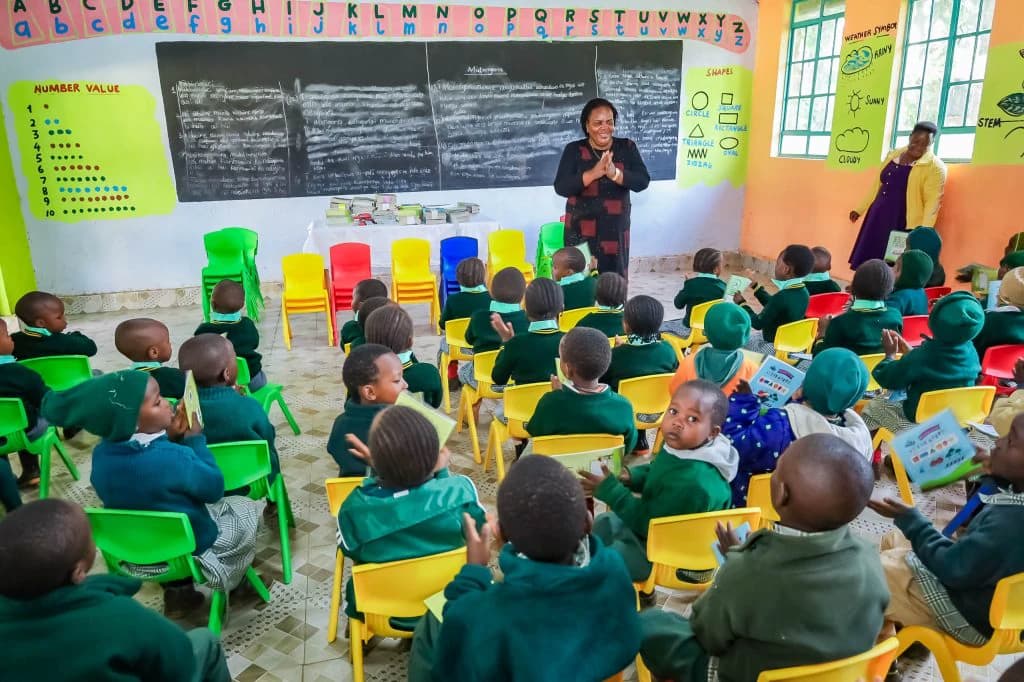
An ECDE teacher may work in the same institution as a Grade 1 teacher, share facilities and participate in activities aimed at improving learners' educational outcomes, yet the two have different employers, remuneration arrangements, professional management systems and career progression structures.
This is one of the most visible contradictions in the implementation of the comprehensive school concept. While education reforms seek to promote continuity from pre-primary to senior school, the administrative framework still separates the foundation of basic education from the rest of the system.
The division is rooted in the Constitution, which assigns pre-primary education to county governments, while the national government is responsible for primary, secondary and university education. Consequently, counties employ ECDE teachers, while the Teachers Service Commission (TSC) manages teachers serving in the national government education system. However, the constitutional division of responsibilities was never intended to create a lower professional standard for teachers handling the youngest learners.
When one school has two employers
The situation becomes particularly complicated in comprehensive schools where ECDE centres operate within primary school compounds.
A headteacher may be expected to coordinate the entire institution's academic activities, ensure discipline, monitor learning outcomes and provide leadership. However, the ECDE teachers working within the same compound may not fall directly under the headteacher's employment and disciplinary authority. This creates potential conflicts over supervision, accountability, performance management, staff deployment and institutional decision-making.
For instance, when an ECDE teacher is absent, underperforms or requires disciplinary intervention, the headteacher may have to involve county education officials because the teacher's employer is the county government.
The situation raises a fundamental question: how can a comprehensive school operate as one institution when its teachers answer to different administrative authorities?
The challenge is not that counties employ ECDE teachers. That responsibility is constitutionally assigned to them. Rather, it is the absence of sufficiently harmonised management arrangements that can make the different structures function as one education system.
How professionalism in ECDE has come under pressure
The separation has also exposed weaknesses in recruitment, professional supervision, remuneration and career development in some counties.
In 2024, the Kenya Union of Pre-Primary Education Teachers raised concerns about alleged political interference in ECDE recruitment, questioning whether some county governments were consistently observing merit-based procedures and professional qualification requirements. The union's concerns included allegations that employment opportunities were sometimes influenced by political connections rather than professional merit. Such allegations should not be generalised to all counties, but they highlight the need for transparent recruitment.
Audit findings have provided further evidence of weaknesses in public-sector recruitment. Reports concerning the 2023/24 financial year identified recruitment irregularities involving county employees, including ECDE teachers. Uasin Gishu County was among the administrations facing questions over documentation supporting the recruitment of 181 employees. Other counties, including Trans Nzoia, Nairobi, Samburu, Narok and Nandi, also featured in reported recruitment concerns. The issues included inadequate appointment documentation and insufficient evidence that established recruitment procedures had been followed.
Such weaknesses undermine public confidence in the recruitment process and make it difficult to guarantee that every ECDE classroom is staffed through transparent and professionally defensible procedures.
Professional registration cannot be optional
Another concern is the distinction between the authority to employ ECDE teachers and the responsibility to regulate the teaching profession.
County governments have the constitutional responsibility to employ pre-primary teachers. However, employment authority should not be confused with professional registration. Legal proceedings involving ECDE recruitment have affirmed the importance of TSC registration in ensuring that teachers meet the applicable professional requirements.
This distinction is critical because devolution does not remove the need for nationally recognised professional standards. A county government should not use its recruitment authority to bypass the qualifications, registration and professional requirements applicable to teachers.
Poor remuneration and unstable employment conditions
Professionalism also depends on the working environment.
Parliamentary discussions and reports on ECDE teachers have highlighted concerns about low remuneration, delayed salaries, inadequate employment protection and inconsistent terms of service across counties. In some areas, ECDE teachers have historically depended on arrangements involving parents and school management committees, exposing them to unreliable sources of remuneration.
This is particularly concerning because early childhood educators handle a critical stage of human development that requires patience, specialised training and consistent professional commitment. A teacher who faces persistent uncertainty over salary, employment security and career progression may struggle to enjoy the professional stability needed to concentrate fully on classroom responsibilities.
It is therefore important that counties establish clear employment structures that recognise ECDE teaching as a professional career and not as a temporary community service.
Inadequate supervision has created another gap
The World Bank's research on devolution and service delivery in Kenya also highlighted weaknesses in ECDE quality assurance. In some counties, field officers were responsible for supervising exceptionally large numbers of ECDE centres across extensive geographical areas. The study documented situations where individual officers were expected to monitor more than 200 centres across two subcounties, while others were responsible for up to 98 centres in a single subcounty.
Such workloads make regular classroom observation, professional mentorship and effective monitoring difficult. The problem is compounded when officers lack adequate transport, facilitation and resources to conduct inspections, particularly in remote communities. Consequently, some centres may operate for extended periods without adequate professional supervision.
This does not mean that ECDE teachers are inherently unprofessional. Rather, it shows how institutional weaknesses can compromise the enforcement of professional standards.
Career progression and professional development
Another challenge concerns the limited and uneven opportunities available to ECDE teachers seeking professional advancement.
Unlike teachers employed by the TSC, whose career progression is guided by nationally established frameworks, county-employed ECDE teachers operate under different county employment structures. This can result in differences in promotion opportunities, recognition of additional qualifications, training and remuneration. An ECDE teacher who upgrades academic qualifications may not necessarily enjoy a predictable promotion pathway comparable to colleagues employed by the TSC.
The situation raises questions about how Kenya intends to attract and retain highly qualified early childhood educators while maintaining different professional development arrangements across its counties. The government should also strengthen continuous professional development so that ECDE teachers remain equipped to implement curriculum changes, undertake learner assessments and respond to the changing needs of young children.
The learner should not suffer because of government structures
Perhaps the greatest concern is the potential impact of this administrative separation on learners.
ECDE is not an isolated stage of education. It establishes the foundation for literacy, numeracy, communication, social interaction and other essential competencies required in subsequent grades. A child moving from pre-primary to Grade 1 should experience continuity in learning, assessment and professional support.
However, when the institutions responsible for these stages operate under poorly coordinated management arrangements, the learner risks experiencing differences in teaching standards, supervision and resource allocation. It is therefore necessary for national and county governments to develop a coordinated framework that protects the continuity of education without disregarding the constitutional responsibilities assigned to each level of government.
The comprehensive school model should not be reduced to placing different levels of education within one physical compound. It should represent an integrated institution with coordinated academic leadership, professional standards, learner support and accountability.
The government should consider establishing a framework that allows headteachers to coordinate the academic operations of ECDE and the other sections while respecting the employment authority of county governments. There should also be harmonised professional standards, transparent recruitment, structured career progression, adequate remuneration and regular professional development.


Reader Discussion (0)
Sign in to comment