
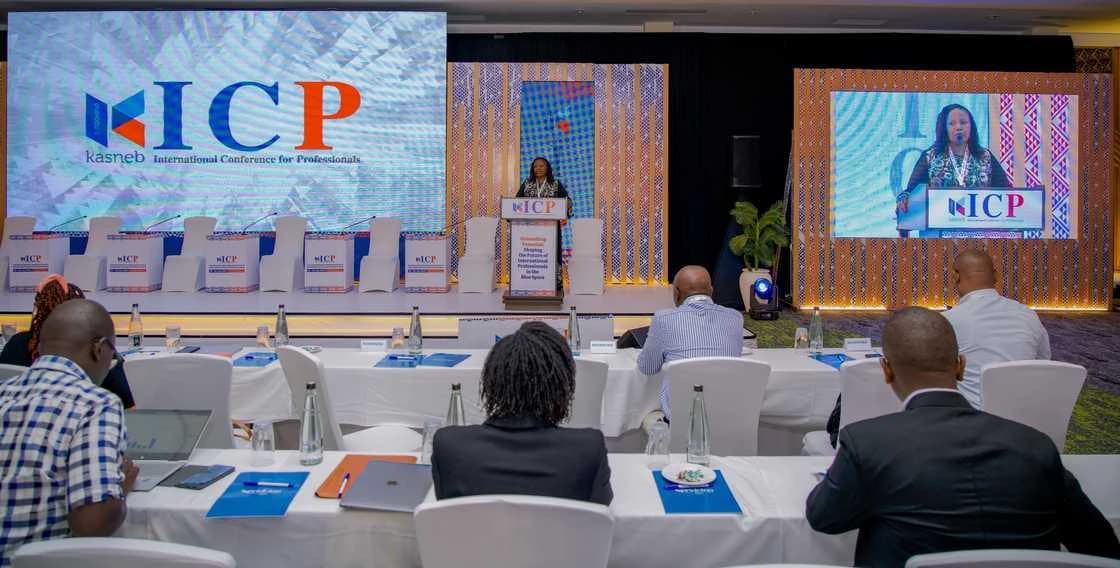








The Kenya Accountants and Secretaries National Examinations Board (KASNEB) has unveiled revised professional examination syllabuses incorporating artificial intelligence (AI) and other emerging technologies to equip graduates with skills relevant to the changing job market.
The curriculum overhaul seeks to strengthen professional training by equipping accountants, financial analysts, company secretaries and credit professionals with practical digital competencies, stronger ethical foundations and workplace-relevant skills.
The revised syllabuses were officially launched during the second KASNEB International Conference for Professionals (KICP) gala dinner held in Nairobi on Thursday.
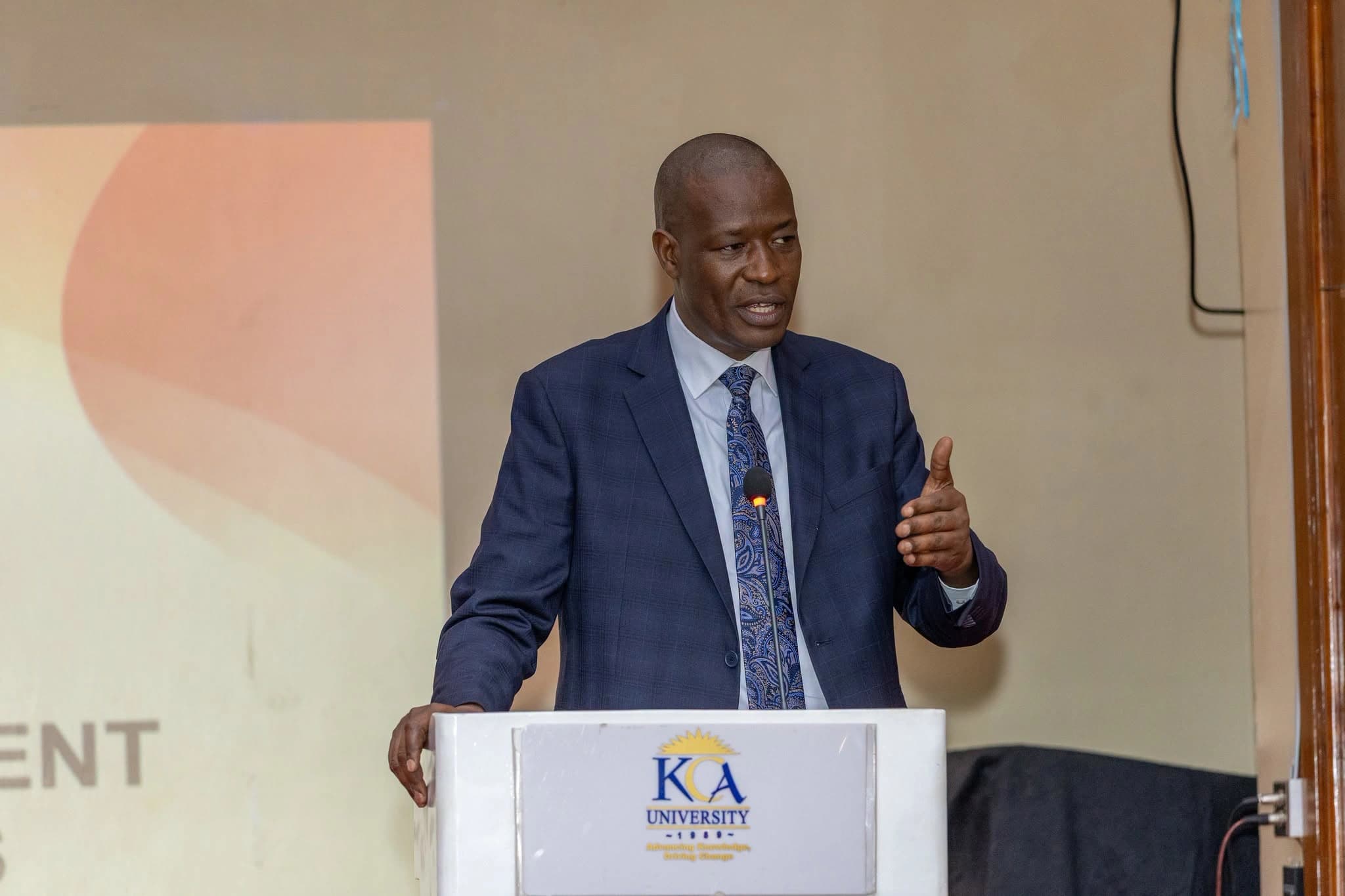
KASNEB Chief Executive Officer Prof Nicholas K. Letting said the review was designed to ensure professional qualifications remain relevant amid rapid technological advancements and changing employer expectations.
He explained that the revised training framework would help professionals transition from traditional manual processes to technology-driven systems that improve efficiency, accuracy and accountability.
“We want our accountants to move from manual processes to digital systems and use technology to prepare financial statements more efficiently,” Prof Letting said.
AI and digital accounting take centre stage
Among the major changes is the integration of emerging technologies into professional training, particularly artificial intelligence, digital accounting and electronic records management.
The revised syllabuses also strengthen training in forensic fraud examination, corporate governance, professional ethics and other competencies increasingly required in modern organisations.
The changes recognise that professionals entering the accounting, financial and corporate sectors must understand not only conventional principles but also how technology is transforming financial reporting, auditing, decision-making and institutional management.
For accountants, the transition to digital financial systems is expected to place greater emphasis on technological proficiency, data management and the ability to use modern tools in professional practice.
The board is also seeking to produce graduates capable of detecting financial irregularities, strengthening internal controls and promoting transparency in public and private institutions.
The review covers four major professional qualifications: Certified Public Accountant (CPA), Certified Secretaries (CS), Certified Investment and Financial Analyst (CIFA) and Certified Credit Professionals (CCP).
The revisions incorporate competency-based training and occupational standards to strengthen the practical dimension of professional education.
Under this approach, candidates will be expected to demonstrate workplace-relevant competencies rather than rely exclusively on theoretical knowledge and examination performance.
The emphasis on practical skills is intended to narrow the gap between professional qualifications and the responsibilities graduates encounter after entering employment.
Curriculum benchmarked internationally
KASNEB has benchmarked the revised syllabuses against professional qualifications and training frameworks in more than 25 countries.
The international comparison included Singapore, Malaysia, India, the United States, Canada and Australia, among other countries.
According to Prof Letting, the exercise was intended to ensure Kenyan professionals acquire qualifications that remain competitive in an increasingly interconnected global economy.
The review also introduces micro-credentials, allowing professionals to develop specialised competencies and improve their marketability in a changing employment environment.
KASNEB Board Chairperson Dr Percy Opio said the curriculum review, undertaken every five years, was necessary to ensure the board's qualifications continued meeting employers' expectations.
He noted that strengthening professional ethics and introducing specialised learning opportunities would improve the relevance and competitiveness of graduates.
Beyond curriculum changes, KASNEB is planning to strengthen examination integrity through biometric identification and digital examination monitoring.
The proposed measures are intended to curb impersonation, examination malpractice and other forms of cheating.
The board currently examines approximately 30,000 candidates in each examination sitting and has produced more than 60,000 qualified professionals.
It has set a target of producing an additional 20,000 professionals over the next five years as part of efforts to expand the country's pool of skilled professionals.
New syllabuses take effect in April 2027
The first examinations under the revised syllabuses are scheduled for April 2027.
KASNEB is finalising transition arrangements to guide candidates already pursuing qualifications under the existing curriculum and ensure they are not disadvantaged by the changes.
The transition will be particularly important for continuing students who need clarity on examination requirements, applicable syllabuses and how their progress will be recognised under the revised framework.
The overhaul comes at a time when employers are increasingly demanding professionals who combine technical knowledge with digital literacy, ethical judgement, analytical ability and practical workplace experience.
By incorporating artificial intelligence, competency-based learning, occupational standards and internationally benchmarked content, KASNEB is positioning its professional qualifications to respond to a labour market undergoing significant technological transformation.
The success of the reforms will ultimately depend on how effectively the new competencies are delivered, assessed and translated into improved employment opportunities for graduates.
Reader Discussion (0)
Sign in to comment