







Working professionals, teachers, entrepreneurs and school leavers can now pursue university education without attending physical lectures every day. This guide lists the universities offering distance learning, the courses available, indicative tuition costs and what is known about their student enrolment.
Kenyan universities are increasingly embracing online and distance learning, opening new opportunities for people who want to advance their education while keeping their jobs, businesses and family responsibilities. The expansion of Open, Distance and e-Learning (ODeL) is changing access to higher education by allowing students to pursue certificates, diplomas, bachelor's degrees, postgraduate diplomas, master's degrees and doctoral qualifications without necessarily relocating to a campus.
Some universities offer fully online programmes, while others use blended arrangements that combine virtual instruction with physical examinations, residential sessions, teaching practice and practical training. The development is particularly important for teachers, civil servants and other working professionals who may find conventional full-time study difficult to balance with their careers.
Universities offering online and distance learning in Kenya
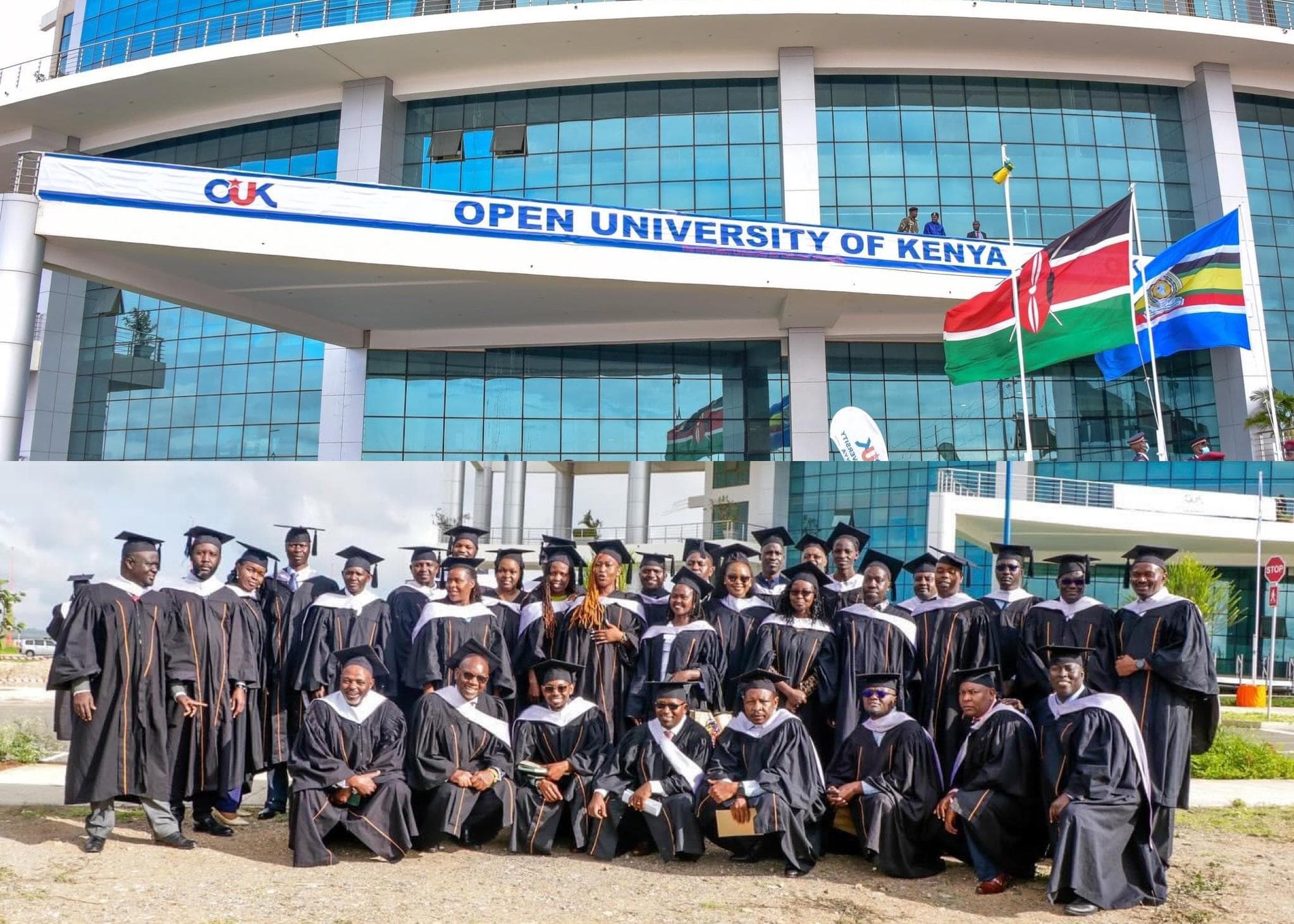
1. Open University of Kenya (OUK)
The Open University of Kenya is a public institution established specifically to expand access to higher education through technology-driven learning. Unlike conventional universities, it is designed around flexible online education, allowing students to study from different parts of the country without relocating.
Its undergraduate programmes include Bachelor of Commerce, Bachelor of Data Science, Bachelor of Economics and Statistics, Bachelor of Education (Arts), Bachelor of Entrepreneurship and Business, Bachelor of Public Administration, Bachelor of Public Communication, Bachelor of Science in Computer Science and Bachelor of Agritechnology and Food Systems. The institution also provides postgraduate studies and professional development opportunities.
Tuition costs: its published 2025/2026 fee schedule indicates that most undergraduate programmes cost about Sh79,000 annually, with some costing more. Selected programmes have annual fees of Sh86,000, while others cost about Sh105,000. Published postgraduate examples include Sh187,500 for selected master's programmes and Sh337,500 for selected doctoral programmes, subject to the programme's fee structure. A four-year undergraduate programme charging Sh79,000 annually would cost about Sh316,000 in tuition.
2. Kenyatta University
Kenyatta University offers online and distance education through its Digital School of Virtual and Open Learning (DSVOL). It provides certificate, diploma, undergraduate and postgraduate programmes for learners who cannot attend conventional campus classes, in areas including education, business, agriculture, law, social sciences, health sciences and technology.
Its programmes include Bachelor of Commerce, Bachelor of Human Resource Management, Bachelor of Education (Arts), Bachelor of Arts, diploma programmes in various disciplines and selected postgraduate programmes.
Tuition costs: published examples indicate that selected bachelor's programmes cost about Sh150,504 annually, while some Bachelor of Arts programmes cost about Sh139,636. Published diploma examples are about Sh75,248 annually. The university also uses regional learning centres to support students who require physical academic sessions.
3. Mount Kenya University (MKU)
Mount Kenya University provides flexible education through its Directorate of Open, Distance and Electronic Learning. Students can pursue certificates, diplomas, bachelor's degrees, postgraduate qualifications, master's degrees and PhDs in business, information technology, education, procurement, public administration and project management.
Tuition costs: MKU's published 2026 prospectus gives programme-specific charges. For example, selected Master of Education programmes offered through distance, institution-based and electronic learning cost about Sh90,000 per semester. The university provides digital learning materials, although some programmes may require examinations or other academic activities at designated centres.
4. Jomo Kenyatta University of Agriculture and Technology (JKUAT)
JKUAT offers distance education through its School of Open, Distance and eLearning (SODeL). Its programmes include a Certificate in Information Technology, a Diploma in Information Technology, a Diploma in Purchasing and Supplies Management, Bachelor of Commerce, Bachelor of Business Information Technology, Bachelor of Science in Information Technology, Bachelor of Human Resource Management, Master of Business Administration, Master of Science in Project Management, Master of Science in Strategic Management and Master of Science in Procurement and Logistics Management. The university serves students interested in business, technology, procurement and management.
Application costs: published application charges are Sh1,000 for certificates, Sh1,500 for diplomas, Sh2,000 for bachelor's degrees and Sh2,500 for master's programmes. These are application charges, not tuition fees. Students should request the applicable SODeL tuition schedule.
5. The University of Nairobi
The University of Nairobi offers open, distance and e-learning opportunities through its various schools and academic departments. Its programmes include Bachelor of Education (Arts), Bachelor of Education (Science), Bachelor of Commerce, Bachelor of Arts, Bachelor of Adult Education and Community Development, Diploma in Adult Education and Community Development, Master of Arts in Peace Education and a Postgraduate Diploma in Education.
Tuition costs: a published Bachelor of Education (Arts) fee example indicates a total programme cost of about Sh311,264. Students taking Mathematics may pay about Sh315,880. The programme takes four calendar years and combines online instruction with scheduled physical academic sessions.
6. Egerton University
Egerton University offers flexible learning through its e-campus and other distance-learning arrangements. Its programmes cover library and information science, criminology, security management, psychology and community development, and include Bachelor of Library and Information Science, Bachelor of Arts in Criminology and Security Studies, Master of Arts in Criminology and Security Studies, Master of Arts in Security Management, Bachelor of Arts in Psychology, Bachelor of Science in Community Development Studies, Master of Education in Education Management and Master of Science in Community Studies and Extension. The university provides digital learning materials and academic resources for students studying away from its campuses.
Tuition costs: applicants should obtain the current programme-specific e-campus fee schedule because charges vary by course and academic level.
7. Kenya Methodist University (KeMU)
Kenya Methodist University provides digital and blended learning through its Digital Campus. Its programmes include Master of Science in Health Systems Management, Master of Science in Agriculture and Rural Development, Master of Science in Information Science, Bachelor of Science in Health Systems Management, Bachelor of Science in Agriculture, Bachelor of Science in Information Science, Diploma in Business Administration, Diploma in Business Information Technology and Diploma in Horticulture. It also provides part-time study arrangements for learners who need flexible schedules.
Tuition costs: fees vary by programme and academic level. Applicants should request the current Digital Campus fee schedule.
8. Management University of Africa (MUA)
The Management University of Africa offers online and distance learning through its Open, Distance and eLearning directorate. Its programmes cover business, leadership, management, development studies and information technology, and include Bachelor of Business and Information Technology, Bachelor of Commerce, Bachelor of Arts in Development Studies, Bachelor of Management and Leadership, Master of Business Administration, Master of Arts in Development Studies, Master of Management and Leadership, Diploma in Business Information Technology, Diploma in Information Technology, Diploma in Counselling Psychology, Certificate in Entrepreneurship and Certificate in Information Science. The university also provides professional training associated with ACCA, CPA and CPS.
Tuition costs: applicants should obtain the current ODeL fee schedule because charges differ across programmes.
9. University of Embu
The University of Embu provides flexible learning through its Directorate of Open, Distance and e-Learning. Its academic areas include business, education, agriculture, science, technology, health sciences, humanities and social sciences. The university targets working professionals, entrepreneurs, adult learners and students who cannot attend regular physical classes.
Tuition costs: students should obtain programme-specific quotations from the university's admissions office.
10. Kabarak University
Kabarak University provides different modes of study, including digital and blended learning, in business, education, science and technology. The institution serves learners who want to pursue higher education while managing employment and other responsibilities.
Tuition costs: fees depend on the programme and mode of study. Applicants should request the current digital or blended-learning fee schedule.
How much does online university education cost in Kenya?
The published examples below indicate the financial commitment required for distance education:
- Open University of Kenya, selected bachelor's degrees: Sh79,000 annually
- Kenyatta University, selected bachelor's degrees: Sh139,636 to Sh150,504 annually
- Kenyatta University, selected diplomas: Sh75,248 annually
- Mount Kenya University, selected Master of Education programmes: Sh90,000 per semester
- University of Nairobi, Bachelor of Education (Arts): Sh311,264 in total
- JKUAT, bachelor's application: Sh2,000
- JKUAT, master's application: Sh2,500
These examples come from different published fee schedules and academic years and are not a uniform comparison of equivalent programmes. They should not be read as the complete cost of studying at each institution. Students should also budget for registration, examinations, research, practical sessions, graduation and other applicable charges.
Enrolment figures help show the scale of digital education and the growing demand for flexible university programmes. The available institutional figures point to the Open University of Kenya and Kenyatta University as major players. OUK has publicly reported a student population exceeding 35,000, while Kenyatta University's Digital School of Virtual and Open Learning has reported more than 8,000 students.
These figures should be interpreted carefully because reporting periods and definitions of enrolment may differ. The following is therefore a ranking of the institutions with identifiable published enrolment information, not a definitive league table of all ten universities.
First, the Open University of Kenya leads among the institutions with published figures, reporting more than 35,000 students. Its technology-driven model makes online education central to its operations. The government had also announced an ambition to grow its enrolment to 50,000 by the end of 2026.
Second, Kenyatta University's Digital School of Virtual and Open Learning has reported more than 8,000 students, showing its established presence in open and distance education.
Mount Kenya University, JKUAT, the University of Nairobi, Egerton University, Kenya Methodist University, the Management University of Africa, the University of Embu and Kabarak University also provide flexible learning. Comparable, independently verified ODeL enrolment figures for these institutions were not established in the available information, so assigning them third to tenth positions without actual student numbers would be misleading. A university's overall enrolment should also not be confused with its distance-learning enrolment. Mount Kenya University's total enrolment, for example, includes conventional and other learning modes and cannot be used to place it in an ODeL ranking.
The expansion of distance learning presents an opportunity for teachers seeking academic advancement without leaving the classroom. Teachers can explore additional qualifications in education management, curriculum development, educational technology, leadership, psychology and other disciplines, and the flexibility of online learning can reduce the disruption of attending regular campus lectures. Civil servants, entrepreneurs and private-sector employees can likewise pursue qualifications while remaining economically active.
An additional qualification does not automatically guarantee promotion, employment or professional recognition. Teachers should confirm that their intended qualifications meet the applicable Teachers Service Commission requirements.
Before paying fees, prospective students should establish whether their preferred programme is fully online or blended. They should also confirm whether the university and programme are accredited, the KCSE grade or previous qualifications required, whether examinations are online or at designated physical centres, whether practical sessions, teaching practice or residential attendance are compulsory, the complete tuition and additional charges, and whether the programme qualifies for any government student financing.
The growing adoption of online and distance learning is widening access to higher education, particularly for people who previously struggled to combine study with employment and family responsibilities. The Open University of Kenya's relatively affordable published undergraduate fees show that university education can be pursued through flexible models without the expense of conventional residential learning.
As more universities embrace digital platforms, competition is likely to grow around affordability, quality of instruction, student support and accessibility. For Kenyan teachers and working professionals, the opportunity is significant: acquiring additional qualifications while continuing to earn a living.



Reader Discussion (0)
Sign in to comment