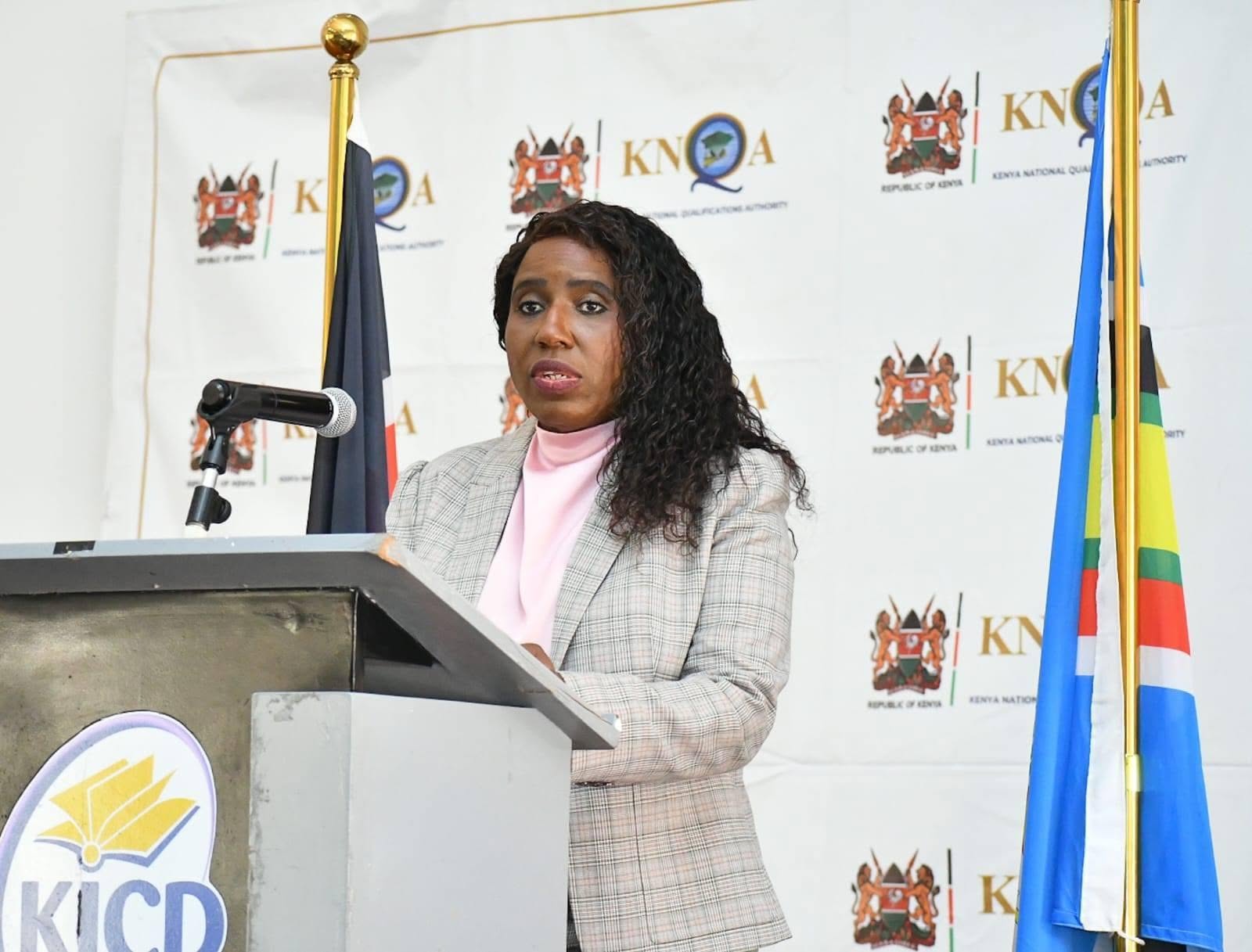
- MoE has directed universities, TVETs and colleges to accelerate registration of their qualifications and graduate records on the National Qualifications Database.
- The database will allow instant verification of accredited qualification-awarding bodies and help curb the use of fake certificates.
- KNQA data has shown that only 22 per cent of universities are registered as Qualification Awarding Bodies and just 13 per cent of their qualifications have been registered so far.
Institutions will soon be able to verify academic and professional qualifications at the click of a button through the National Qualifications Database (NQD), managed by the Kenya National Qualifications Authority (KNQA).
The Ministry of Education has directed universities, Technical and Vocational Education and Training (TVET) institutions, colleges and other qualification-awarding institutions to accelerate the registration of their qualifications and graduate records in the NQD. The directive was issued by Dr Beatrice Inyangala, Principal Secretary, State Department for Higher Education and Research, who represented Education Cabinet Secretary Julius Ogamba during a consultative meeting on the Kenya National Qualifications Framework (KNQF) and NQD held on Monday, September 1, 2026, at the Kenya Institute of Curriculum Development (KICD).
Inyangala said the database will play a critical role in ensuring that qualifications awarded in Kenya are credible, recognised and comparable both locally and internationally.
“The Ministry will continue to support stronger coordination among the Ministry, Commission, KNQA, TVETs, universities and other relevant agencies to ensure that implementation is practical, coordinated and responsive,” she said. The PS added that the government expects all universities to be integrated into the system by the end of the year, noting that the database would make it easier for institutions to share and verify qualification data.
ALSO READ:
MPs raise alarm Over Stalled Sh69.9 Million Luanda TVC Project
KNQA Chief Executive Officer Dr Alice Kande said registering accredited qualifications, programmes and graduate records in the NQD will enhance the visibility, comparability, mobility and verifiability of Kenyan qualifications both nationally and internationally. She said the system would enable stakeholders to identify accredited qualification-awarding bodies and help curb the issuance and use of fake certificates. “We are glad to see the progress made by the universities. At the click of a button, you will be able to see which are duly accredited qualification-awarding bodies within the university space,” she said, adding that the database would also help in identifying fraudulent certificates and individuals presenting fake or misrepresented qualifications.
Commission for University Education (CUE) Chief Executive Officer Prof Mike Kuria said the initiative would strengthen the credibility of university qualifications and help combat certificate fraud, providing a platform through which employers and other stakeholders can confirm the authenticity of a person’s academic credentials. “It is not only targeting universities. It will also target TVETs and other qualifications. We are strengthening an ecosystem, and the university is part of it. This will strengthen what we do,” he said, noting that CUE has worked to ensure certificates issued by universities remain credible.
Grade 10 selection crisis: KEMIS hitches stall placement of 1.2 million learners
According to KNQA data, only 22 per cent of universities are currently registered as Qualification Awarding Bodies (QABs), compared with 97 per cent of national polytechnics, 10 per cent of professional examination boards, 39 per cent of specialised institutions, 100 per cent of foreign institutions and 67 per cent of national assessment and examination bodies. Overall, only 40 per cent of operating Qualification Awarding Bodies have been registered with KNQA.
The registration of qualifications is also progressing slowly. Universities have registered 13 per cent of their qualifications, compared with 56 per cent for national polytechnics, 40 per cent for professional examination boards, 44 per cent for specialised institutions, 24 per cent for foreign institutions and 85 per cent for national assessment and examination bodies. Overall, only 35 per cent of mapped qualifications have so far been registered.
ALSO READ: Ex-Machakos chief officer charged over alleged forged academic certificates
The consultative meeting, attended by Vice-Chancellors from both public and private universities, focused on practical steps institutions will take to register with the NQD and strengthen implementation of the KNQF. Key areas discussed included the structure and implementation of the framework, its role in education and training, the registration of universities and academic programmes in the NQD, and the onboarding of graduate records. The meeting also examined progression pathways, including the Kenya Credit Accumulation and Transfer System (KCATS), Recognition of Prior Learning (RPL) and micro-credentials, along with their implications for universities and learners, as well as the roadmap for implementing the KNQF and NQD and the roles and responsibilities of stakeholders in ensuring successful implementation.
The government hopes the system will make it easier for employers and other institutions to authenticate qualifications while strengthening the credibility of Kenya’s education and training system.
By Obegi Malack
Get more stories from our website: Education News
To write to us or offer feedback, you can reach us at: editor@educationnews.co.ke
You can also follow our social media pages on Twitter: Education News KE and Facebook: Education News Newspaper for timely updates.
>>> Click here to stay up-to-date with trending regional stories