




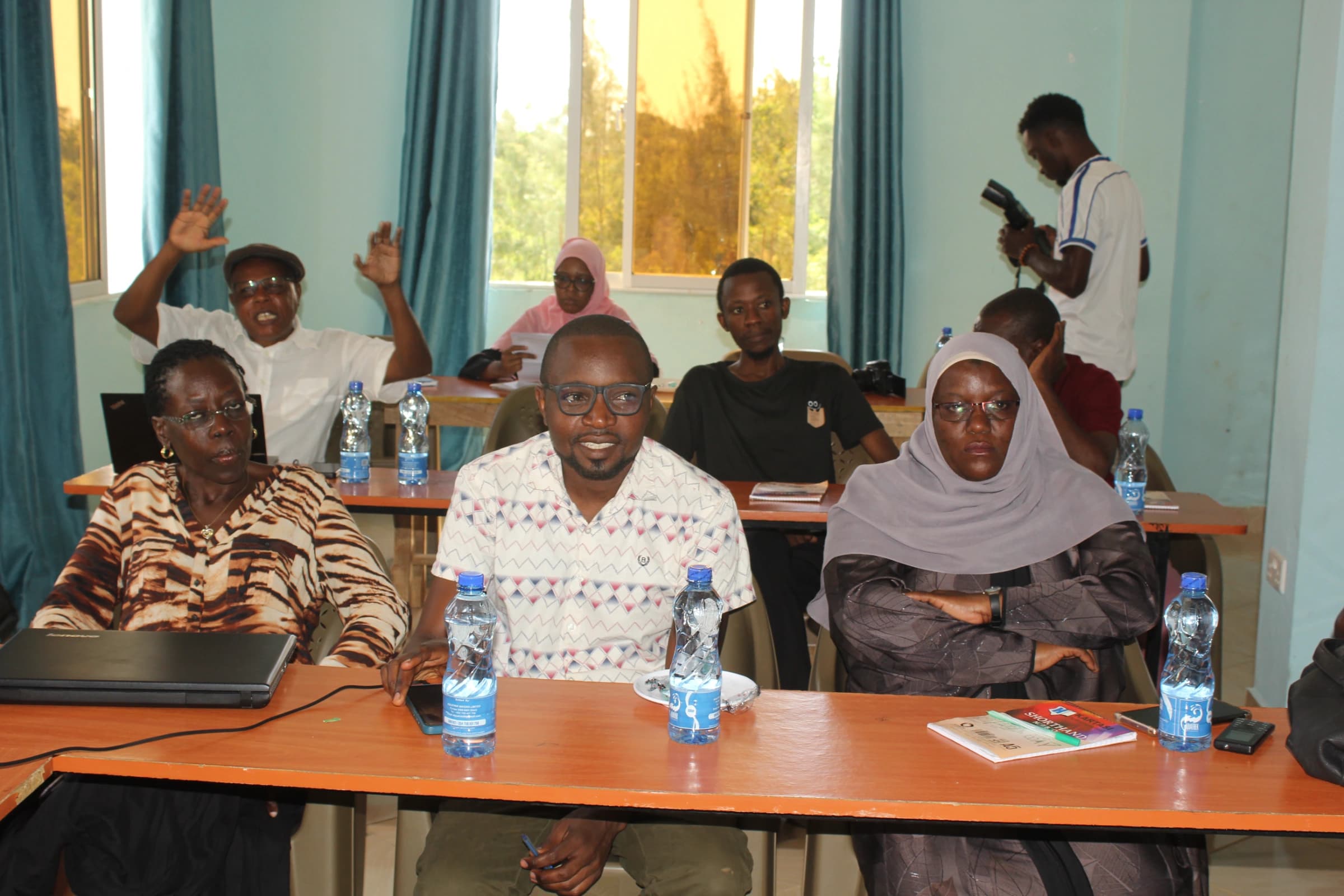





- Victor Ochieng’ examines some of the notable spelling differences between British and American varieties of English.
- He argues that learners should understand both systems while maintaining consistency in formal writing and examinations.
- The English enthusiast also explores spelling patterns, vocabulary differences and Kiswahili words adopted into English usage.
In the recent past, while studying English Language and Literature in the gelid land of Kikuyu, our lecturer taught us orthography in a unit called Grammar and its Usage. Orthography basically refers to the spelling system of a language. When talking about good grammar, we focus on aspects including correct sentence structure, subject-verb agreement, language pattern, parts of speech, tense, diction, idioms, punctuation, spelling, et cetera. In Better Spelling in 3 Minutes a Day, a good book I read recently, the putative authors – Harry H. Crosby and Robert W. Emery posit that spelling is one of the most noticeable features of good writing, and I absolutely agree.
British and American Spelling
On matters spelling – English variety – British or American – influences how words are spelt correctly in conformity of either variety. For instance, “spelt” is British while “spelled” is American. “Analogue” is British while “analog” is American. “Skillful” is British while “skilful” is American. “Travelling” is British, while “traveling” is American. “Programme” is British and “programme” is American. Therefore, let us dig deeper with sharp shafts of grammatical profundity.
What is Widely Accepted?
Somewhat, the good don told us that there is nothing wrong with using the British or American spelling. Only that you need to be consistent on usage of a particular spelling system. Generally, it is conventionally agreed that neither of the version is just right, but there are certain choices and preferences. For instance, I have a predilection for the British type. In the book titled Golden Tips: Skills in Composition Writing for Secondary Schools, Joseph Ndirangu advances that it is advisable to use the British variety of English at all times.
However, there are some native words which have been accepted as English words in some countries. By and large, such words can be used as well. Again, the variety of English in common use in Africa is the British variety. This is more so in countries colonised by the British such as Kenya, Nigeria, Ghana, South Africa, et cetera – call them commonwealth countries. We should never be nagged by worry because the main reference material – Oxford Advanced Learner’s Dictionary – the 10th Edition – provides words in both American and British varieties.
Words with American Provenance
In actual sense, you should also endeavour (American “endeavor”) to make a giant list of words that are purely American in their philology. For Americans refer to some things using different words. For instance: Faucet (tap), elevator (lift), freeway (highway), sidewalk (pavement), et cetera.
“er” and “re”
Haply, in an examination situation, a candidate is hardly penalised (American “penalized”) for mixing these varieties or for being inconsistent with either. Albeit, for the sake of grammatical proficiency and profundity, we advise learners to stick like a tick to one variety. In this case, the British one. Firstly, there are words that end in “er” in American but in “re” in British spelling systems. For instance, we have: center, fiber, liter, theater and meter as American spelling. The same words in British are spelt as centre, fibre, litre, theatre and metre.
“se” and “ze”
Secondly, we have words that end in “se” in American but in “ze” in British spelling system. For instance, we have words like apologize, agonize, organize and criticize as American spelling. In British spelling, the words are written as apologise, agonise, organise and crticise. Therefore, in the same logic and train of thought, “organization” is American spelling, while “organisation” is British spelling.
“or” and “our”
Thirdly, there are words that end in “or” in American spelling but in “our” in British spelling. In American spelling, we have words like color, humor, labor, clamor and favor. In British spelling, they are written as colour, humour, labour, clamour and flavour.
“nse” and “nce”
Additionally, we have words that end in “nse” in American spelling, but in “nce” in British spelling system. In American spelling, think of words like defense, license and pretense. In British spelling, the three words are written as defence, licence and pretence. But take note of this: the word “advise” is a verb and “advice” is a noun. So, do not get confused about it.
Acceptance of Kiswahili Words
Advisedly, there are words in Kiswahili which have been grafted into the English lexicon. They are known, understood, and currently acceptable. So, you can use them when writing without enclosing them in quotation marks. Some of those words include: sukuma wiki, madrasa, debe, askari, ugali, shamba, matoke, rungu, matatu, harambe, wananchi, manyata, panga, et cetera.
READ ALSO: Kenyan, Ugandan MPs explore cooperation on AI and emerging technology regulation
Finally, while there are certainly many more varieties of English, these two are more prominent than the rest and taught in ESL/EFL programmes. Apart from difference in spelling and specific monikers of tools as aforementioned, pronunciation also differs. Therefore, ascertain the notable nuances in British and American pronunciations in words such as “issue” and “schedule”. Now, the glaring question is: Which is your way, learnt or learned? American or British?
By Victor Ochieng’
Victor Ochieng’ is an English enthusiast.
Email: vochieng.90@gmail.com | 0704420232
Get more stories from our website: Education News
To write to us or offer feedback, you can reach us at: editor@educationnews.co.ke
You can also follow our social media pages on Twitter: Education News KE and Facebook: Education News Newspaper for timely updates.
>> Click here to stay up-to-date with trending regional stories



Reader Discussion (0)
Sign in to comment