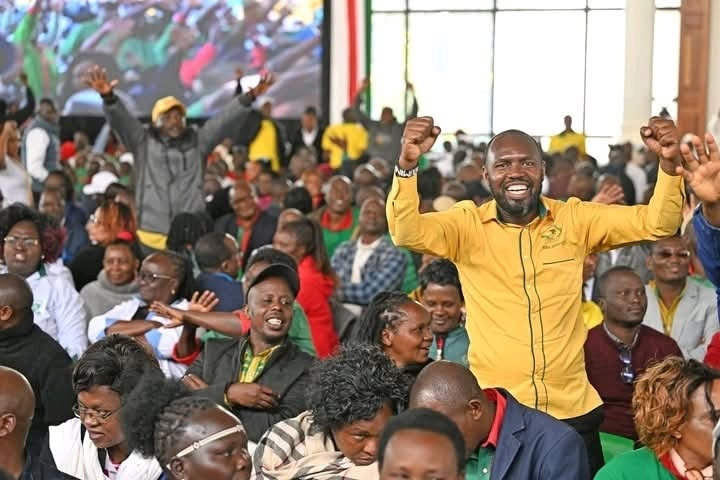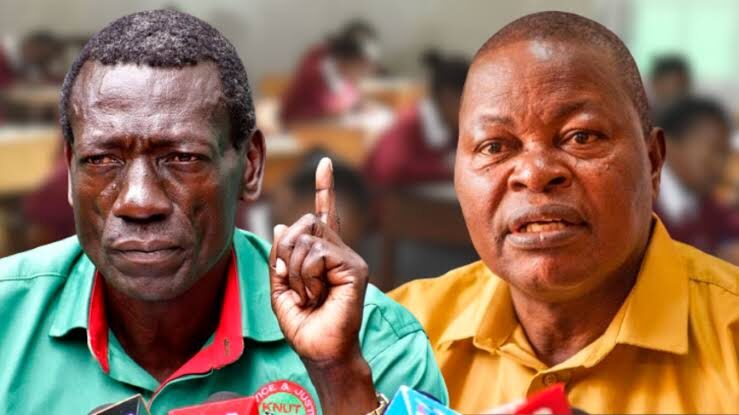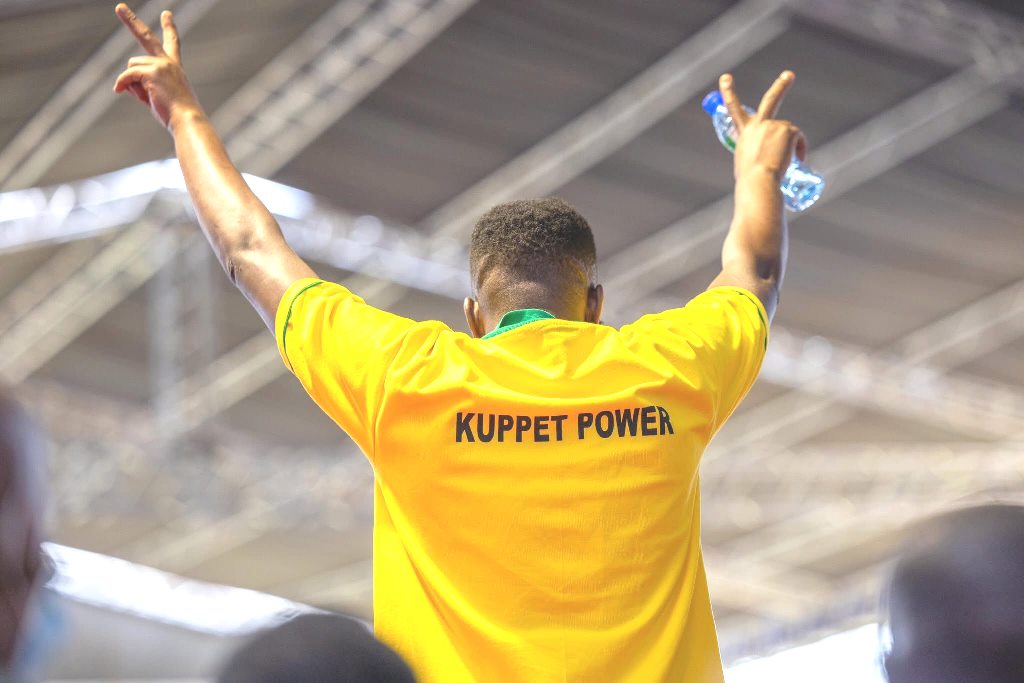
- Kenya’s labour movement has faced renewed scrutiny over whether union dues, governed by the Labour Relations Act rather than any constitutional mandate, are delivering proportionate value to members.
- Questions have emerged around transparency in union finances, internal democracy, leadership accountability and the speed of assistance to workers facing employment disputes.
- The debate has highlighted the influence of major union leaders alongside calls for stronger financial and democratic accountability across the movement.
Every month, workers surrender part of their salaries to unions. For thousands of Kenyan teachers, nurses, doctors, lecturers, civil servants, drivers, hotel workers, construction workers and employees across the private sector, the deduction is almost invisible on the payslip. But multiply that deduction by thousands, or tens of thousands, of workers and the picture changes dramatically.
Union dues can become a substantial financial stream supporting powerful organisations with national structures, elected officials, branch offices, lawyers, researchers, meetings, campaigns and negotiations, raising a question Kenya’s labour movement cannot afford to avoid: are workers’ unions still delivering enough value to justify the money and confidence workers place in them?
Yes, unions remain necessary, but no, they should not be beyond scrutiny. The Constitution protects trade unionism, workers need collective bargaining, and employees need representation when confronting powerful employers. But workers also deserve unions that are transparent, democratic, responsive and demonstrably effective.
One misconception should be killed immediately: the Constitution of Kenya does not prescribe a universal percentage of salary that every worker must pay as union dues. Article 41 protects workers’ rights to form, join and participate in the activities and programmes of trade unions, and it protects collective bargaining, but it does not set a fixed portion of salary that every worker must surrender, nor create an annual government budget for KNUT, KUPPET, UASU, KMPDU, KNUN or other unions. The detailed framework governing union subscriptions and deductions is principally contained in the Labour Relations Act, 2007, alongside the constitution and rules of individual unions, with Section 48 providing the legal framework for deduction of trade-union dues from members’ wages through the prescribed process. Union dues are membership subscriptions, not a constitutional tax, and the amount payable depends on applicable union rules and lawful deduction arrangements.
Kenya has a large and diverse trade-union movement. Teachers are represented by organisations including the Kenya National Union of Teachers (KNUT) and Kenya Union of Post Primary Education Teachers (KUPPET); university academic staff have the Universities Academic Staff Union (UASU); doctors have KMPDU; nurses have KNUN; and civil servants have the Union of Kenya Civil Servants (UKCS). Other unions represent workers in hospitality, commercial enterprises, transport, construction, ports and numerous other sectors, with the wider labour movement also operating through umbrella structures such as COTU-K. These organisations can wield enormous influence: they can bring workplaces to a standstill through lawful industrial action, sit across the negotiating table from government, influence labour legislation, mobilise thousands of workers, and shape national conversations about wages and working conditions.
ALSO READ:
Parents protest as Bomet, Kericho schools send learners home over fees
That power exists because workers act collectively. A single teacher walking into negotiations with a powerful employer carries far less weight than thousands of teachers presenting the same demand through an organised institution with lawyers, researchers, negotiators and established bargaining structures. A union can negotiate salaries, allowances, working hours, leave, promotions, career progression, job security, occupational safety and other employment conditions; it can represent workers during disciplinary proceedings, challenge unfair dismissal, assist members in employment disputes, research salary structures and living costs before negotiations, and mobilise workers when negotiations collapse. That is why declaring unions obsolete would be premature. The workplace has changed, but the imbalance between an individual worker and a powerful employer has not disappeared.
This is where workers’ curiosity about where the money goes becomes legitimate. Union dues can finance collective bargaining, which requires preparation, data analysis, legal interpretation of labour laws and agreements, member consultation, travel and meetings. They can also fund legal representation for workers facing dismissal, interdiction, disciplinary proceedings or other employment disputes that they could struggle to afford individually, as well as workplace representation through branches, officials and workplace representatives who handle grievances and communicate with members, requiring offices, staff, transport, communication and administration. Legitimate expenditure, however, does not mean unquestionable expenditure, and that is where accountability begins.
The phrase “workers’ welfare” is often misunderstood. It does not necessarily mean every member receives a cheque every month; depending on the union, its constitution and specific schemes, welfare may involve bereavement assistance, emergency support, hardship assistance, medical arrangements, insurance, education initiatives or other member programmes.
There is also welfare that cannot easily be measured in cash: a union that stops an unlawful dismissal has protected a worker’s livelihood, one that secures safer working conditions has protected workers’ health and dignity, and one that negotiates better leave terms or pay has delivered benefits that can continue for years. The objective question, then, is not simply whether a member received money from their union, but what protection and value their membership provided.
This is where the labour movement faces its biggest credibility test. Workers are increasingly asking how much their union collects monthly and annually, how much is spent on leadership, branches, lawyers and welfare, how much is invested, what assets the union owns, how much administration consumes, and, most pointedly, what members have actually gained. These are not anti-union questions; they are accountability questions. If workers finance the institution, they deserve to understand how it is run.
The amount of union dues itself can become controversial, since different unions operate under different subscription arrangements and there is no single deduction rate applicable to every Kenyan worker. Disputes can arise when members believe dues have been increased without sufficient consultation, or when workers question whether the level of subscription remains justified by the benefits delivered. Workers are members, not merely revenue sources, and if a union wants members to contribute more, it should be able to explain why, what additional services will be provided, what financial pressures exist, and what members actually approved. Transparency can prevent suspicion; silence can deepen it.
There is also an uncomfortable question about internal democracy: can an organisation created to defend democracy at the workplace afford weak democracy within its own structures? Workers sometimes complain about leadership disputes, election controversies, delegate systems, constitutional amendments and inadequate grassroots participation. Not every allegation is proven, but the complaints themselves reveal a trust problem. A union’s legitimacy does not come merely from having a national office; it comes from the confidence of its members, and if ordinary workers feel decisions are made far away from them, the union risks becoming disconnected from the people it exists to represent.
Union leaders are powerful figures who negotiate with government, speak to Parliament, appear on television and radio, organise workers, lead industrial action and influence national policy. Prominent leaders in Kenya’s labour movement, including KNUT Secretary-General Collins Oyuu, KUPPET Secretary-General Akelo Misori, UASU Secretary-General Dr Constantine Wasonga and COTU-K Secretary-General Francis Atwoli, operate within organisations that carry significant influence. That influence can be beneficial, since workers need leaders capable of confronting powerful employers and negotiating firmly, but it also creates responsibility: union leaders are custodians, not owners, of workers’ organisations, and leadership has to answer questions about finances, governance, representation and performance. The test of leadership should not be how frequently an official appears on television, but whether members feel represented when they need help.
Nothing weakens a union faster than internal warfare. When officials spend their time fighting over positions, legitimacy and control, ordinary workers can become the casualties, resources are consumed, attention is diverted, negotiations can suffer, and the credibility of the organisation declines. Recent disputes in Kenya’s labour movement have demonstrated how leadership and financial disagreements can end up before the courts, including cases involving demands for audits and challenges to union administration. Such disputes should not be used to condemn every union, but they are a warning that internal governance is not a side issue; it is central to the credibility of a workers’ organisation.
Kaimosi Friends University signs MoU with China’s Donghua University to boost research
There is another criticism unions cannot completely escape: politics. Labour issues and politics inevitably intersect, since government determines public-sector wages, Parliament passes labour legislation, tax policy affects workers, pension policy affects retirement, and economic policy affects employment. Unions therefore have every right to participate in public policy debates. But workers can still ask whether political activism sometimes overshadows workplace priorities, when the ordinary teacher wants manageable workloads, the nurse wants adequate staffing, the doctor wants workable conditions, the civil servant wants job security, and the private-sector worker wants decent pay and protection from unfair treatment. If political battles dominate while workplace grievances remain unresolved, members are entitled to question priorities.
Another source of frustration is the speed of union assistance. A worker facing interdiction, dismissal, disciplinary proceedings or another urgent workplace problem wants representation now, not next month, and delays in assistance, communication or feedback can erode confidence. Modern unions need modern systems: digital grievance tracking, fast communication, accessible officials, clear response timelines, regular financial reporting, online member services and transparent election processes. Kenya’s unions have a long history of fighting for workers, and that history deserves recognition, but it cannot alone guarantee relevance in a labour market, technology, public service, education sector and set of worker expectations that are all changing rapidly.
The answer to union weaknesses is not to abolish unions, but to demand better ones. Workers need organisations that negotiate effectively, provide legal support when employment rights are threatened, engage in collective bargaining with powerful employers, deliver welfare structures where promised, protect against unfair treatment, and offer a voice in policy. But they also need transparency, accessible leaders, democratic participation, financial accountability and evidence that their monthly subscriptions are producing results.
Residents of Nationokar in Turkana West get new ECDE facility ending years of long treks
A union should ultimately be judged from the perspective of the ordinary member, not the national official, branch boss, politician or commentator: does membership strengthen bargaining position, does the union defend workers when they face trouble, does it negotiate meaningful improvements, communicate with members, account for their money, and allow them to participate in choosing leaders and challenging decisions? If the answer is yes, the union has a compelling case for continued relevance. If the answer is no, workers have every right to demand reform.
Kenya does not need weaker workers’ unions. It needs stronger ones, capable of standing up to government and employers while also standing accountable before their own members. It needs leaders who understand that power is borrowed from workers and must be exercised responsibly, organisations that can negotiate aggressively without becoming internally undemocratic, welfare programmes that are genuine and properly managed, and financial systems members can understand. Article 41 of the Constitution settled one fundamental issue: workers have the right to organise. But constitutional protection does not settle the question of performance, and that question belongs to workers, who are entitled to ask, for every shilling deducted from their salary, what value their union is delivering. Unions will remain powerful only if they can prove that the power, money and trust workers give them are being used for the workers themselves.
By Hillary Muhalya
Get more stories from our website: Education News
To write to us or offer feedback, you can reach us at: editor@educationnews.co.ke
You can also follow our social media pages on Twitter: Education News KE and Facebook: Education News Newspaper for timely updates.
>>> Click here to stay up-to-date with trending regional stories