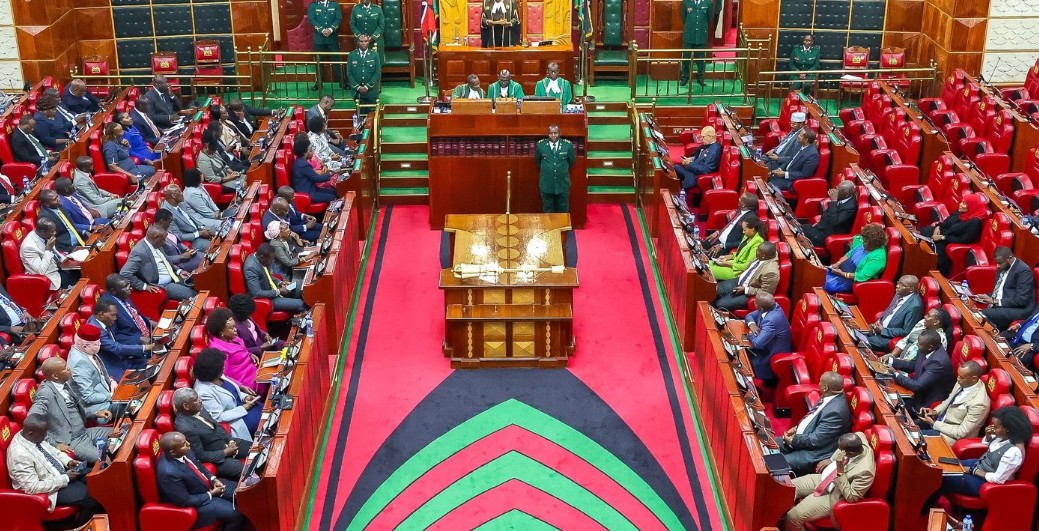
How profit-driven schooling is reshaping learners into customers, teachers into performers, and education into a market product. When schools begin to operate more like business enterprises than centres of learning, the entire philosophy of education quietly changes.
What was once a sacred space for nurturing minds, shaping character, and building curiosity slowly transforms into a system driven by fees, rankings, branding, competition, and above all, profit expectations. On the surface, everything still resembles education, but beneath it lies a gradual replacement of learning values with commercial logic.
This shift rarely arrives with noise or open declaration. It creeps in quietly through decisions that appear practical at first—how learners are admitted, how fees are structured, how teachers are evaluated, how performance is measured, and how the institution presents itself to the public. Over time, these small decisions accumulate into a complete transformation. The school still stands physically, but its educational soul begins to be reshaped by business thinking.
In many private learning institutions, this transformation becomes even more visible because school owners often focus on financial sustainability and the profits the institution can generate. While private schools must remain economically viable to survive, challenges begin when profit becomes not just an outcome but the driving force of decision-making.
Admissions may begin to prioritize revenue potential, fee structures may be designed primarily for income growth, and program offerings may lean toward what attracts more paying learners rather than what strengthens balanced education.
ALSO READ:
When profit logic becomes dominant, education risks being treated like a market product. Enrolment starts to resemble market share. Learners become units of income. Class sizes may expand beyond optimal learning limits to maximize returns. Investment decisions may favour visible attractions—modern buildings, branding, and marketing—over less visible but more essential areas like teacher development, learner support systems, counselling, and curriculum enrichment. The institution may appear successful financially, yet the quality of learning experience may slowly become strained.
At the core of this shift, education stops being viewed as a public good in spirit and begins to operate as a packaged commodity. It is priced, marketed, and sold. Admission becomes influenced not only by academic readiness but also by financial capacity. Fees become the central pillar of planning, and even basic learning resources or co-curricular activities may attract additional charges. The guiding question subtly changes from developing the learner to sustaining revenue.
ALSO READ: Kakamega ECDE teachers trained on financial management
Once this happens, learners begin to be redefined as customers. On the surface, this may appear respectful and modern, but within the learning environment it introduces deep contradictions. A customer demands satisfaction, but a learner requires transformation. A customer avoids discomfort, while a learner must sometimes be challenged, corrected, and stretched beyond comfort.
When schools begin to fear losing “customers,” academic standards may quietly soften. Teachers may feel pressured to prioritize satisfaction over mastery. Passing rates may become more important than understanding. Learning gradually shifts from a rigorous developmental process to a managed experience designed to avoid dissatisfaction.
Teachers, in turn, are reshaped by this system. They increasingly become performance-driven workers measured by statistics—exam results, rankings, enrollment numbers, and retention rates. This numerical pressure changes the nature of teaching. The classroom becomes less a space of exploration and more a space of preparation for examinations. Creativity is replaced with repetition, and depth is sacrificed for coverage.
The teacher, once a mentor and guide, risks becoming a performer under constant pressure to deliver measurable outcomes. The emotional and intellectual richness of teaching slowly gives way to targets, reports, and institutional expectations. Education becomes less of a calling and more of a performance contract.
ALSO READ:
Why staff tours are no longer a luxury but a necessity in modern institutions
Even the curriculum is not spared. In business-influenced environments, subjects and programs begin to reflect demand, popularity, and perceived economic value. Courses that attract more enrolment or enhance institutional image are prioritized, while others that build critical thinking, ethics, creativity, and cultural understanding may be pushed aside.
Yet true education is not meant to follow demand alone. It is meant to shape well-rounded individuals. When curriculum becomes market-driven, learning narrows and intellectual balance is lost.
Infrastructure also becomes a major symbol of institutional success. Schools invest heavily in appearance—modern buildings, branded uniforms, polished compounds, and visually attractive facilities. While infrastructure is important, problems arise when appearance begins to overshadow learning depth.
A school may look impressive externally, yet classroom engagement remains shallow. Laboratories may exist but be underused. Libraries may be present but rarely used for meaningful intellectual exploration. In such cases, image replaces substance, and marketing replaces educational depth.
Discipline also undergoes transformation. In a true educational setting, discipline is a developmental process that builds character, responsibility, and respect. In a business-oriented model, it risks becoming a tool for control and reputation management.
Decisions may be influenced by customer satisfaction, financial considerations, or public image rather than fairness and educational integrity. Over time, this inconsistency weakens trust in the institution, and learners begin to see rules as flexible rather than formative.
The relationship between schools and parents also shifts. Instead of collaboration in shaping the learner, parents may begin to view themselves as paying clients expecting guaranteed results. This consumer mindset places pressure on schools to deliver immediate success, even though education is a long-term developmental process.
ALSO READ:
Inside the Finance Bill 2026 proposals affecting Kenya’s education sector
Expectations of instant results replace patience and trust. Yet education cannot function like a commercial service. It requires partnership, shared responsibility, and long-term commitment.
At the centre of all these changes lies a deeper concern—the slow erosion of educational purpose. A school exists to educate, to shape minds, to build character, and to prepare individuals for life and society. When business logic becomes dominant, that purpose begins to fade into the background.
Financial sustainability is necessary, but it must remain supportive, not dominant. When profit becomes the main measure of success, education risks becoming efficient but hollow—well organized, yet disconnected from its true mission.
A balanced system recognizes that schools require resources. Teachers must be paid, facilities maintained, and learning materials provided. The challenge is not the existence of financial planning, but its dominance over educational values. A healthy institution keeps education at the centre and finance in support.
Decisions should begin with learner development and only then consider financial feasibility. When this balance is maintained, schools can be both sustainable and genuinely educational.
Ultimately, the integrity of education depends on resisting over-commercialization. Learners must remain human beings in development, teachers must remain mentors, and schools must remain spaces of transformation rather than transaction.
A school that becomes only a business risks losing its soul. But a school that remains rooted in education, even while managing resources wisely, becomes a powerful force for shaping minds and societies.
Because education, at its core, is not a transaction—it is a transformation.
By Hillary Muhalya
You can also follow our social media pages on Twitter: Education News KE and Facebook: Education News Newspaper for timely updates.
>>> Click here to stay up-to-date with trending regional stories
>>> Click here to read more informed opinions on the country’s education landscape