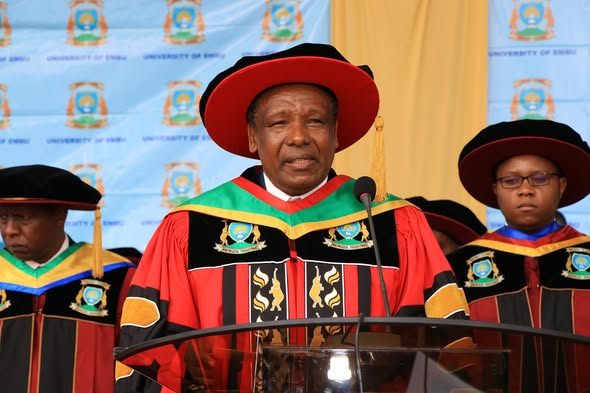
The University of Embu Vice Chancellor (VC) Prof. Daniel Mugendi Njiru, has defended Kenya’s new university funding model, describing it as one of the most significant reforms ever introduced in the country’s higher education sector.
Prof. Mugendi said the model, which uses the Means Testing Instrument (MTI) to determine the financial needs of students, has brought relief to universities that had struggled financially for years.
According to him, the system ensures that students pay fees based on their level of need, making higher education financing more equitable and sustainable.
The funding framework, introduced by the government in 2023, replaced the Differentiated Unit Cost (DUC) model and shifted support from blanket university capitation to student-centered funding through scholarships, loans, and household contributions.
Speaking in support of the model, Prof. Mugendi noted that universities had begun recovering from financial distress, with some institutions now able to clear salary arrears owed to lecturers and staff members.
ALSO READ:
Inside the Finance Bill 2026 proposals affecting Kenya’s education sector
However, despite the optimism from university administrator, concerns continue to emerge from students, parents and education stakeholders who argue that the model still disadvantages many vulnerable learners.
Critics say the Means Testing Instrument has in some cases wrongly categorized needy students into higher funding bands, forcing families to shoulder fees they cannot afford.
This, they argue, has left thousands of students uncertain about their ability to continue with higher education.
Education stakeholders are now calling for greater transparency in the classification process and a more accessible appeal mechanism for students who believe they were wrongly placed in certain funding categories.
Some students and parents have also expressed fears that the model could widen inequality if the appeals process remains complicated and slow.
Online discussions among Kenyans have reflected growing frustration, with some warning that university education risks becoming unaffordable for many low-income families.
The government has already acknowledged challenges facing the implementation of the model and recently formed a committee to review and refine the system to enhance accountability, transparency, and fairness.
By Our reporter
You can also follow our social media pages on Twitter: Education News KE and Facebook: Education News Newspaper for timely updates.
>>> Click here to stay up-to-date with trending regional stories
>>> Click here to read more informed opinions on the country’s education landscape