- Tanzania’s teacher-education reforms offer lessons for Kenya as classrooms adapt to technology and changing learner needs.
- Hillary Muhalya says Kenya must modernise teacher preparation alongside CBE, digital learning and emerging artificial intelligence.
- He argues that future teachers need stronger skills in assessment, inclusion, classroom management and continuous professional development.
Tanzania’s education system is entering a period in which the traditional model of teacher preparation is being tested by rapidly changing classrooms, new technologies, evolving learner expectations and increasingly complex approaches to teaching and assessment. The country’s emerging focus on transforming teacher education offers a useful regional case study—and an important lesson for Kenya.
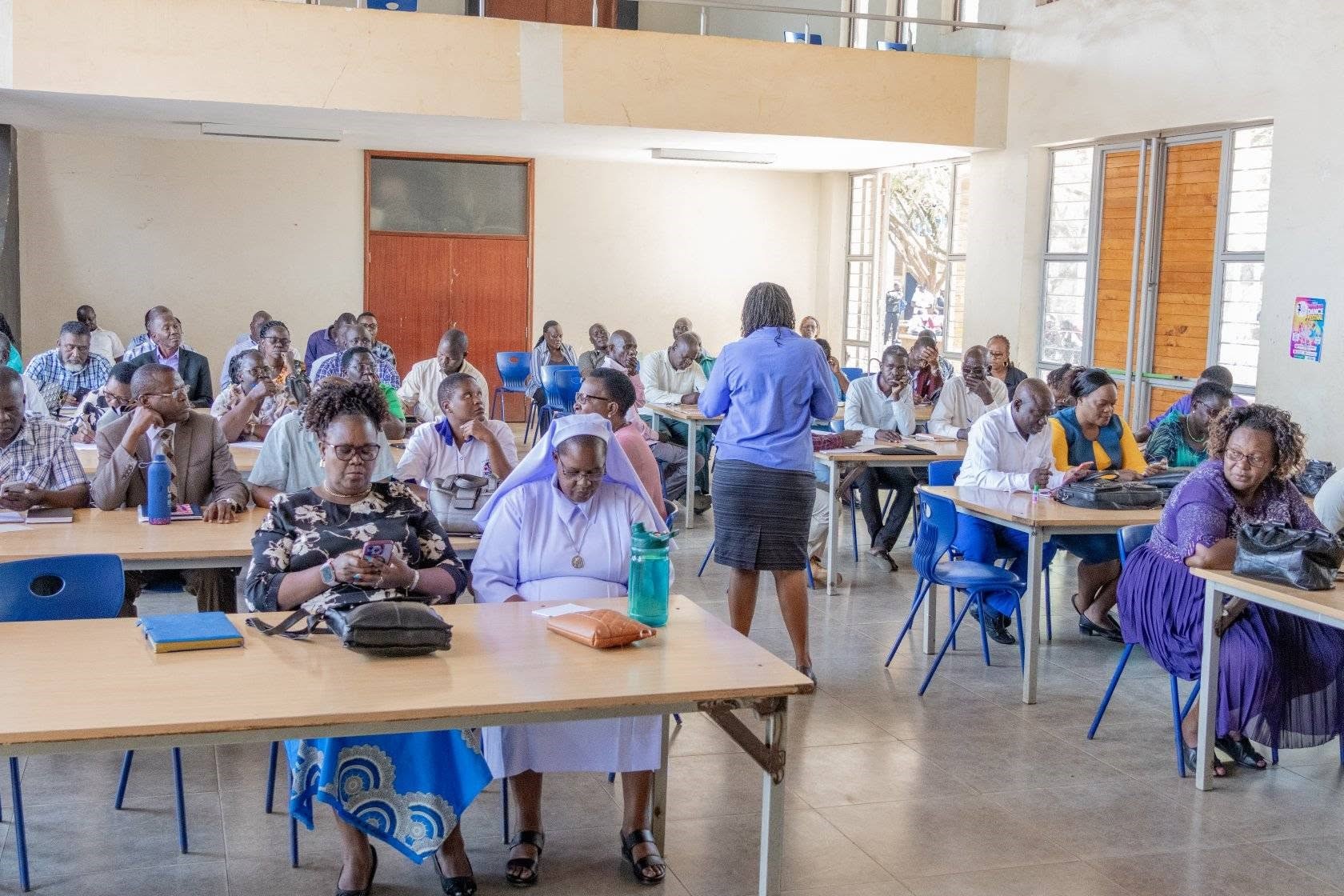
A regional learning exchange held in Dar es Salaam brought together teacher educators, policymakers, researchers, school leaders, development partners, student teachers and education practitioners from across East Africa and beyond. The discussions focused on a fundamental question facing modern education systems: how should teachers be prepared when the classroom itself is changing?
The Tanzanian experience demonstrates that teacher training can no longer be treated as a one-time process that ends when a student receives a teaching qualification. Modern classrooms demand professionals who can continuously learn, adapt and respond to new educational realities.
Tanzania’s experience is particularly important because the transformation taking place in classrooms is not limited to curriculum content. It involves technology, pedagogy, assessment, inclusion and the changing relationship between teachers and learners.
The teacher is increasingly expected to move beyond simply transmitting knowledge. The modern teacher must facilitate learning, encourage critical thinking, nurture creativity, identify individual learner needs and use different approaches to ensure that learners participate meaningfully.
The classroom is changing
Technology is becoming increasingly influential in education. Digital resources are altering how teachers access information, prepare lessons and engage learners. At the same time, learners are growing up in an environment where information is readily available through smartphones, computers and online platforms.
This changes the teacher’s role.
Instead of being the sole source of information, the teacher increasingly becomes a guide who helps learners evaluate information, ask better questions, solve problems and apply knowledge.
Artificial intelligence is likely to accelerate this transformation. Teachers will increasingly have to understand AI-powered educational tools, their potential benefits and their risks.
This makes digital literacy and technological confidence essential components of modern teacher preparation.
Assessment is also changing
The transformation of education extends to assessment.
Modern learning increasingly requires teachers to determine not merely what learners remember, but what they can understand, apply, create and demonstrate.
Teachers consequently need stronger skills in formative assessment, observation, projects, practical tasks, portfolios and continuous feedback.
Assessment should become part of learning rather than merely an event at the end of learning.
Inclusion is central to the modern classroom
Another defining feature of contemporary education is diversity.
Learners have different abilities, backgrounds, learning speeds and support requirements. A teacher trained for a uniform classroom may struggle to respond to such diversity.
Modern teacher education must therefore equip teachers with practical approaches to differentiated instruction and inclusive learning.
The Tanzanian conversation points to a broader regional reality: teacher preparation must respond to the learners who actually occupy classrooms, rather than the learners education systems imagine.
The teacher must become a lifelong learner
Perhaps the most important lesson from Tanzania is that professional learning cannot end with initial teacher training.
Teachers need continuous opportunities to update their knowledge and skills as curricula, technology, assessment methods and learner needs evolve.
This makes professional development a central component of education quality rather than an optional activity.
Experienced teachers can also become mentors and professional resources for younger colleagues, creating a culture in which knowledge is shared across schools and generations.
Kenya is facing many of the same pressures.
The country is implementing Competency-Based Education, expanding Junior Secondary School, investing in digital learning and changing approaches to assessment. These reforms have transformed expectations placed on teachers.
The first lesson is therefore clear: Kenya must modernise teacher training alongside curriculum reform.
A new curriculum cannot achieve its objectives if teachers continue to be prepared using methods designed for an earlier education system.
CBE requires a new kind of teacher
Kenya’s CBE requires teachers who can facilitate learning rather than simply deliver content.
Teachers must develop learners’ creativity, critical thinking, collaboration, communication and problem-solving abilities. They must also understand how to assess competencies rather than rely exclusively on traditional examinations.
Teacher-training institutions should therefore ensure that student teachers experience modern, learner-centred approaches before entering the profession.
JSS needs continuous teacher support
Kenya’s JSS transition reinforces the same lesson.
Teachers cannot be expected to implement a new level of education successfully through deployment alone. They require induction, mentoring, teaching resources, assessment support and continuous professional development.
Future reforms should ensure that teachers receive adequate preparation before implementation and structured support during transition.
Digital devices are not enough
Kenya’s investment in digital education must also be matched by investment in digital teacher competence.
Smart boards, computers and online learning platforms will have limited impact if teachers do not know how to integrate them effectively into instruction.
Teacher education should therefore cover digital pedagogy, online safety, media literacy and responsible use of emerging technologies.
AI literacy should now become part of this agenda.
Teachers need to understand how AI can support learning while also recognising the dangers of plagiarism, misinformation and overdependence on automated answers.
Inclusive education must become practical
Kenya should also strengthen preparation for inclusive education.
Teachers should be equipped to recognise different learning needs, adapt lessons and provide appropriate support. Inclusion should be treated as a practical classroom competence rather than simply a theoretical requirement.
Kenya must also rethink how teachers are prepared to manage classrooms.
Modern classroom management should combine discipline with communication, counselling, positive behaviour support, learner engagement and social-emotional learning.
A successful classroom is not necessarily the quietest one. It is one in which learners feel secure, participate actively and understand the boundaries within which learning takes place.
Career progression should recognise expert teachers
Kenya should equally strengthen career pathways for teachers who want to remain classroom practitioners.
An excellent teacher should not be compelled to leave teaching simply to achieve professional advancement. Expert classroom teachers should be recognised for mentoring colleagues, leading instructional improvement, specialising in assessment or supporting digital learning.
Such pathways would strengthen professional motivation and retain experienced teachers in classrooms.
Finally, Kenya should strengthen consultation.
Teachers are the principal implementers of education policy. Their experiences should inform curriculum reviews, assessment reforms, teacher-training programmes and professional-development policies.
Education reforms should not be imposed in a helter-skelter manner. They should be preceded by meaningful consultation with teachers, teacher educators, school leaders, parents, researchers and other stakeholders.
The bigger East African lesson
The Tanzanian experience and Kenya’s own education transformation point towards the same conclusion: the future of education depends heavily on the future of the teaching profession.
Modernising schools without modernising teachers will produce incomplete reform.
Kenya therefore needs a teacher-training system that prepares professionals for digital classrooms, CBE, artificial intelligence, inclusive education, modern assessment, environmental challenges, entrepreneurship, social-emotional learning and an increasingly interconnected world.
The ultimate lesson is straightforward: when the classroom changes, teacher preparation must change with it.
READ ALSO: Five years shut out: UNESCO renews call for Afghan girls to return to classrooms
Tanzania’s evolving approach provides Kenya with an opportunity not merely to observe, but to learn, adapt and build a stronger teacher-development system before the gap between educational ambition and classroom reality becomes even wider.
By Hillary Muhalya
Get more stories from our website: Education News
To write to us or offer feedback, you can reach us at: editor@educationnews.co.ke
You can also follow our social media pages on Twitter: Education News KE and Facebook: Education News Newspaper for timely updates.
>>> Click here to stay up-to-date with trending regional stories