

As Kenya continues to implement Competency-Based Education (CBE) and phase out the 8-4-4 system, every school leader must understand what happens at each level of the education system. From the head of kindergarten to the principal of a senior school, leaders must know the competencies learners are expected to develop, the assessments they undertake and how each stage prepares them for the next.
CBE follows the 2-6-3-3 structure: two years of pre-primary, six years of primary school, three years of junior school and three years of senior school, followed by tertiary education. Each stage has a distinct purpose, and understanding these differences is essential for effective leadership.
Unlike the 8-4-4 system, which was widely associated with high-stakes final examinations, CBE emphasises continuous competency development, practical learning and nurturing every learner's potential.
Pre-primary: interactive skills and self-discovery
Pre-primary education, made up of PP1 and PP2, lays the foundation for lifelong learning. The emphasis is on interactive skills, communication, play, curiosity and discovering the world.
Through storytelling, songs, games and group activities, children learn to share, cooperate, express emotions, solve simple problems and interact with others. Building blocks together, for example, develops creativity, communication, negotiation and problem-solving skills.
At this stage, developmentally appropriate observation and formative assessment help teachers understand children's progress. Formal examinations should not replace play-based learning and meaningful interaction.
School leaders must ensure that children have safe, stimulating environments that nurture their social, emotional, physical and cognitive development. Readiness for primary school should not be judged solely by reading and writing abilities.
Primary school: socialisation and foundational competencies
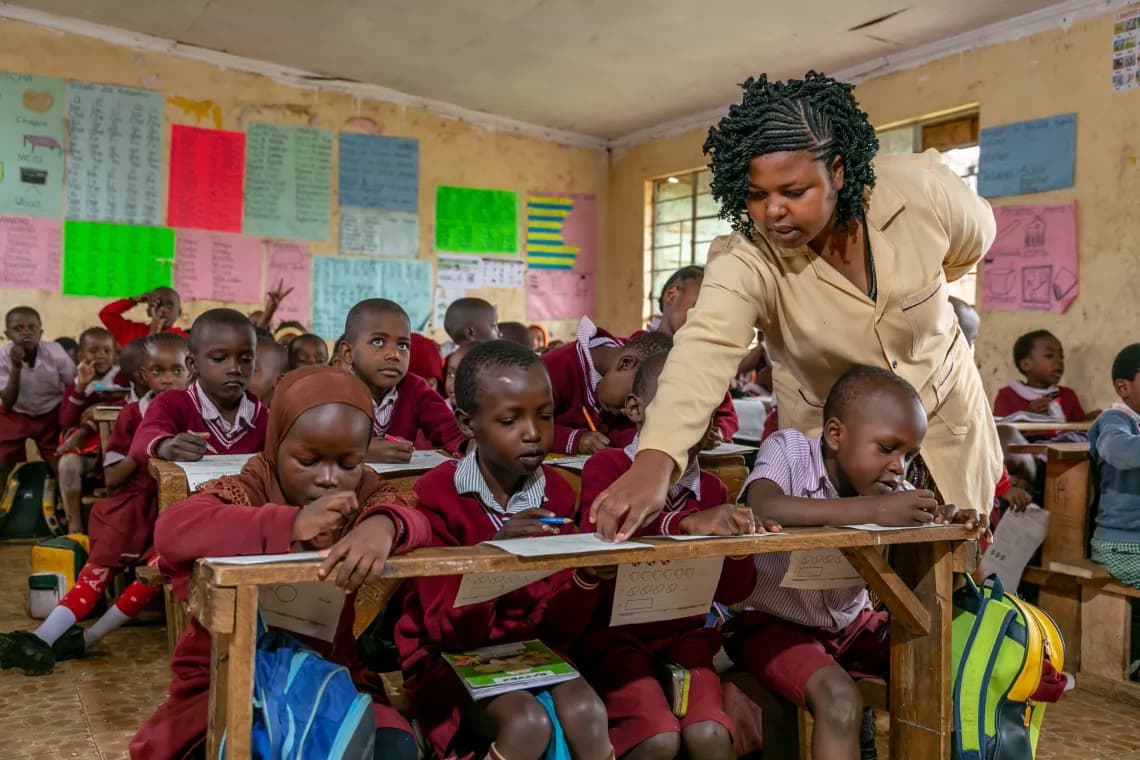
Primary school, covering Grades 1 to 6, builds foundational literacy, numeracy, knowledge and socialisation skills. Learners develop respect, empathy, teamwork, responsibility and the ability to resolve conflicts peacefully.
Through classroom projects, environmental activities, sports and group assignments, they develop communication and collaboration, citizenship, creativity, critical thinking, self-efficacy and digital literacy.
This is also the stage for identifying emerging interests and abilities. Some learners may excel in mathematics and science, while others show talent in music, sports, leadership or creative arts. Schools should nurture these differences rather than label learners by academic performance alone.
The Kenya Early Years Assessment (KEYA) supports monitoring of learning in the early years, while the Kenya Primary School Education Assessment (KPSEA) is administered at the end of Grade 6. These assessments give information on achievement and learning needs, helping teachers improve instruction and prepare learners for junior school.
School leaders must ensure that assessment results inform intervention, enrichment and better teaching rather than become instruments for ranking learners.
Junior school: exploration and informed pathway choices
Junior school, covering Grades 7 to 9, gives learners opportunities to explore different learning areas, discover their abilities and identify potential career pathways.
Exploration must go beyond classroom lessons. Science fairs, coding, robotics, sports, music, entrepreneurship projects, clubs, competitions and mentorship expose learners to different talents and professions. A learner interested in engineering, for instance, may discover this through design projects and science experiments, while another may find a passion for business through entrepreneurship activities.
These experiences develop critical thinking, creativity, communication, collaboration, self-efficacy and decision-making. Career guidance should help learners connect their interests, abilities and aspirations with appropriate pathways.
The Kenya Junior School Education Assessment (KJSEA), administered at the end of Grade 9, provides evidence of achievement and contributes to senior school placement under applicable national guidelines. Results should, however, be considered alongside learners' interests, demonstrated competencies and aspirations.
School leaders must ensure that learners receive adequate exposure and guidance before selecting pathways. Preparing learners for KJSEA without meaningful exploration would undermine a central purpose of CBE.
Senior school: pre-career development and specialisation
Senior school, covering Grades 10 to 12, allows learners to pursue more specialised learning aligned with their chosen pathways. These are Science, Technology, Engineering and Mathematics (STEM), Social Sciences, and Arts and Sports Science.
Learners develop deeper knowledge, practical skills and attitudes relevant to further education, entrepreneurship and future careers. STEM learners may undertake scientific investigations, those interested in business may develop business proposals, and Arts and Sports Science learners can develop creative, performance and sporting abilities.
School leaders must ensure that pathway choices are supported by qualified teachers, appropriate facilities, learning resources and career guidance. No pathway should be treated as inferior to another, and every learner deserves an opportunity to develop their strengths.
Assessment at this stage should provide evidence of achievement and readiness for progression in line with current Ministry of Education and Kenya National Examinations Council (KNEC) requirements.
Why every school leader must understand all levels
School leaders cannot operate effectively by concentrating only on their own institutions. A pre-primary head must understand primary school readiness. A primary head must understand junior school expectations. A junior school principal must understand senior school pathways, and a senior school principal must appreciate the competencies learners bring from earlier levels.
This understanding promotes continuity of learning, informed assessment, effective career guidance, appropriate resource allocation and collaboration between schools. It also helps leaders identify gaps early and ensure that learners get the support they need. Leadership training should therefore cover the entire CBE journey, not only curriculum implementation and assessment procedures.
CBE is a journey of discovery, development and deployment of learners' potential. Pre-primary develops interactive skills, primary school builds socialisation and foundational competencies, junior school provides exploration opportunities, and senior school develops pre-career skills through specialisation.
As Kenya moves towards the planned phase-out of 8-4-4 by December 2027, every school leader must understand this progression and prepare learners accordingly. The success of CBE will be measured not by examination results alone, but by how effectively schools identify talents, nurture competencies and prepare every learner to make informed decisions about their future.



Reader Discussion (0)
Sign in to comment