
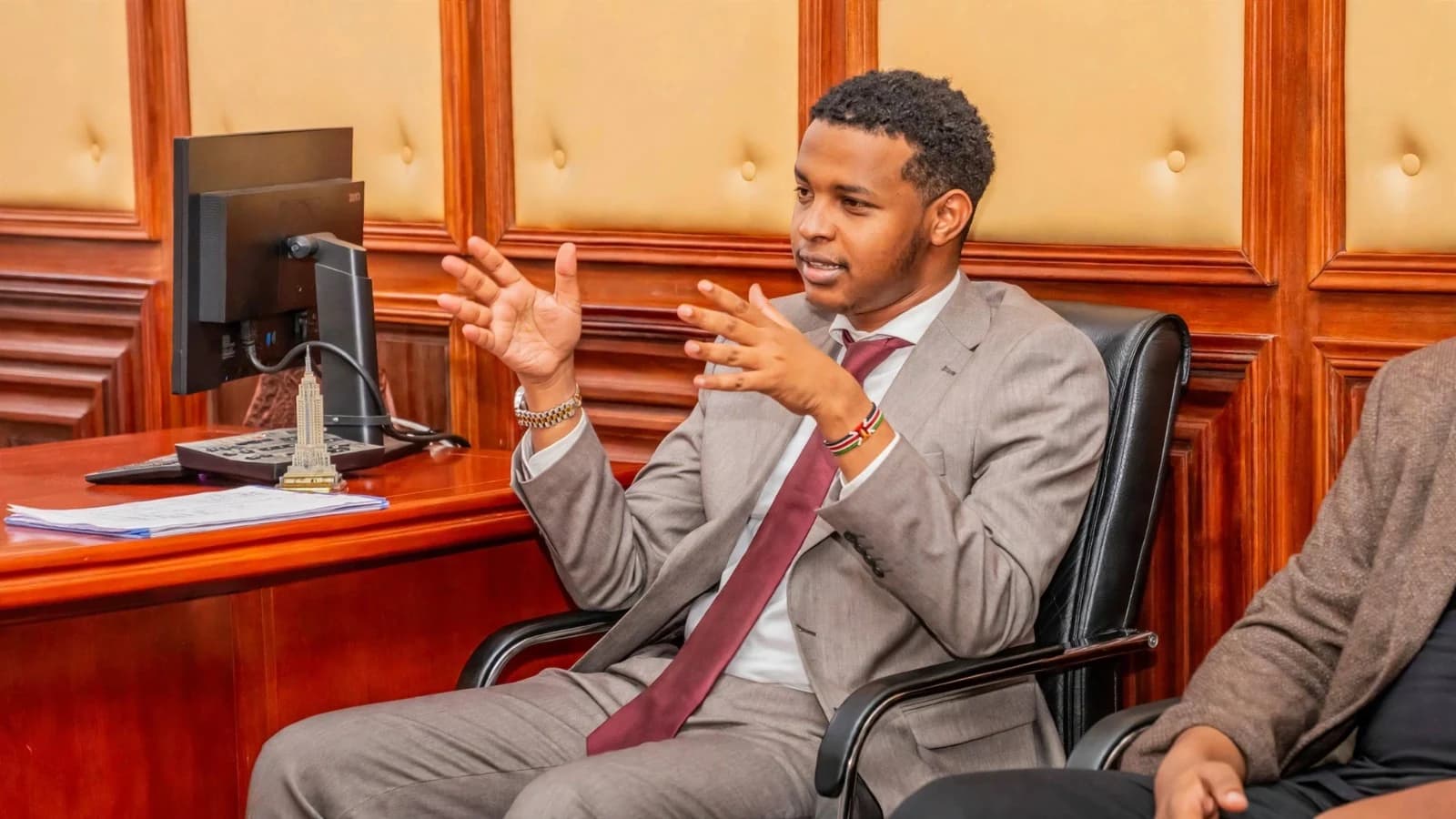





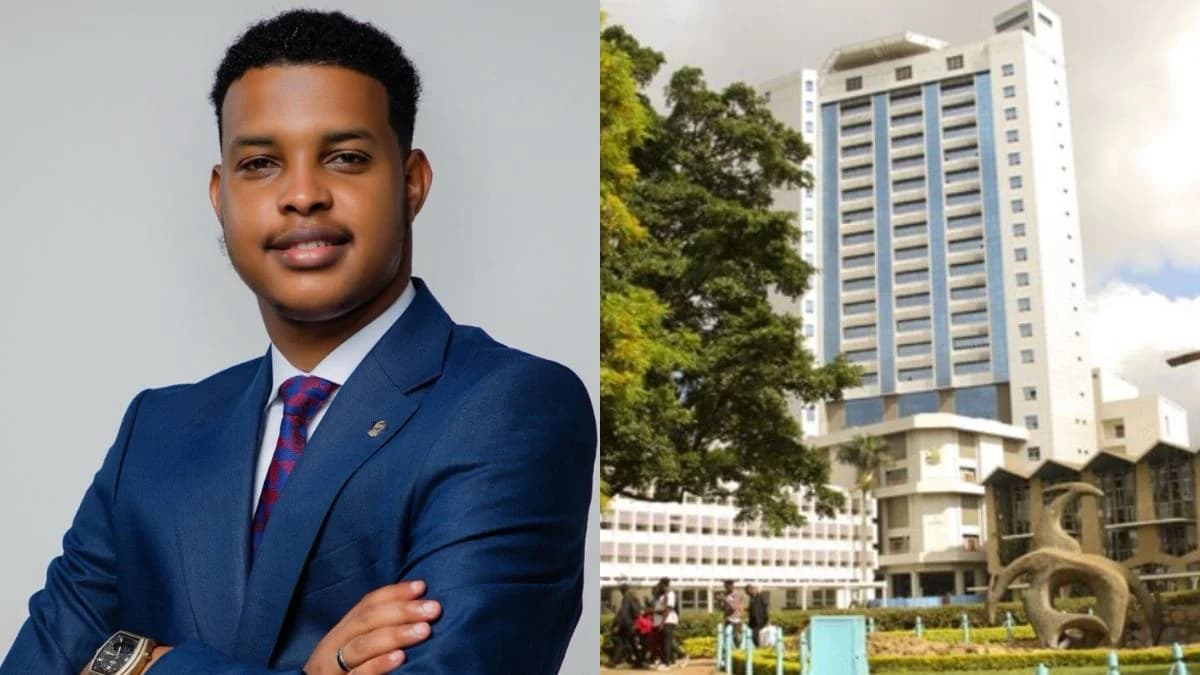
University of Nairobi Students' Association (UNSA) President Ahmed Rashid has defended his conduct during a controversial live podcast recording at the institution, dismissing claims that he and his team disrupted the event over demands for money.
Rashid said his intervention was driven by concerns over student safety and the alleged exclusion of the students' leadership from preparations for the recording.
The student leader, who spoke on Tuesday, November 24, maintained that organisers of the Mic Cheque podcast failed to consult him or involve other student representatives despite planning an event targeting the university community.
He argued that student leadership should have been part of the planning and implementation process, saying the failure to engage his office raised questions about how activities involving outsiders were being coordinated within the institution.
According to Rashid, he learnt about the planned recording after a friend shared a promotional poster announcing the podcast's visit to the university. He said neither his office nor the UNSA Secretary-General, Tony Ochieng, had been informed about the arrangements.
Rashid also claimed that he had attempted to contact the Mic Cheque organisers three days before the event to seek an explanation over the failure to involve student leaders but received no response.
Rashid rejected allegations that he demanded payment from the organisers as a condition for allowing the event to proceed, challenging those making the claims to produce evidence. He insisted that he had not issued an invoice or made any financial demands to the podcast team, describing the accusations as unfounded.
The confrontation, which was captured on video during the live recording, attracted public criticism after footage emerged showing Rashid and several individuals confronting and manhandling people at the event.
However, the UNSA president maintained that the situation was not simply about disagreements over the organisation of an entertainment programme, but also involved concerns about security within the university.
He claimed that the event attracted a significant number of people who were not students, some of whom allegedly accessed the institution carrying knives. Rashid warned that the presence of large crowds of outsiders could expose students to insecurity, including theft and physical attacks.
He further pointed to the university's location in Nairobi's Central Business District as a factor requiring heightened vigilance when organising activities that attract large gatherings.
The incident has also exposed divisions within the student community, with some attendees reportedly chanting slogans demanding Rashid's removal following the confrontation. The chants, including "Rashid must go", raised questions about his standing among students and the level of support for his leadership.
However, Rashid played down the protests, describing dissent as an ordinary feature of student politics and insisting that he remained in office. He said he would assess the situation upon returning to campus, adding that he had not encountered further disturbances during his subsequent visit.
Despite the criticism directed at him, the student leader maintained that he had no regrets about his intervention, arguing that he acted in what he considered the best interests of students. He nevertheless apologised to learners who may have been inconvenienced by the disruption, particularly those who had travelled to attend the recording.
The controversy has renewed debate over the authority of university student associations in coordinating activities on campus, particularly events organised by external entertainment groups.
It has also raised questions about the balance between student representation, freedom to organise activities and the responsibility of university management to maintain security within learning institutions.

Reader Discussion (0)
Sign in to comment