

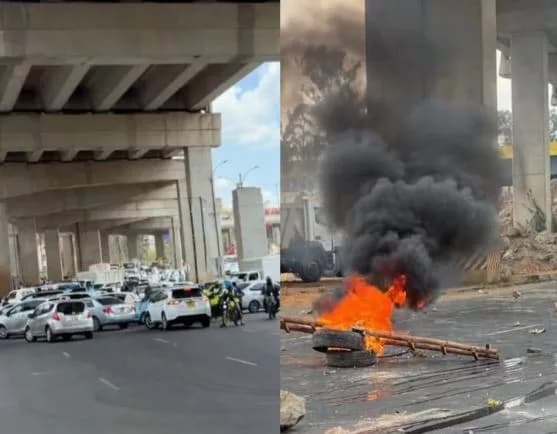


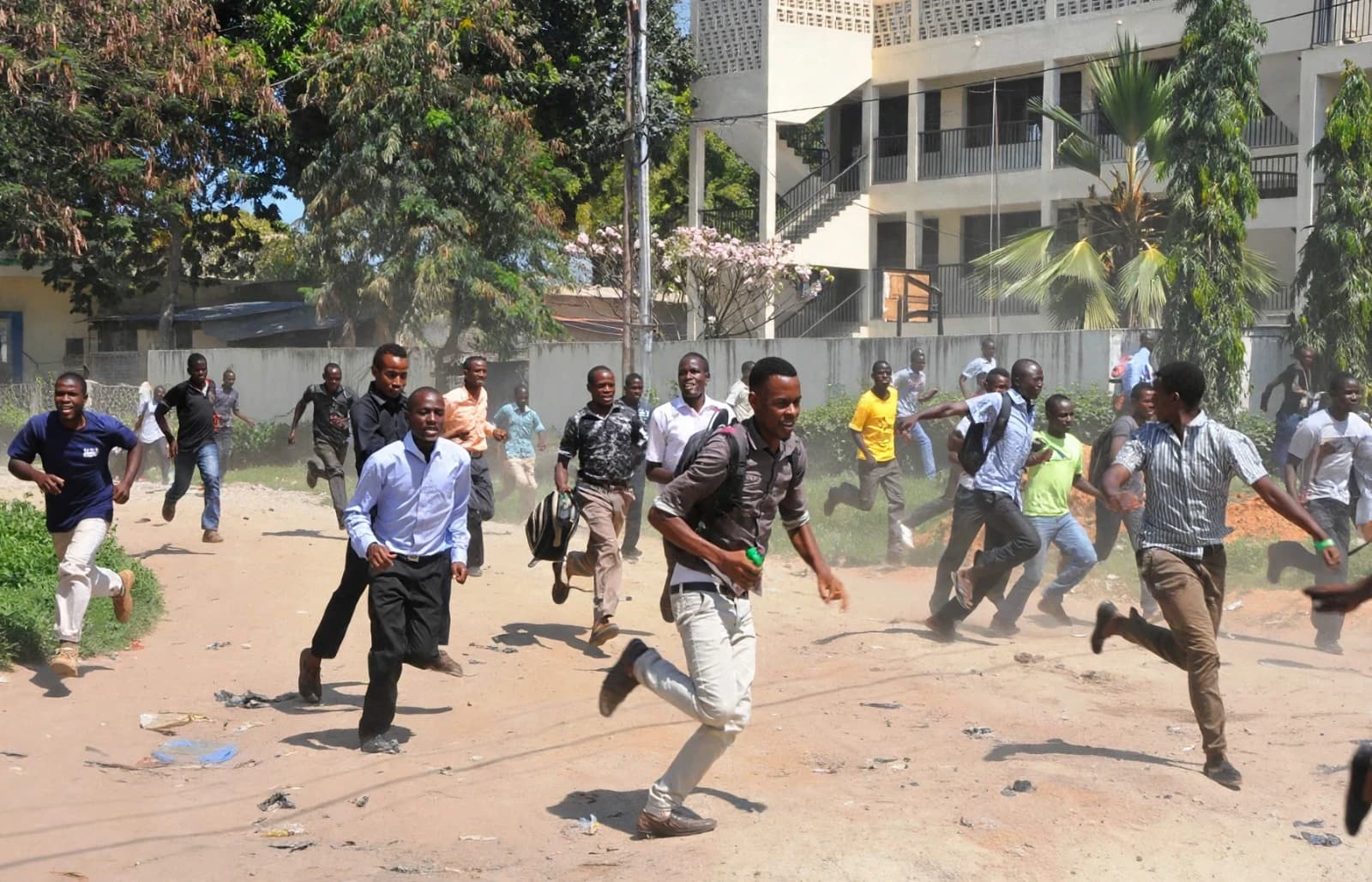
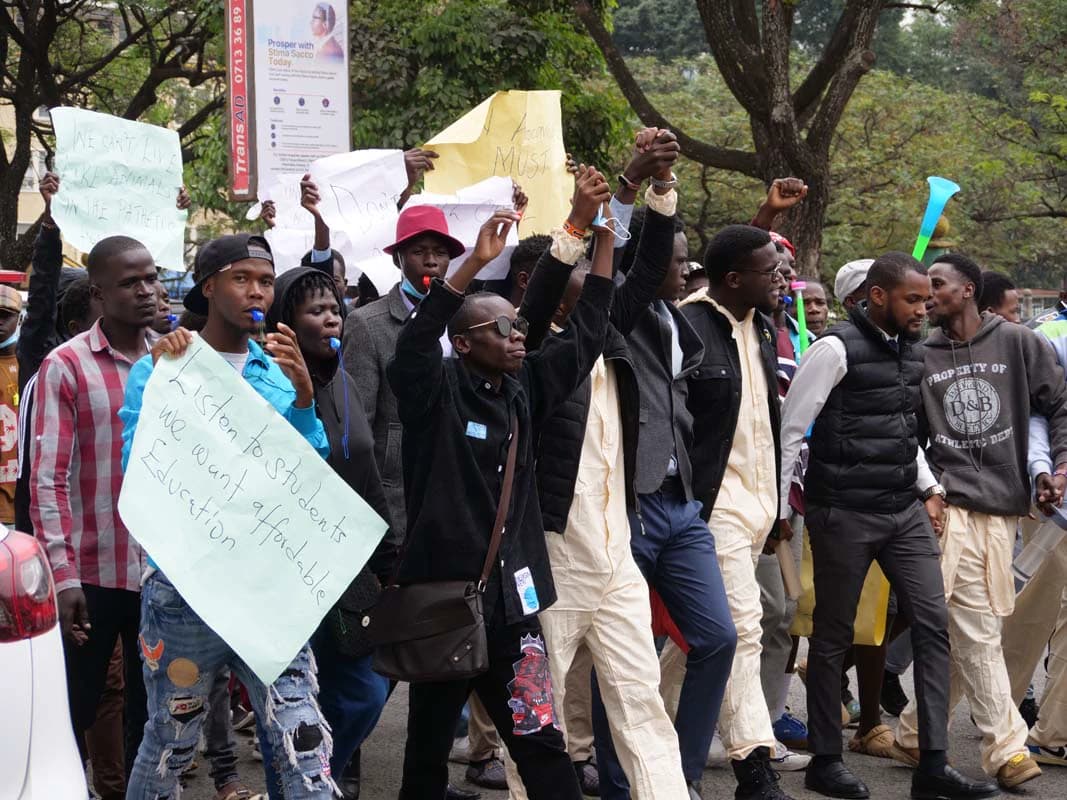
University of Nairobi students returned to the streets on Tuesday, blocking Waiyaki Way with burning tyres and heavy stones in renewed protests over the lecturers' strike that has paralysed learning and left thousands uncertain about their examinations and graduation dates.
The demonstration brought traffic to a standstill along one of Nairobi's busiest highways, leaving motorists stranded as smoke billowed from burning tyres and makeshift barricades obstructed the road.
Some drivers were forced to turn back and seek alternative routes as the protests disrupted movement along the highway.
Police officers later arrived at the scene and fired tear gas to disperse the demonstrators before clearing the barriers and restoring traffic flow.
The latest confrontation marks a continuation of student protests over the prolonged industrial action by university lecturers, with learners increasingly expressing frustration over the disruption of their academic programmes.
A similar demonstration occurred on October 21 after the University of Nairobi Students Association issued a 72-hour ultimatum demanding action to resolve the dispute.
With the deadline passing without a breakthrough, students returned to the streets to press their demands.
Students demand accountability
Student leaders have accused the government and other parties involved in the negotiations of failing to resolve the dispute, arguing that learners should not bear the consequences of a labour dispute over which they have little control.
University of Nairobi Students Association President Ahmed Rashid has criticised the handling of the standoff, saying students have been left to endure the consequences despite not being parties to the negotiations.
The students have also called for Education Cabinet Secretary Julius Migos Ogamba to resign, linking their demand to dissatisfaction with the government's handling of the crisis.
Their protests reflect growing anxiety among university learners over lost lecture time, uncertainty surrounding examinations and the financial implications of an academic calendar that continues to be disrupted.
With teaching activities suspended, students face uncertainty over when normal learning will resume, when examinations will be administered and whether graduation schedules will be affected.
Some learners are also concerned that accommodation, transport and other living expenses continue to accumulate even as their studies remain on hold.
Lecturers' strike enters fourth week
The university lecturers' strike began on October 2 after negotiations between the government and university staff unions failed to produce an agreement on the 2025–2029 Collective Bargaining Agreement (CBA).
The industrial action involves the Universities Academic Staff Union (UASU) and other university staff unions seeking the implementation of agreed employment and remuneration terms.
Negotiations have continued amid disagreements over the funding required to address the unions' demands and the government's proposed settlement.
A further round of talks on October 26 reportedly failed to break the deadlock, with the unions rejecting a government offer of approximately Sh11.9 billion as inadequate.
The continuing disagreement has left universities struggling to maintain normal academic operations, with lectures interrupted and examinations delayed.
The strike has also raised concerns about the possible effects on students approaching the completion of their degree programmes, particularly those whose examinations, research activities or graduation requirements depend on uninterrupted academic schedules.
Pressure mounts for a settlement
The return of students to Waiyaki Way highlights the widening impact of the dispute beyond university lecture halls.
While the lecturers' unions are pursuing their employment demands, students are calling for a resolution that protects their right to continue learning without prolonged interruptions.
The government and university managements face mounting pressure to facilitate an agreement that addresses the outstanding issues while allowing academic activities to resume.
However, until the parties reach a settlement, students remain exposed to uncertainty over their studies, examinations and graduation timelines.
The latest protests also underscore the need for negotiations to consider the interests of learners, whose academic progress is directly affected by the prolonged industrial action.


Reader Discussion (0)
Sign in to comment