








The Teachers Service Commission (TSC) is pushing ahead with plans to restructure the regulatory framework governing Kenya's teaching profession, with proposed amendments to teacher registration and professional qualifications now before Parliament.
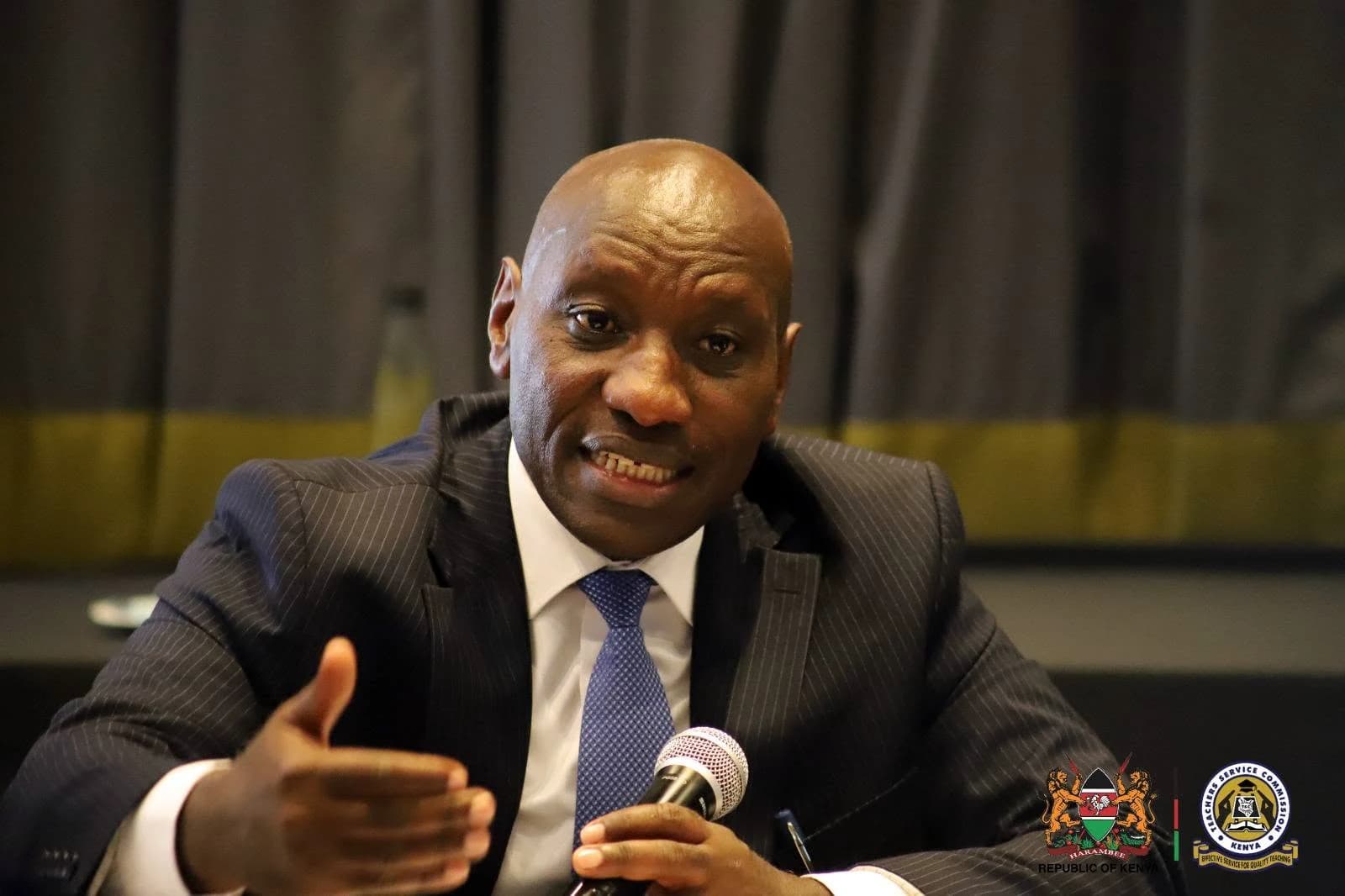
The proposals, which cover admission into teacher training, professional certification and five-year licence renewals, were presented on Thursday, November 26, 2026, when TSC engaged the Parliamentary Committee on Delegated Legislation over proposed amendments to the Code of Regulations for Teachers (CORT).
The commission is seeking to align teacher registration, professional certification and training standards with the Competency-Based Education (CBE) system.
At the centre of the proposals is Regulation 20, which sets the academic and professional qualifications individuals must meet before being registered as teachers. The review follows public consultations in April and May 2026, in which teachers and members of the public were invited to submit their views.
TSC has proposed lowering the Kenya Certificate of Secondary Education (KCSE) mean-grade requirement for admission into diploma teacher education programmes from C+ to C plain. The change would widen the pool of eligible applicants, although subject-specific requirements would still determine admission into particular programmes. The commission will still need to ensure that prospective teachers acquire the subject knowledge, pedagogical skills and competencies required for effective classroom instruction.
Under the framework announced by TSC in June 2026, teachers would be required to renew their practising licences every five years. The arrangement would be anchored in Continuous Professional Development (CPD), with the Teacher Professional Development (TPD) programme providing the training framework.
TSC has indicated that the programme would be offered free of charge, mainly through online learning, so that teachers can update their knowledge and competencies. It is meant to keep teachers up to date with curriculum changes, modern teaching approaches, assessment methods and emerging educational technologies.
Questions remain over how the renewal requirement would apply to teachers approaching retirement, those on extended leave, long-serving teachers and those who may struggle to complete the training. It is also not yet clear whether serving teachers' existing credentials will automatically remain valid under the revised framework, or whether additional certification will be required beyond periodic renewal. Teacher registration, practising licences and employment status are separate matters, and a renewable licence does not amount to termination of employment or cancellation of a teacher's registration number.
TSC also wants stronger oversight of teacher training institutions to ensure that their programmes meet the standards expected under the evolving education system. The emphasis is expected to extend beyond academic qualifications to practical teaching competencies, curriculum interpretation, learner assessment, inclusive education and professional ethics.
The commission is also seeking to reinforce provisions on professional conduct and disciplinary matters.
A lower diploma entry threshold could expand access to teacher training for prospective teachers, while training institutions could face closer scrutiny and a greater emphasis on competency-based preparation. Newly qualified teachers could see more emphasis on competencies aligned with CBE, and serving teachers would have structured professional development as a continuing obligation under periodic licence renewal. Transitional provisions will determine how the five-year cycle applies to teachers nearing retirement.
The engagement with the committee is part of the regulatory review, and the proposals have not taken effect. TSC must complete the applicable legal and parliamentary processes before the provisions become enforceable, and the C plain threshold, renewable licences and other amendments will not apply until the commission formally communicates their implementation.




Reader Discussion (0)
Sign in to comment