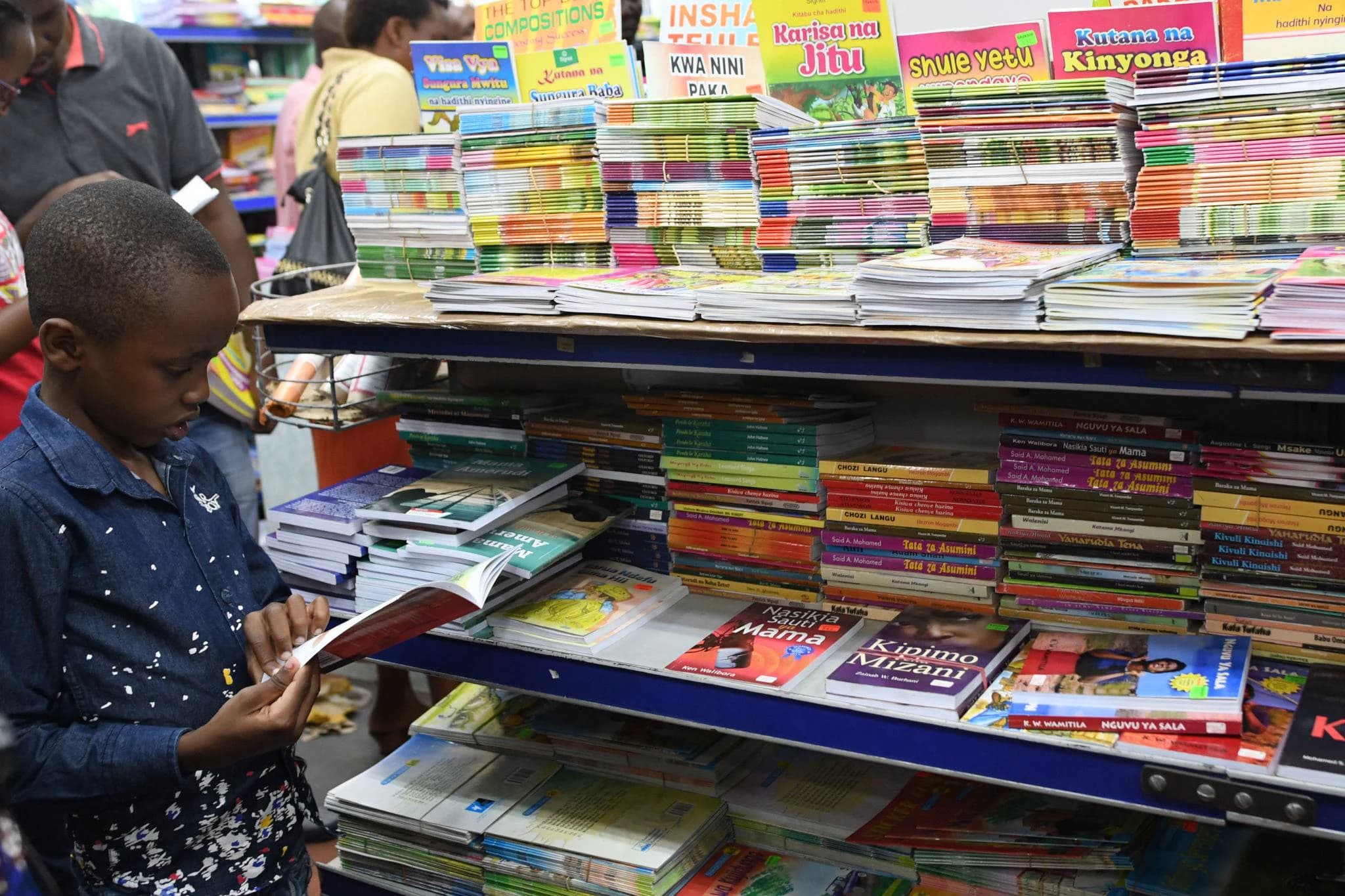
As schools prepare to close for the end-of-year holidays, another familiar exercise is taking centre stage in the education sector: the annual school booklisting season. Across the country, learners will return home carrying customised booklists detailing the books, stationery and other learning materials they are expected to have when schools reopen for the next academic year.
For many parents, this document is more than a piece of paper. It is a financial plan, a shopping guide and an indication of what the school expects of their children. For booksellers and publishers, it signals the beginning of a busy commercial season. For school administrators, it is an opportunity to communicate academic expectations and prepare learners for the year ahead.
Yet, despite its apparent simplicity, a school booklist is an important document that deserves careful thought, professional presentation and a strong commitment to the interests of learners and parents. A good booklist should not merely tell parents what to buy. It should tell them what is necessary, why it is necessary and where they can obtain it without unnecessary inconvenience or expense.
School identity and contact information must be clear
First, the school name must feature prominently.
A professional booklist should begin with the official name of the school, clearly displayed at the top of the document. Where appropriate, the school logo should accompany the name to reinforce institutional identity and make the document easily recognisable.
The name should not be buried beneath decorative graphics, commercial advertisements or unnecessary information. The booklist is an official school document, and its appearance should reflect the institution's standards.
A parent receiving a booklist should immediately identify the school to which it belongs. This becomes particularly important where parents have children attending different schools or where printed booklists are shared electronically through WhatsApp groups.
Second, the school contact details and motto should be included.
A good booklist should provide the school's official telephone numbers, email address, physical location and other relevant contact information. These details allow parents to seek clarification when they encounter difficulties locating a particular book or wish to confirm whether a listed item is compulsory.
The school motto may also be included, especially where it communicates the institution's educational philosophy and values. A motto such as a commitment to excellence, discipline or integrity reinforces the school's identity.
However, contact details must be accurate and functional. There is little value in providing a telephone number that nobody answers or an email address that is no longer monitored. Communication is an essential component of effective school administration.
Five essential components of a professional school booklist
Third, the booklist should have five clearly defined components.
A well-organised booklist should separate requirements into five categories: KICD-approved coursebooks, supplementary books, class readers, stationery and information on where to source the materials.
The first category should consist of the prescribed coursebooks approved by the Kenya Institute of Curriculum Development (KICD), as applicable to the relevant grade and curriculum. These are the core learning materials that support curriculum implementation. The titles, authors, publishers and editions should be clearly identified wherever necessary to prevent parents from purchasing incorrect or outdated editions.
Schools should exercise particular care when preparing these lists. A booklist should not become a platform for promoting titles simply because a publisher or bookseller has a commercial relationship with the institution. Every recommended coursebook should have a legitimate educational purpose and meet the applicable curriculum requirements.
The second category should contain supplementary books. These materials may provide additional exercises, revision questions, reference information or opportunities for learners to deepen their understanding of particular subjects. Their inclusion should be justified by educational value rather than commercial convenience.
Schools should also distinguish between essential supplementary materials and optional resources. Parents should not be left guessing whether every item is compulsory, particularly when household budgets are already under pressure.
The third category should comprise class readers. Reading materials play a significant role in developing vocabulary, comprehension, imagination, critical thinking and a lifelong interest in learning. The selected titles should be appropriate for the learners' age, reading ability, curriculum and educational objectives.
Where several readers are required, the list should identify each title clearly and, where practical, specify the author and publisher. This reduces confusion and prevents unnecessary purchases.
The fourth category should cover stationery. Exercise books, pens, pencils, rulers, mathematical sets, crayons, files and other relevant supplies should be listed according to the actual needs of the grade. Quantities should be indicated clearly.
There is little justification for vague instructions such as “adequate exercise books” when the school can specify the number and type required. Precision helps parents budget accurately and prevents learners from arriving with either insufficient or unnecessarily excessive supplies.
The fifth category should explain where parents can source the books and other materials.
This is a frequently overlooked but important component. Schools should provide practical guidance on reputable booksellers, authorised distributors or other reliable purchasing options. Where possible, parents should be free to purchase genuine materials from any suitable supplier offering competitive prices.
A school may provide information about convenient suppliers, but such guidance should not become an instrument for forcing parents into exclusive commercial arrangements. Transparency is essential, especially where school recommendations could be perceived as endorsements of particular businesses.
Affordability, accuracy and accountability must guide booklisting
Fourth, affordability must inform the entire process. An ideal booklist should be prepared with sensitivity to the economic realities facing families. The fact that a book is available does not automatically mean that its purchase is necessary. Every item should have a clear educational justification.
Schools should avoid unnecessary duplication of learning materials, excessive quantities of stationery and the inclusion of resources that learners are unlikely to use. Where existing books remain suitable for the next academic year, parents should not automatically be required to replace them without good reason.
Schools should also communicate which items are essential immediately and which may be purchased later. Such guidance enables parents to prioritise expenditure without compromising their children's learning.
Finally, presentation, accuracy and accountability matter.
A professional booklist should be legible, logically arranged, free from spelling errors and easy to understand. Tables can help organise titles, quantities and other specifications. The grade, year and date of issue should be clearly indicated, while any revisions should be communicated promptly.
School administrators should review the document before distribution to eliminate errors and ensure that every item is relevant to the intended grade.
Ultimately, an ideal school booklist is not measured by the number of books it contains, the length of its stationery section or the number of suppliers it recommends. Its quality is measured by its usefulness to learners, clarity to parents, educational relevance and fairness in the purchasing process.
As the annual booklisting season gathers momentum, schools have an opportunity to demonstrate that they understand their responsibility beyond classroom instruction. They must help families prepare for learning without exposing them to unnecessary expenditure or avoidable confusion.
A school booklist should be an instrument of educational planning, not commercial exploitation. It should guide parents, support teachers, equip learners and promote transparency.
The best booklist is not necessarily the longest or the most expensive. It is the one that gives every parent a clear, accurate and affordable roadmap for preparing a child for the next academic year.
Ashford is a teacher of English and Literature and writes on education and youth affairs.




Reader Discussion (0)
Sign in to comment