


The commitment comes as public universities continue to navigate financial difficulties, with accumulated obligations, employee welfare concerns and infrastructure deficits placing pressure on institutional operations.
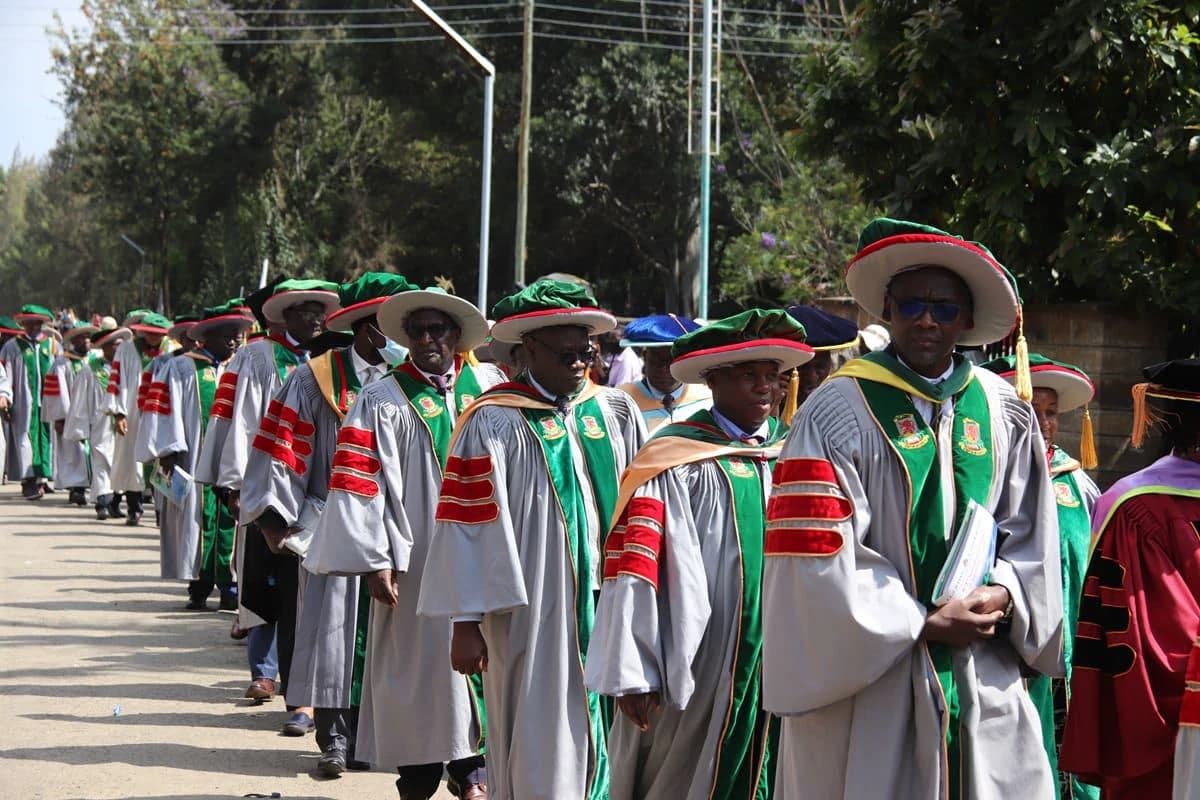
Ruto announced the measures during Egerton University’s 50th graduation ceremony on Friday, November 27, 2026, in an address delivered on his behalf by Education Cabinet Secretary Julius Ogamba.
The President said the Ministry of Education and the National Treasury were working together to address the outstanding payroll obligations, signalling the government’s intention to restore financial stability at the institution.
“The Ministry of Education and the National Treasury are working to settle the outstanding payroll dues owed to Egerton University staff,” he said.
The pledge places the welfare of university employees at the centre of the government’s latest intervention, particularly as institutions of higher learning grapple with competing demands for resources.
Government targets stalled university projects
Alongside the salary arrears commitment, Ruto directed the Kenya Rural Roads Authority (KeRRA) to accelerate the upgrading of 12.55 kilometres of internal roads at the university’s Njoro campus.
The road works will be undertaken under the Njoro-Nesuit Road Project and are intended to improve movement, accessibility and safety within the institution.
The President also identified the administration building, laboratories and student accommodation as priority infrastructure projects whose completion should be accelerated.
The commitments point to a broader effort to address both the financial and physical infrastructure challenges affecting the university.
Ruto discloses Sh82 billion university funding
In a separate but equally significant announcement, the President defended his administration’s higher education financing reforms, citing increased government allocations to universities.
He said funding to universities had grown from Sh45 billion in the 2022/2023 financial year to Sh82 billion in 2025/2026.
Allocations to the Higher Education Loans Board (HELB) had also increased from Sh17 billion to Sh41 billion over the same period.
According to Ruto, more than 437,000 students across the first three cohorts had benefited from government scholarships under the Student-Centred Funding Model.
He argued that the reforms were designed to make university education more accessible by ensuring that students’ academic potential, rather than their parents’ financial circumstances, determined their educational opportunities.
“The academic ability of a child, not the financial ability of a parent, must determine how far that child goes in education,” he said.
The government is also pursuing the Tertiary Education Placement and Funding Bill, 2026, currently before Parliament, to establish a comprehensive and sustainable framework for financing tertiary education.
Egerton challenged to lead agricultural research
The President challenged Egerton University to strengthen its contribution to national food security by translating scientific research into practical solutions for farmers.
He called for intensified research into drought-resistant crops, sustainable livestock production, water management and dryland agriculture.
Citing improvements in agricultural production, Ruto said national maize output had increased from 34.3 million bags to 71 million bags, while imports had declined from 9.9 million to 3.3 million bags.
He urged universities to measure the value of their research through its impact on agricultural productivity, household incomes and food affordability.
“The ultimate measure of agricultural research must be its impact on productivity on our farms, incomes in our households and food affordability in our markets,” he said.
He further challenged institutions to strengthen collaboration with industry and commercialise research discoveries to create marketable products, businesses and employment opportunities.
Universities urged to prepare for 2029 CBE transition
Ruto also urged universities to begin preparing for the first cohort of Competency-Based Education (CBE) learners expected to enter higher education institutions in 2029.
He said institutions must anticipate changes in the skills, training approaches and academic programmes required to accommodate the incoming learners.
The President identified artificial intelligence (AI), biotechnology and automation as critical areas shaping the future of employment, challenging universities to produce graduates equipped with relevant technological and practical competencies.
His remarks place additional responsibility on universities to align higher education with the evolving demands of the education system and labour market.
Egerton University was established in 1939 as a farm school by Lord Egerton before developing into one of Kenya’s established institutions of higher learning, particularly in agricultural education and research.
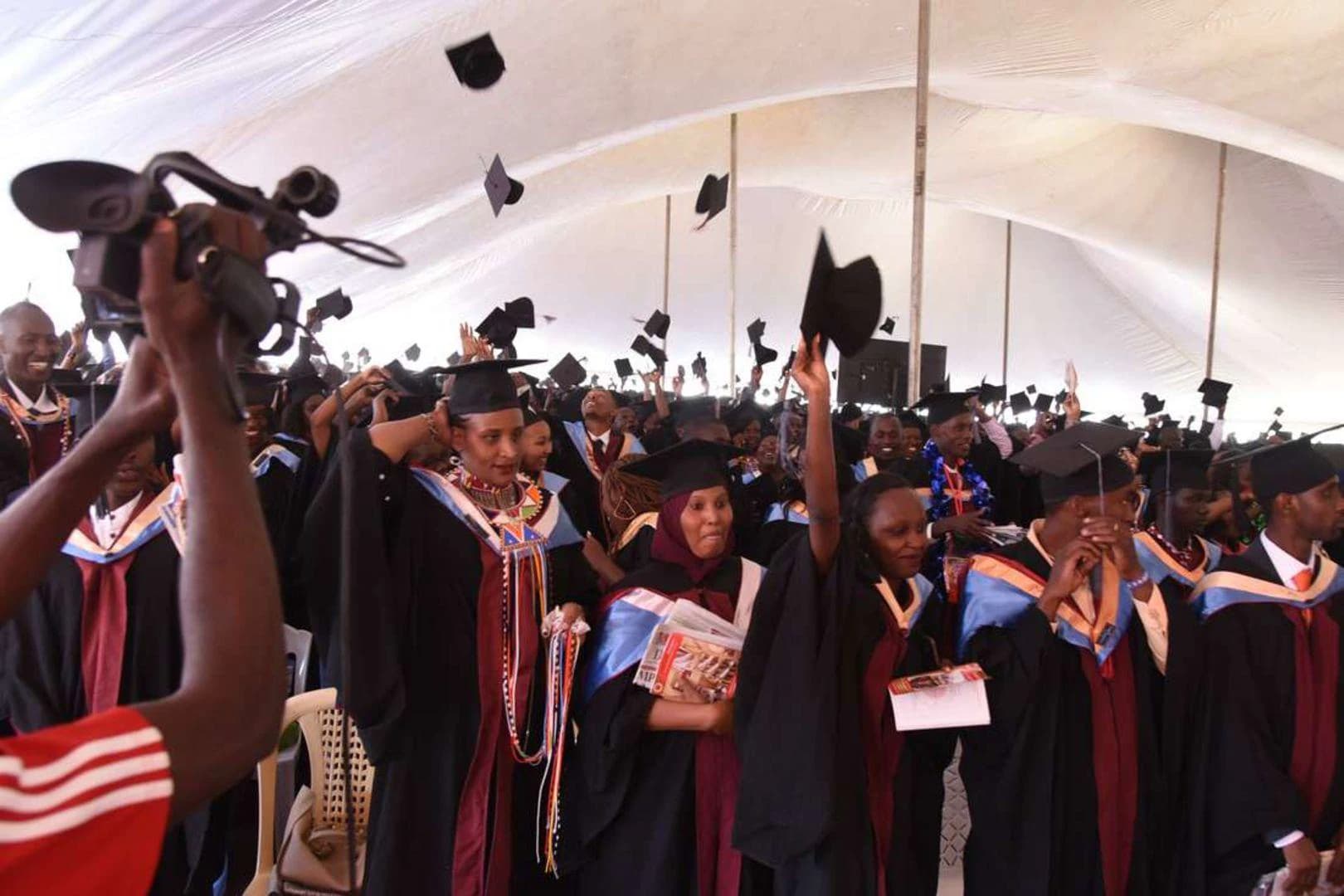
Congratulating the Class of 2026, Ruto urged the graduates to use their knowledge and professional skills to address national challenges and contribute to the country’s development.

Reader Discussion (0)
Sign in to comment