







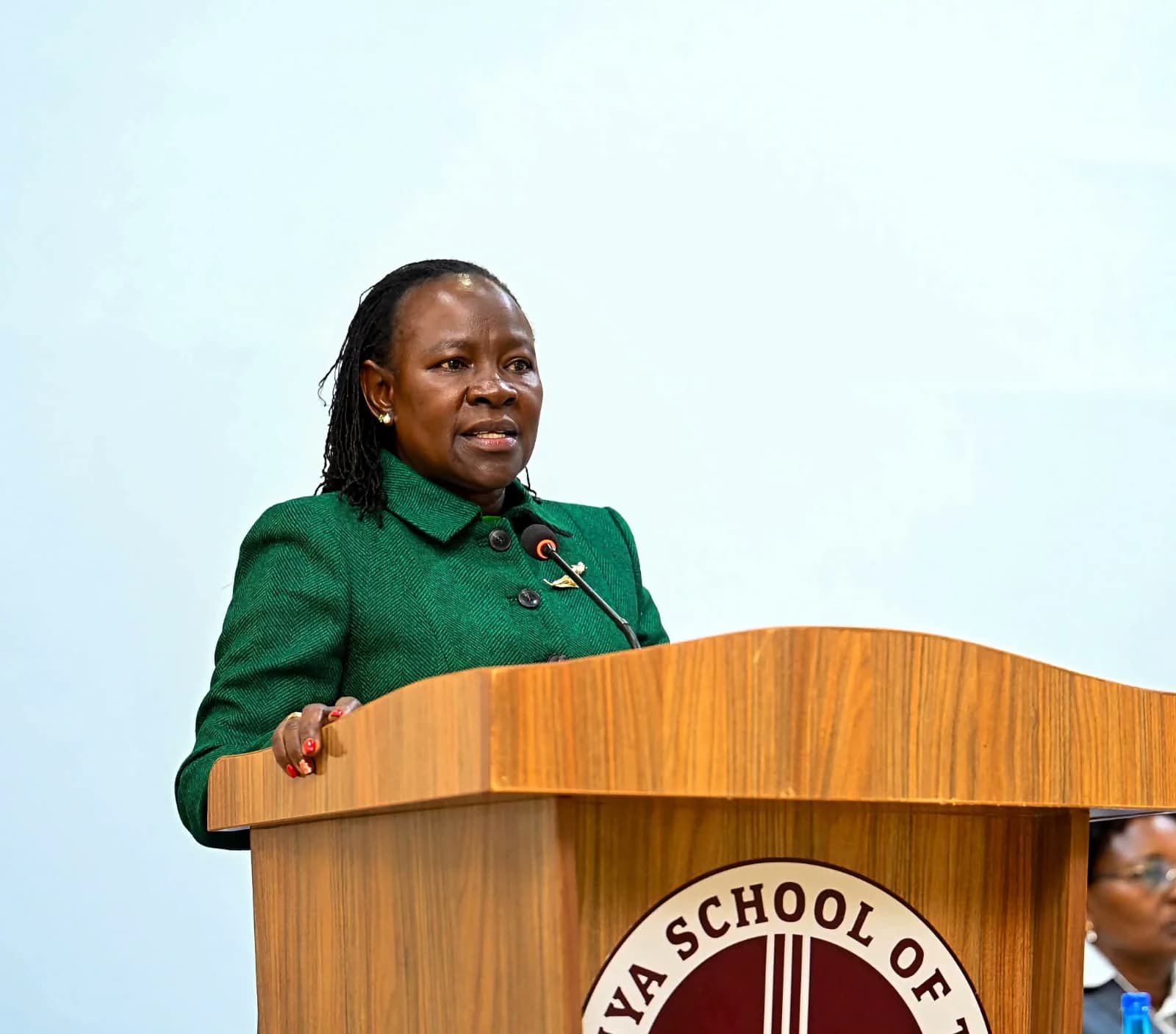

The Principal Secretary for Technical and Vocational Education and Training (TVET), Dr Esther Thaara Muoria, has challenged principals of technical institutions to tighten assessment standards and ensure graduates demonstrate practical skills before being awarded certificates.
Muoria said the credibility of Kenya’s Competency-Based Education and Training (CBET) system depends on producing graduates whose qualifications reflect skills they can demonstrate in real workplace environments.
Speaking during the opening of the Principals’ Quarterly Consultative Meeting at the Kenya School of TVET in Nairobi, the PS cautioned that awarding certificates without proof of competence risks undermining employers’ confidence and damaging the reputation of the entire TVET sector.
She emphasised that assessment must measure actual competence rather than attendance or the ability to present evidence that does not reflect a trainee’s practical performance.
“Every qualification awarded must be a true and verifiable reflection of competence demonstrated by the trainee,” Muoria said, urging institutional heads to take direct responsibility for safeguarding the integrity of assessment and certification.
The meeting, held under the theme CBET@3 Years: Consolidating Reforms, Strengthening Implementation and Delivering Competent Graduates, provided an opportunity to review three years of implementation and identify areas requiring improvement.
Muoria noted that public TVET institutions had achieved 100 per cent transition to the CBET system, alongside progress in modularising curricula, strengthening assessment arrangements and building the capacity of trainers.
However, she warned that the transition must now move beyond adoption to delivering measurable improvements in the quality of training and graduate competence.
She identified curriculum delivery, practical training, assessment integrity, industry partnerships and institutional accountability as key priorities for the next phase of implementation.
On curriculum reforms, the PS said revised curricula, following further refinement and stakeholder consultations, are expected to be rolled out early next year. She urged institutions to prepare trainers adequately to ensure effective implementation of the improved modules.
She also called on principals to prioritise practical training in institutional budgets, noting that adequate equipment, consumables and functional workshops are essential to developing occupational skills.
Muoria expressed concern over situations where training equipment remains underutilised or trainees undertake practical programmes without sufficient materials to acquire the required competencies.
She further urged institutions to strengthen partnerships with industry to improve workplace-based learning, industrial attachment and alignment of training with changing labour market demands.
The PS also encouraged TVET institutions to develop sustainable income-generating activities that expose trainees to real production environments while supporting institutional operations.
On accountability, she called for timely reporting, effective use of institutional data and clear action plans to address implementation gaps.
Muoria challenged principals to take ownership of CBET reforms at institutional level, insisting that successful implementation requires more than compliance with government directives.
She directed institutional leaders attending the meeting to convene staff meetings during the coming week to communicate the resolutions and key messages to trainers and other staff in State Agencies not represented at the gathering.
She said the next phase of CBET must focus on consolidating gains made over the past three years while addressing weaknesses that could compromise the quality and relevance of technical training.



Reader Discussion (0)
Sign in to comment