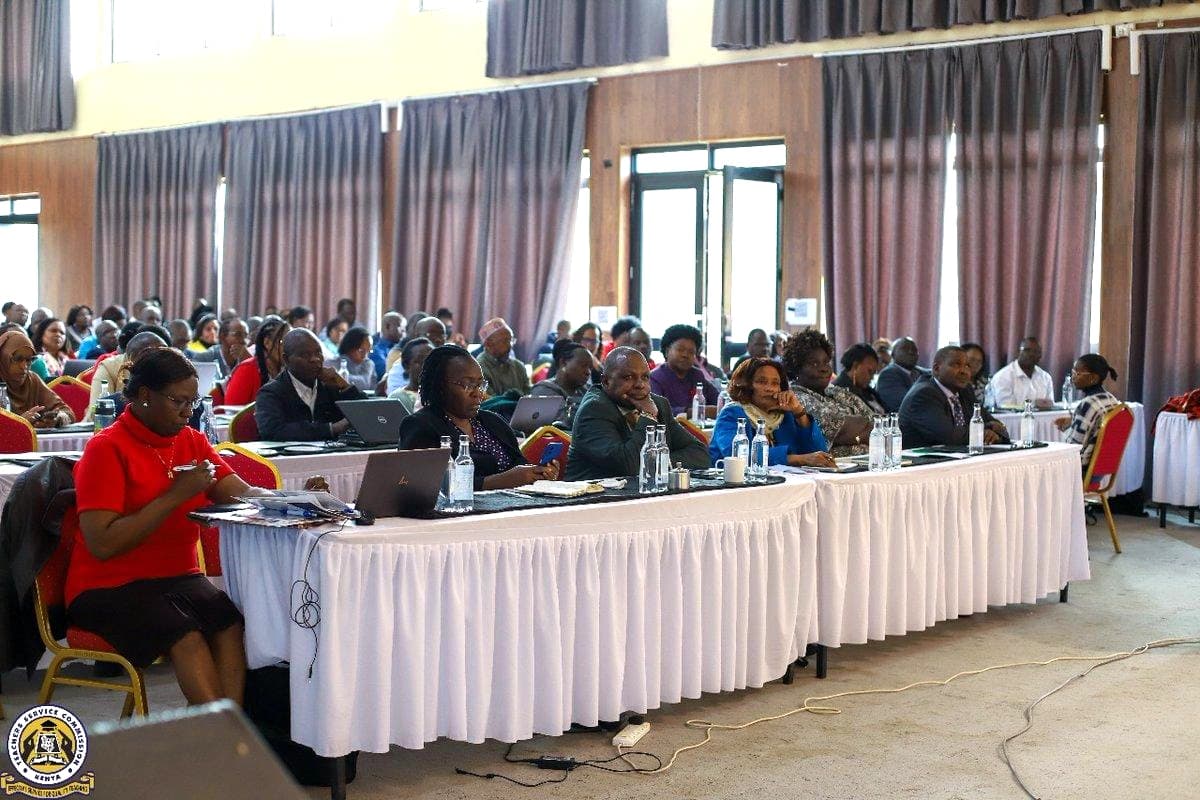
Kenya’s Competency-Based Education (CBE) system faces a reported staffing shortfall of 84,573 teachers across Junior and Senior Schools, with Junior School accounting for more than 71 per cent of the deficit, raising fresh concerns over the availability of qualified subject specialists to deliver the new curriculum.
Figures reported in July 2026 indicate that Junior School requires an additional 60,313 teachers, compared with 24,260 for Senior School. The gaps threaten effective teaching in learning areas that demand specialised knowledge, practical instruction and technical skills as learners advance towards more focused career pathways.
The shortage presents the Teachers Service Commission (TSC) and the government with a twofold challenge: increasing the number of teachers in classrooms and ensuring that those deployed possess the appropriate qualifications to teach the subjects assigned to them.
Mathematics, Agriculture, Creative Arts and Sports, and Pre-technical Studies are among the key Junior School learning areas requiring attention. At Senior School, the demand extends to sciences, computing, engineering, technical disciplines, languages, arts and sports-related subjects.
The staffing challenge comes as CBE places greater emphasis on practical learning, competency development and helping learners pursue pathways aligned with their abilities and interests. Without enough appropriately qualified teachers, schools may struggle to provide the full range of learning experiences envisaged under the curriculum.
Junior School shortages threaten curriculum delivery
Junior School teachers must deliver a broad curriculum to learners transitioning from primary education towards specialised learning.
Mathematics is particularly important because it provides the foundation for further studies in science, technology, engineering and technical fields. Where schools lack sufficient Mathematics teachers, existing staff may have to handle several classes, reducing opportunities for individual attention and remedial support.
Agriculture requires teachers who can connect theory with practical activities, while Creative Arts and Sports depends on personnel capable of developing learners' artistic, physical and performance skills.
Pre-technical Studies presents similar challenges because learners need structured guidance in practical and technology-related activities. Computer Studies, Home Science and science learning also require appropriate subject knowledge and, in some cases, specialised facilities.
The gaps vary between schools and counties, depending on enrolment, teacher deployment and the availability of qualified personnel. A national headcount alone cannot reveal which subjects are most severely affected in individual schools.
Senior Schools need qualified subject specialists
The staffing challenge becomes more specialised at Senior School, where learners select subjects aligned with their interests, abilities and future careers.
Under CBE, Senior School is organised around three broad pathways: STEM, Social Sciences, and Arts and Sports Science. Each requires teachers with relevant academic backgrounds and professional preparation.
STEM subjects, including Mathematics, Biology, Chemistry and Physics, require teachers capable of delivering theoretical and practical instruction. Technical courses such as Building and Construction, Electricity, Metalwork, Woodwork and Power Mechanics demand additional specialised knowledge and practical competence.
Other areas requiring suitably qualified teachers include Computer Studies and ICT, Aviation, Marine and Fisheries Technology, Media Technology, Music, Fine Arts, Theatre and Film, and sports-related disciplines.
The availability of teachers will influence the range of subjects schools can offer and the extent to which learners can pursue their preferred pathways.
Retooling is necessary, but not enough
The government and TSC deserve recognition for investing in teacher retooling programmes to prepare educators for CBE implementation. The training helps teachers understand revised curriculum designs, learner-centred instruction and competency-based assessment.
However, retooling cannot replace targeted recruitment where schools lack teachers, nor can short courses automatically substitute for the academic depth and technical expertise required in specialised subjects.
The priority must therefore be to complement retooling with recruitment, appropriate deployment and sustained professional development. A teacher's existing qualifications and recognised subject combinations must guide assignment to particular learning areas.
This is especially important in Physics, Chemistry, Computer Studies and technical subjects, where effective teaching may require laboratory experience, workshop practice or specialised training.
Retooling can strengthen the existing workforce, but it cannot independently resolve a structural shortage of teachers.
Qualifications must match subject assignments
The staffing debate must consider not only how many teachers Kenya employs but also what they are qualified to teach.
Under established post-primary recruitment frameworks, graduate teachers commonly qualify through a Bachelor of Education degree with recognised teaching subjects, or a relevant bachelor's degree combined with a recognised Postgraduate Diploma in Education. Diploma teachers may also qualify under applicable recruitment requirements.
Standard graduate-entry criteria have generally included a KCSE mean grade of C+ and at least C+ in each of the two teaching subjects, subject to applicable exceptions and specific recruitment rules.
Technical and specialised teaching assignments require qualifications relevant to the discipline, alongside the professional credentials required for the position.
A teacher qualified in Mathematics, for instance, cannot automatically be considered qualified to teach Physics, Computer Studies or Electrical Studies simply because a school has a vacancy. The teacher's academic background, recognised teaching subjects and applicable TSC requirements must be considered.
Retooling may supplement existing qualifications, but it should not automatically be treated as equivalent to formal subject specialisation.
Recruitment and deployment must go hand in hand
Closing the staffing gap requires a combination of targeted recruitment and more effective deployment of the existing workforce.
Where qualified teachers are available but staffing arrangements leave particular subjects understaffed, deployment reviews may help. Where schools genuinely lack appropriately qualified personnel, additional recruitment is necessary.
TSC should establish the shortages by subject, school level, county and sub-county, identifying both the number of teachers required and the qualifications needed to fill each gap.
Investment in laboratories, workshops, computers and other practical learning facilities must accompany these measures. Qualified teachers cannot fully deliver practical instruction where the necessary equipment and resources are unavailable.
Without timely intervention, learners in understaffed schools risk receiving fewer practical learning opportunities and having a narrower choice of subjects than their counterparts in better-resourced institutions.
Staffing crisis tests CBE implementation
The reported deficit of 84,573 teachers highlights the scale of the staffing challenge facing Kenya's education reforms. However, the aggregate figures do not establish the exact number of vacancies in every subject or county, making a detailed and updated staffing breakdown essential.
The government and TSC must combine recruitment, appropriate deployment, recognised subject qualifications, professional development and investment in learning facilities to ensure that schools can deliver the curriculum effectively.
CBE's success will depend not only on curriculum design, textbooks and assessment reforms, but also on the availability of teachers who can turn the curriculum into meaningful learning experiences.
Retooling is a commendable investment in teachers, but closing the staffing deficit requires a sustained commitment to placing enough appropriately qualified subject specialists in the schools that need them most.


Reader Discussion (0)
Sign in to comment