


The revelations should awaken the conscience of every Kenyan. They are a painful reminder that despite years of legislation, public education and national campaigns, the war against FGM is far from over.
Even more disturbing is the possibility that practices outlawed in Kenya are being sustained through cross-border arrangements involving families and relatives who should, instead, be protecting the children.
When girls are transported into neighbouring countries to undergo FGM, it exposes weaknesses in our collective response and raises serious questions about the effectiveness of cross-border child protection mechanisms.
Kenya has made commendable progress. According to the 2022 Kenya Demographic and Health Survey (KDHS), FGM prevalence among women aged 15–49 declined from approximately 38 per cent in 1998 to 15 per cent in 2022.
This is significant progress attributable to sustained advocacy, education, legislation and community mobilisation. However, a declining national average should not create complacency when girls in certain communities continue to face the threat of this harmful practice.
The law must work beyond our borders
Kenya is not without legislation to confront this vice. The Prohibition of Female Genital Mutilation Act, 2011, criminalises performing, aiding, abetting and procuring FGM.
Section 21 specifically addresses taking someone outside Kenya or arranging for someone to be brought into the country for the purpose of undergoing FGM. The Children Act, 2022, further reinforces children’s protection against harmful cultural practices.
The question, therefore, is not simply whether Kenya needs more laws. It is whether existing legislation is being effectively enforced, whether perpetrators are investigated and prosecuted, and whether vulnerable girls can access protection before the damage is done.
The government must strengthen border surveillance, intelligence-sharing and coordination between security agencies, children’s officers, immigration authorities and local administrators.
Communities along the borders require adequately resourced child protection structures, confidential reporting channels and rapid-response mechanisms to identify girls at risk.
More importantly, Kenya must intensify diplomatic and legislative engagement with neighbouring countries, particularly Ethiopia and Somalia, as well as Uganda and Tanzania. FGM does not respect political boundaries; neither should the determination to eliminate it.
Regional cooperation must move beyond declarations and conferences. Governments should strengthen bilateral agreements, harmonise relevant legislation, facilitate joint investigations and share information to disrupt networks involved in facilitating cross-border FGM.
Kenya cannot win this battle alone when the practice simply shifts across national boundaries.
Parents must stop facilitating the cut
Perhaps the most uncomfortable question concerns the role of parents and relatives.
How does a parent become an accomplice in subjecting their own daughter to an act that threatens her health, dignity and future? Why should a relative entrusted with a child’s welfare become the person organising her journey to undergo FGM?
Parents must understand that cultural expectations cannot supersede a child’s fundamental rights. A child is not family property whose body can be subjected to harmful practices to satisfy community expectations.
The holiday season should be a period of relaxation, recreation, family bonding and personal growth for our learners.
Girls should enjoy their childhood, participate in sporting and social activities, explore their talents and prepare for the next school term.
They should not spend their holidays fearing that a family gathering, a visit to relatives or a journey across the border could become an opportunity for them to be cut.
Childhood is not a rehearsal for suffering. Girls deserve to grow naturally, without being subjected to painful procedures that can leave lifelong physical and psychological consequences.
Parents, guardians and relatives must become the first line of protection. They should resist social pressure, challenge harmful traditions and report attempts to subject children to FGM. Silence and complicity only give perpetrators room to operate.
Education must become a powerful weapon
One of the most sustainable ways of defeating FGM is through education and the empowerment of children.
The Competency-Based Curriculum (CBC) provides an opportunity to strengthen the values, communication skills and social awareness that enable learners to recognise harmful practices and speak against them.
Through Community Service Learning, Religious Education, English, Kiswahili and contemporary issues across the curriculum, learners engage with questions of human dignity, personal safety, children’s rights and responsible citizenship.
Our girls must be empowered to understand that they have a right to bodily integrity and that nobody, including a parent or relative, should subject them to harmful practices.
They should know where to seek help, whom to report to and how to speak out without intimidation.
Teachers must go beyond classroom instruction. They have a responsibility to create safe environments where learners can disclose threats and seek guidance without fear of ridicule or victimisation. The values imparted in school must also find expression in family and community life.
However, schools cannot carry this responsibility alone. What happens when a learner goes home for the holidays? Does the protection she enjoys within the school compound disappear at the family doorstep?
Home must be a safe haven, not a place of danger. It is unacceptable for children to feel safer in school than in the homes where they are expected to find love, care and protection.
Parents must listen to their children, take their concerns seriously and provide safe spaces for open conversations.
The government and communities must not relent
The Anti-FGM Board, the ministry responsible for gender, county governments, children’s services, the National Police Service (NPS), religious institutions and civil society organisations must intensify their efforts.
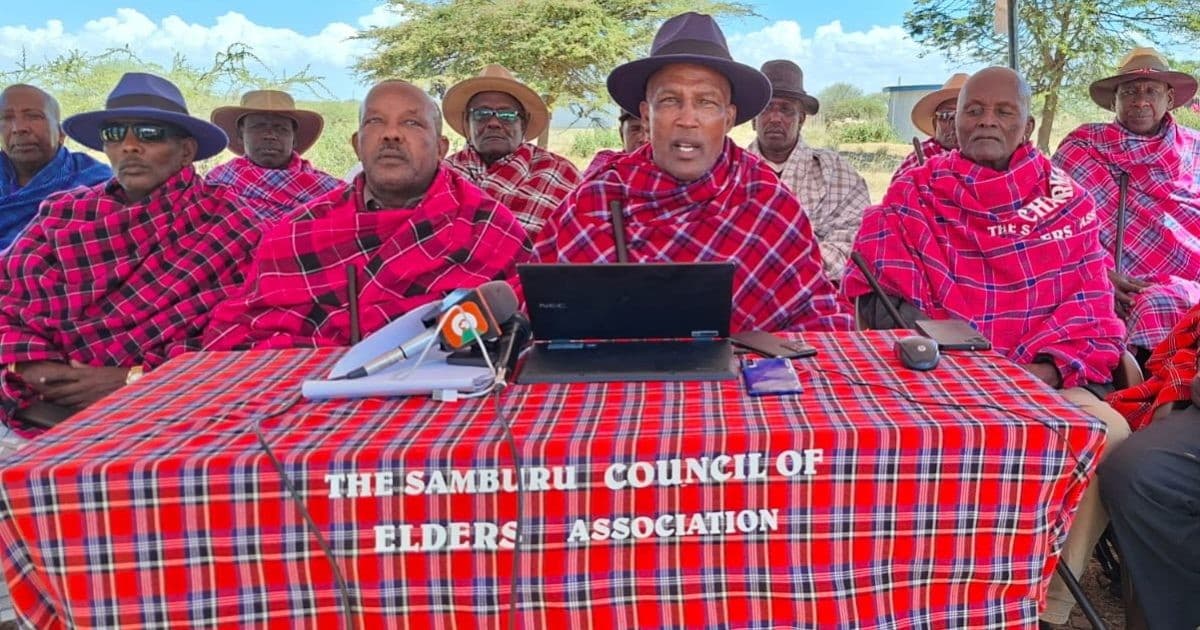
Community sensitisation should be continuous rather than seasonal. Traditional elders, religious leaders, women, men, youth representatives and FGM survivors must participate in changing attitudes.
Men, in particular, must take a more visible role in rejecting the practice and challenging the social expectations that sustain it.
Alternative rites of passage should also be promoted in communities where FGM is associated with the transition into adulthood.
Cultural identity and the celebration of maturity do not have to involve cutting a girl’s body. Communities can preserve meaningful traditions while abandoning practices that violate children’s rights.
We must equally invest in rescue services, safe shelters, counselling, medical care, legal assistance and educational continuity for girls escaping the threat of FGM.
Saving a child from the cut is only the beginning; ensuring that she recovers, remains in school and enjoys a normal childhood is equally important.
The media also has an important responsibility. Investigative reporting that exposes the hidden realities of FGM should be encouraged while protecting the identities and dignity of affected children.
Public awareness must translate into action, accountability and community involvement.
The war is not over
FGM is not an innocent cultural ceremony. It is a harmful practice that violates the dignity, bodily integrity and rights of girls. No cultural justification should be allowed to disguise the harm inflicted on children.
Kenya has committed itself to eliminating FGM by 2030. That ambition demands more than political declarations and commemorative events. It requires visible action, adequate funding, effective prosecution, community ownership and unwavering protection of every girl at risk.
Let us not become complacent because prevalence figures are declining. Every girl subjected to FGM represents a failure of the systems entrusted with her protection.
Let us join hands as parents, teachers, religious leaders, community elders, policymakers, law enforcement officers and responsible citizens. Let us refuse to facilitate, conceal or normalise this vice.
The fight must continue until no girl has to cross a border to be cut and no child has to fear returning home during the holidays.
In the 21st century, there should be no place for FGM in our society. Let girls be girls. Let them grow naturally, learn freely and enjoy their childhood.
Let home be their first sanctuary of safety, love and protection. The cut must stop, and the responsibility to end it begins with us.
The writer, Astiba Kebong’o, can be reached at jackiekebongo@gmail.com.


Reader Discussion (0)
Sign in to comment