









Academic failure is not necessarily a measure of intelligence, talent or hard work. Sometimes, obstacles to academic success include less visible struggles involving confidence, anxiety, motivation, fear and emotional wellbeing.
One misconception in education is that students who perform poorly in examinations are necessarily less intelligent, lazy or academically incapable. This assumption overlooks the psychological and environmental factors that shape learning.
Some learners demonstrate commitment, spend considerable time studying and understand concepts during lessons, yet struggle to translate that preparation into examination results.
Academic achievement involves more than classroom instruction. Confidence, emotional wellbeing, study strategies, prior knowledge and access to learning resources all deserve consideration when a learner is struggling.
Confidence, anxiety and the fear of mistakes
Students who believe they can improve may be more willing to attempt difficult questions, participate in discussions and seek clarification.
Learners who repeatedly doubt themselves may hesitate to express ideas or tackle demanding assignments, even when they have relevant knowledge.
Repeated disappointing results can reinforce feelings of inadequacy. Without constructive support, a student may begin to view difficulty in a subject as a permanent limitation.
Examination pressure can compound the problem. Some learners worry intensely about disappointing parents and teachers, while others struggle with constant comparisons with classmates.
Research links test anxiety with poorer educational outcomes, although the relationship is complex. Anxiety should be considered alongside subject knowledge, preparation and other factors rather than treated as the sole explanation for disappointing results. pubmed.ncbi.nlm.nih.gov
Parents and teachers should therefore ask what support a learner needs, rather than assuming that additional pressure will produce better marks.
The fear of making mistakes also deserves attention.
In classrooms where errors attract ridicule or humiliation, students may avoid asking questions, testing ideas or attempting unfamiliar tasks.
Yet mistakes provide valuable information about what a learner understands and where further explanation is required. Constructive correction can help students develop better approaches without making them feel inadequate.
A supportive classroom allows learners to acknowledge confusion and work through it.
Motivation matters too. When education is presented exclusively as a race for grades, some students lose interest in the knowledge and skills behind the assessment.
Connecting lessons to practical experiences, personal interests and future opportunities can make learning more meaningful.
Teachers can also help students replace sweeping statements such as “I can never do mathematics” with specific questions about the concepts they need to practise.
Home and school environments shape learning
Academic development continues beyond the classroom.
Unrealistic expectations, constant comparisons and limited emotional support can make it difficult for children to discuss their struggles openly.
Parents should create opportunities for learners to explain what they find challenging without fearing humiliation or rejection.
Children develop at different rates and have different strengths. Examination performance should inform decisions about support, while leaving room to recognise their wider abilities and potential.
Schools have a corresponding responsibility to provide environments that support learning and wellbeing.
Large classes, inadequate resources and limited individual attention can leave some students struggling to keep pace. A learner who needs additional explanation may be overlooked when progress is measured only by how quickly the class completes the syllabus.
Teachers should use assessment and classroom interaction to identify gaps in understanding and adjust support where possible.
Patience, clear explanations and constructive feedback can help a student rebuild confidence and engage more actively.
Learning difficulties may also require specialist assessment or additional educational support. Poor results alone cannot establish whether a learner has a psychological condition, a learning difficulty or gaps in prior instruction.
Digital habits are another part of the picture.
Frequent notifications and prolonged recreational phone use can interrupt revision and make it harder to maintain a study routine. Technology can also support learning when students use it purposefully.
Young people need guidance on organising study time, taking breaks and balancing online activity with academic responsibilities.
Replace labels with practical support
Addressing underachievement begins with understanding the individual learner.
Parents and teachers should discuss patterns in performance, review study methods and identify whether difficulties occur across subjects or in particular areas.
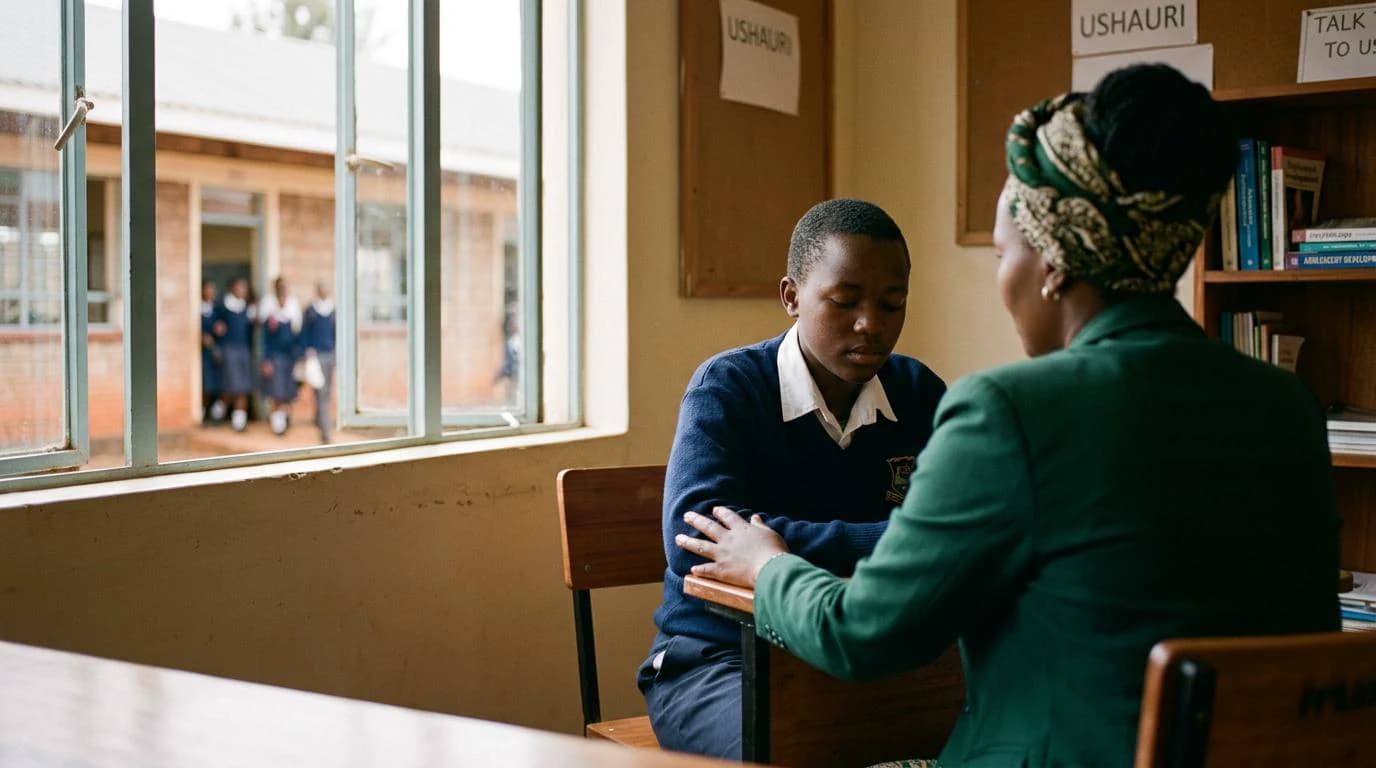
Schools should strengthen guidance and counselling services and help learners develop practical approaches to examination preparation. These can include realistic revision plans, practice questions and opportunities to discuss worries.
Achievable learning targets are useful when accompanied by clear instruction and regular feedback. Recognising progress can help students see that improvement is possible.
A growth mindset—the belief that abilities can develop—may encourage persistence. However, encouragement must be supported by effective teaching, appropriate strategies and resources. Research on growth-mindset programmes shows that changing beliefs alone does not reliably improve attainment. EEF
Telling a struggling learner to “try harder” offers little help unless someone also identifies what they need to do differently.
Poor performance should prompt questions about understanding, preparation, wellbeing and the learning environment. It should not become a permanent label attached to a child.
Behind a disappointing result may be a learner coping with fear, diminished confidence, overwhelming expectations or circumstances that make learning difficult.
The responsibility of education stakeholders is to understand those circumstances and respond with suitable support.
Education should develop knowledge alongside confidence, resilience and the capacity to learn from setbacks. That requires attention to the whole learner and practical action when difficulties emerge.



Reader Discussion (0)
Sign in to comment