









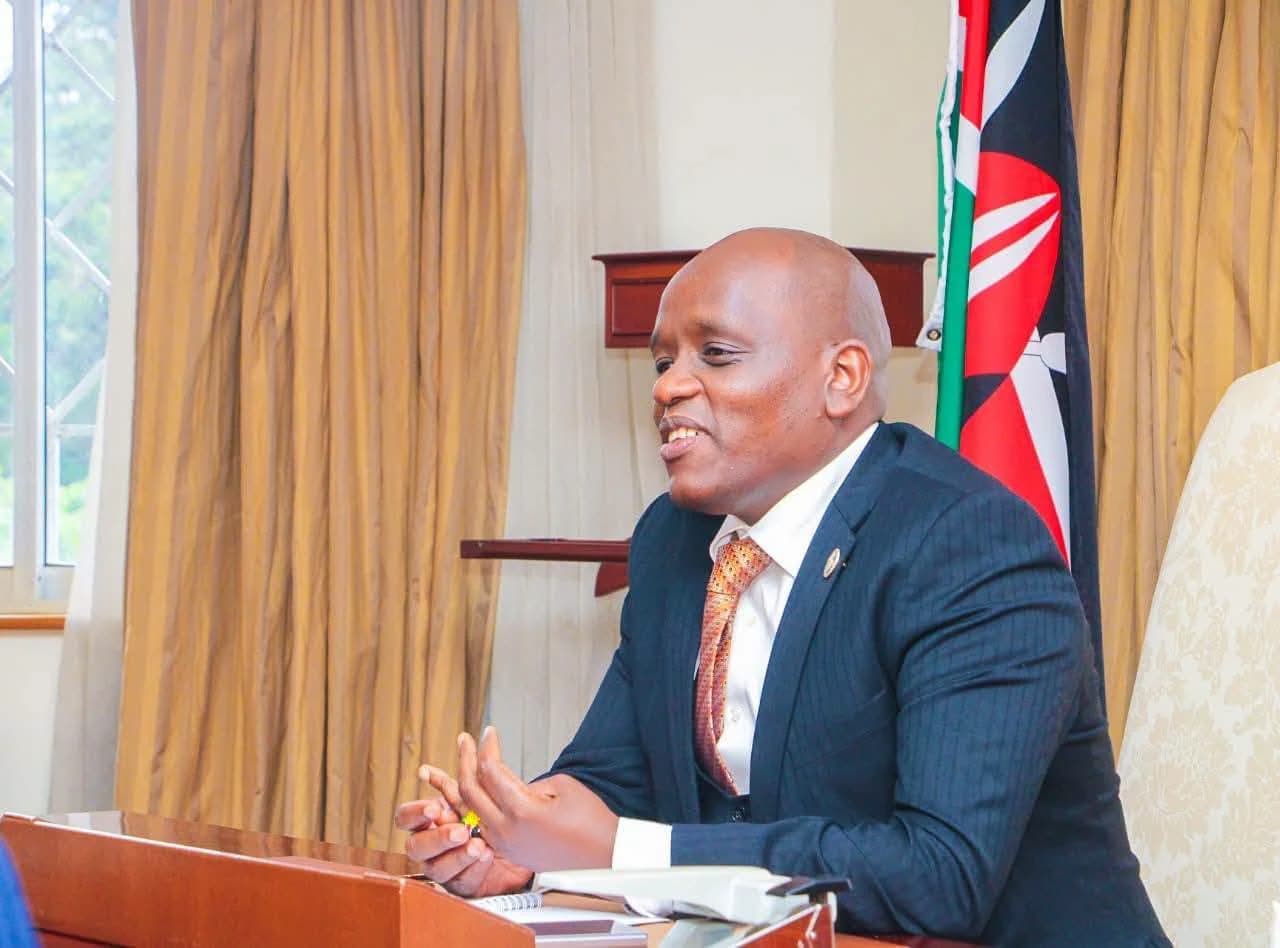
The Teachers Service Commission (TSC) has a new captain at the helm. Congratulations to Cheptumo Ayabei on your appointment as Secretary and Chief Executive Officer of the Commission.
Your appointment is more than a change of leadership. It presents an opportunity to renew institutional confidence, rethink longstanding administrative practices and improve the relationship between the Commission and the teachers it serves.
Your professional journey carries an inspiring message about perseverance. In 2015, you were among four candidates shortlisted for the TSC chief executive position, which eventually went to Nancy Macharia. More than a decade later, you returned to pursue the same dream and secured the position. Having joined TSC in 1999 as a Finance Officer and risen through the ranks to become Director of Finance, your 27 years of institutional experience offer a valuable foundation for the responsibility ahead.
Your appointment also marks a historic milestone as the first person with a disability to lead the Commission. It is an important statement about inclusion, equal opportunity and the recognition of professional competence in public leadership.
However, while your achievement deserves celebration, the expectations accompanying your appointment are enormous. The teaching fraternity is not merely looking for a new officeholder; it is looking for a new chapter in the management of the teaching service.
You assume office at a particularly demanding time, when political temperatures are rising and the country is gradually moving towards another election cycle. Political rhetoric, competing interests and external pressure can test the independence of public institutions. Your leadership will therefore require courage, integrity and an unwavering commitment to the constitutional mandate of the Commission.
The question is whether your administration can help restore TSC's credibility as an independent, fair and dependable employer.
Recruitment: restoring merit and fairness
Perhaps no issue weighs more heavily on the minds of teachers than recruitment.
For thousands of qualified but unemployed teachers, every recruitment announcement represents renewed hope. Unfortunately, prolonged waiting, limited vacancies and the challenge of securing permanent employment have left many qualified professionals uncertain about their future.
The magnitude of the staffing challenge is documented in parliamentary records. On April 9, 2025, the National Assembly was informed that Kenya faced a teacher shortage of approximately 98,461. This is not merely a statistic; it represents classrooms, learners and schools experiencing the consequences of inadequate staffing.
The situation calls for a deliberate, adequately funded and sustainable recruitment strategy. It is encouraging that successive recruitment exercises have expanded the teaching workforce, but the numbers must progressively respond to actual demand.
Ayabei, your administration must champion a transparent and equitable recruitment framework. Employment opportunities should be guided by established criteria, professional qualifications, subject requirements and demonstrable staffing needs.
The teaching profession must never become an arena where political connections, personal patronage or undue influence appear to determine who gets employed. Qualified teachers deserve a fair opportunity, regardless of their geographical background or social connections.
There is also need for predictable recruitment schedules, transparent communication of selection criteria and accountability in the allocation of vacancies. The Commission should continually review staffing disparities across counties, sub-counties and schools, particularly as the Competency-Based Education (CBE) system creates new demands for specialised teachers.
The challenge is to ensure that recruitment remains a professional process rather than a contest of influence.
Article 237 of the Constitution of Kenya establishes the Teachers Service Commission and outlines its responsibilities, including recruiting, employing, deploying, promoting and transferring teachers, as well as exercising disciplinary control over the teaching service. These responsibilities require an institution capable of making professional decisions without improper external interference.
With political temperatures rising, your leadership will be tested on how firmly it safeguards this independence. Collaboration with government and other stakeholders is necessary, but such engagement should never compromise the Commission's constitutional responsibilities.
Teachers need assurance that recruitment, transfers, promotions and disciplinary processes will be guided by law, fairness and established professional standards. An independent institution must demonstrate its independence through its decisions, not merely through constitutional recognition.
This is an opportunity to strengthen institutional safeguards, promote accountability and ensure that the Commission serves the interests of the teaching profession and the nation's education system.
Remuneration remains another critical concern
The signing of the 2025-2029 Collective Bargaining Agreement between TSC and teacher unions was an important development. The agreement provided salary increments of up to 29.5 per cent across different teacher cadres, with the greatest percentage increases benefiting lower job grades.
While this represented progress, the broader conversation about teachers' earnings and welfare must continue. The rising cost of living, housing expenses, medical needs and other economic pressures have continued to shape teachers' experiences. Salary reviews should therefore be accompanied by constructive engagement on allowances, career progression and the overall sustainability of teachers' remuneration.
Your financial management background allows you to bring informed leadership to these conversations. However, financial prudence must go hand in hand with an appreciation of the human realities facing teachers. There is need for sustained engagement with teacher unions and the Salaries and Remuneration Commission to address emerging concerns and promote equitable remuneration.
Career progression also deserves renewed attention. Teachers who invest in further training, acquire additional qualifications and demonstrate professional competence should have clear and fair opportunities for advancement.
A teacher who feels professionally valued is more likely to remain motivated and committed to the task of educating the next generation. As the saying goes, a happy worker is a productive worker. Teacher welfare is not a favour; it is an investment in educational quality.
Beyond recruitment and salaries, several administrative concerns require attention.
The Commission needs to strengthen the management of teacher transfers, improve the handling of disciplinary cases, address delays in pension processing and enhance communication between headquarters, county offices and individual teachers. Teachers serving in hardship areas and insecurity-prone regions also deserve careful consideration in deployment and welfare decisions.
Equally important is the need to address professional burnout, workplace conflict and teachers' psychological well-being. The demands of modern education require a workforce that is not only qualified but also adequately supported.
The relationship between TSC and teacher unions must also be strengthened. Industrial relations should not revolve around crisis meetings whenever disagreements threaten to disrupt learning. Regular consultation, honest communication and mutual respect can prevent many disputes from escalating. The Commission must become an employer that listens before grievances become crises.
The transition to CBE provides another opportunity for strategic workforce planning. Senior School, with its different pathways and subject combinations, requires appropriate teacher deployment, professional development and careful assessment of staffing needs. TSC must work closely with the Ministry of Education and other relevant institutions to ensure that workforce planning keeps pace with educational reforms.
Ayabei, you have a significant advantage: you understand the institution from within. Your nearly three decades of service have exposed you to its financial operations, administrative structures and institutional challenges. That experience should now become a foundation for meaningful transformation.
The teaching fraternity wants a Commission that is firm but fair, independent but accountable, financially prudent but responsive to human needs. It wants transparent recruitment, equitable promotions, humane transfers, competitive remuneration and administrative decisions that inspire confidence.
Your return after an unsuccessful attempt in 2015 demonstrates that setbacks need not determine one's final destination. However, your new responsibility goes beyond personal achievement.
The question is no longer whether you can rise to the highest office at TSC. It is whether you can raise the standards of the institution you have been entrusted to lead.
The country is watching. Teachers are waiting. The responsibility is enormous, but so is the opportunity.
Congratulations once again, Ayabei. May your tenure be remembered not merely for the historic nature of your appointment but for the reforms you champion, the confidence you restore and the dignity you help reclaim for the teaching profession.
It is time to turn expectations into action. It is time to deliver.


Reader Discussion (0)
Sign in to comment