- The proposed law has introduced new minimum academic requirements for applicants seeking admission to teacher training diploma programmes.
- The Bill has created an alternative entry route for persons with disabilities, allowing admission with a minimum KCSE mean grade of C-.
- The proposed law has required teacher training colleges to obtain registration from county education boards, with unregistered operation constituting a criminal offence.
Prospective teachers seeking admission to training programmes will face new academic requirements and mandatory pre-service education under proposed reforms aimed at strengthening teacher preparation, regulating training institutions and improving professional standards before individuals qualify for registration and begin teaching in Kenya’s education system.
The proposed Pre-Service Education and In-Service Training Bill, 2026, sponsored by National Assembly Majority Leader Kimani Ichung’wah, requires anyone seeking registration as a teacher to formally undertake pre-service education in accordance with the Teachers Service Commission Act.
Applicants seeking a Diploma in Primary Teacher Education will be required to have a minimum Kenya Certificate of Secondary Education (KCSE) mean grade of C plain or its equivalent under the senior school system.
Those seeking a Diploma in Secondary Teacher Education will require a mean grade of C plain and at least C+ in their respective teaching subjects.
Applicants for a Diploma in Special Needs Teacher Education will require a minimum mean grade of C plain, while those pursuing a Diploma in Technical Teacher Education will need C plain and at least C+ in science, technology, engineering or mathematics teaching subjects.
The proposed requirements will also create an alternative entry route for persons with disabilities, who may be admitted to diploma programmes with a minimum KCSE mean grade of C-.
RELATED:
Proposed law introduces savings scheme for parents planning for children’s tertiary education
“An applicant who is a person living with disability may be admitted for education to acquire any of the qualifications in the first column if the applicant has attained a mean grade of “C” minus in the Kenya Certificate of Secondary Education or an equivalent in senior school,” reads part of the Bill.
Under the Bill, the Kenya Institute of Curriculum Development (KICD) will be responsible for developing teacher training programmes, curricula and learning materials. The Kenya National Educational Assessments Council will conduct national assessments and award certificates and diplomas.
The Cabinet Secretary for Education, in consultation with the Teachers Service Commission [TSC], will also be required to establish and implement structured in-service training programmes for teachers and education managers.
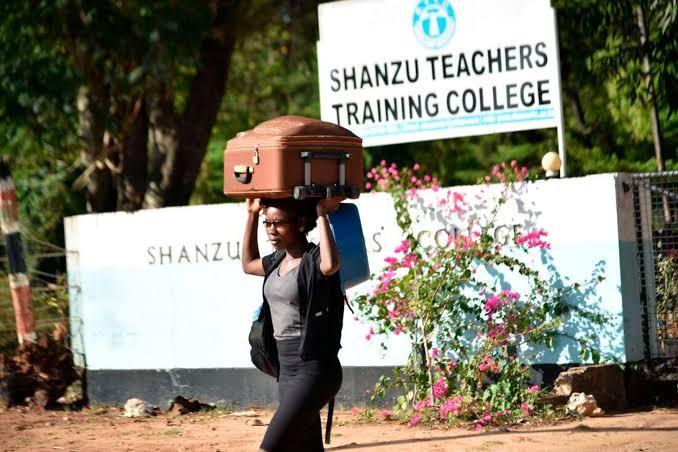
Teacher training colleges will be required to obtain registration from their respective county education boards before operating. Operating an unregistered teacher training college or providing education management services to one will constitute a criminal offence under the proposed law.
Headteachers face Sh1 million fine, jail term over illegal school fees
County education boards will be required to consider applications and issue either a certificate of registration or a written decision giving reasons for rejection within 30 days.
Applicants dissatisfied with a board’s decision will have 14 days to request a review by the county education board and 30 days to appeal the decision before the Education Appeals Tribunal.
The Bill also provides for universities, Technical and Vocational Education and Training institutions, national polytechnics, technical and vocational colleges, technical trainer colleges and the proposed Kenya Teachers Training College as institutions where prospective teachers can undertake pre-service training.
By Bernard Magada
You can also follow our social media pages on Twitter: Education News KE and Facebook: Education News Newspaper for timely updates.
>>> Click here to stay up-to-date with trending regional stories
>>> Click here to read more informed opinions on the country’s education landscape