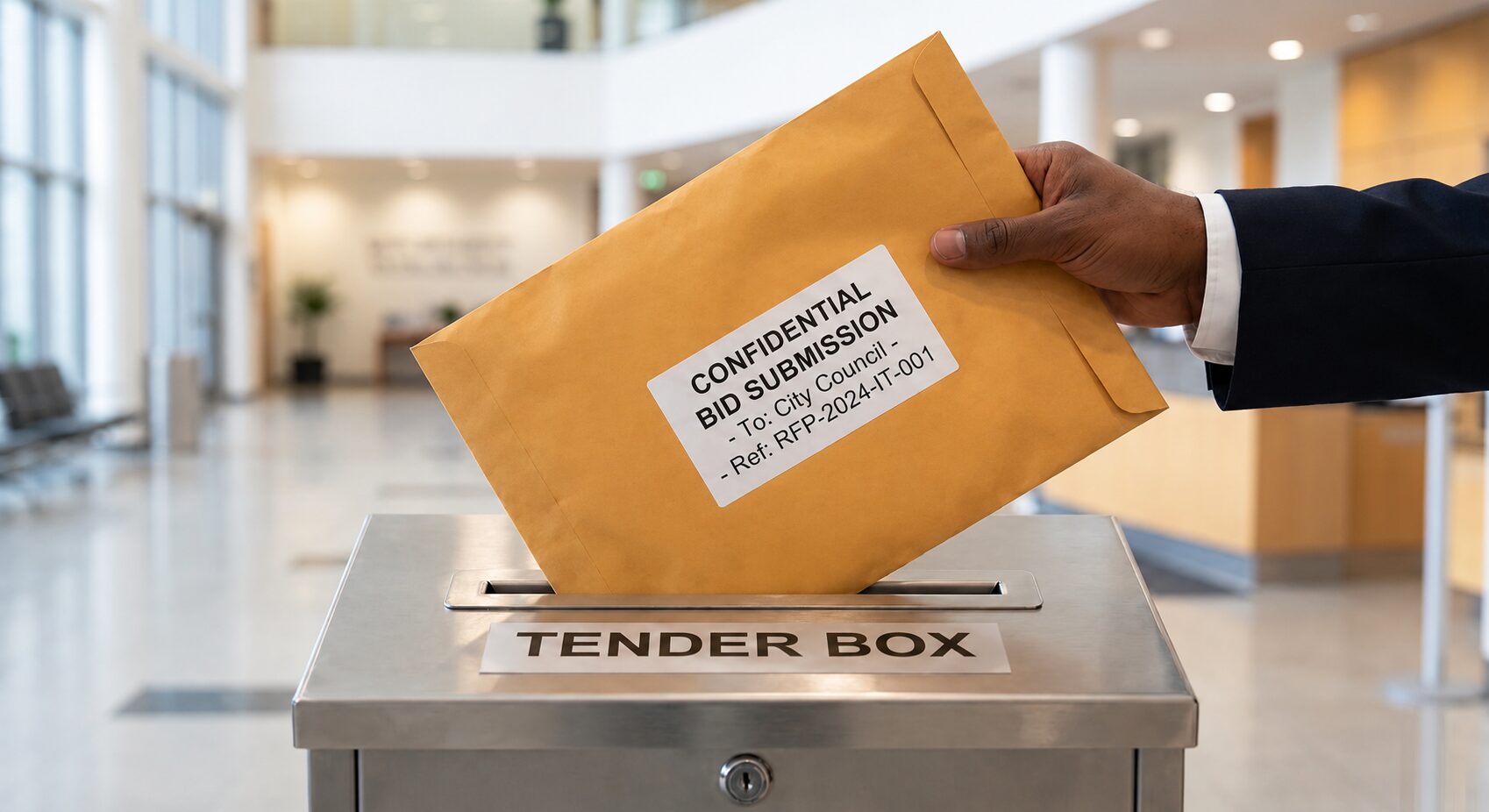
- KUCCPS says it has the technical capacity to manage Junior-to-Senior School placement if government assigns it the role.
- The proposal raises fresh questions over transparency, learner choices, school capacity and appeals under the CBE transition.
- Parents will want clear placement rules before learners receive Senior School assignments.
Kenya’s transition from Junior School to Senior School could be heading for another major turning point after the Kenya Universities and Colleges Central Placement Service (KUCCPS) offered to manage the placement of learners into Senior School if called upon by the government.
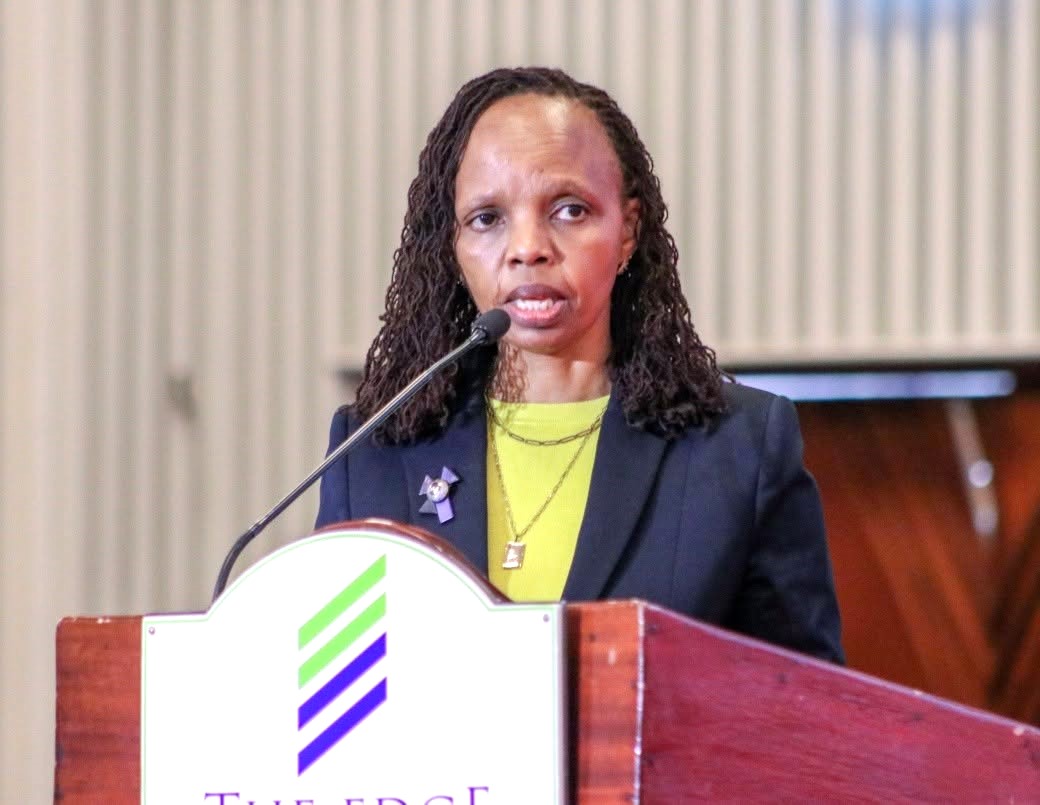
KUCCPS Chief Executive Officer Dr Agnes Mercy Wahome told Parliament that the agency has the internal technical expertise required to undertake the exercise, opening a new possibility in the increasingly contentious Grade 10 transition under the Competency-Based Education (CBE) system. A September 9, 2026 parliamentary news update reported that KUCCPS had offered to manage the Junior-to-Senior School placement exercise if called upon, citing its internal technical expertise.
The proposal comes at a critical moment when thousands of learners, parents and schools are seeking clarity on how the next stage of education will be organised.
For parents, however, the biggest question may not simply be who conducts the placement, but whether the process will be transparent enough for families to understand why a learner has been assigned to a particular school.
The prospect of KUCCPS taking over the exercise has therefore immediately reignited the debate over the architecture of Senior School placement.
KUCCPS is best known for coordinating placement of students into universities, colleges and Technical and Vocational Education and Training (TVET) institutions.
Its possible entry into Senior School placement would represent a significant expansion of its role.
The agency already operates a centralised placement system involving large numbers of applicants, programmes, institutions and selection preferences. KUCCPS officially describes its mandate as coordinating placement to universities and colleges and administering placement-related data and career guidance.
That experience could potentially be adapted to the Grade 10 transition, where learners will move into pathways and schools offering different combinations of subjects and facilities.
The argument in favour of KUCCPS is straightforward: if an agency already possesses the technology, data-management systems and technical personnel required to handle large-scale placement, why create another mechanism from scratch?
But technical capacity is only one side of the debate.
The other is public confidence.
Transparency will be the real test
The most immediate concern emerging from the public reaction is transparency.
A placement system can be technically sophisticated and still leave parents dissatisfied if they cannot understand how decisions were reached.
Parents will want to know whether placement will depend on learner performance, school choices, pathway preferences, geographical considerations, available spaces or a combination of several factors.
They will also want to know what happens when thousands of learners select the same prestigious schools.
This is where the government will have to provide unusually clear answers.
Under a centralised placement system, there must be an auditable trail showing how learner preferences interact with available spaces and other placement criteria.
Otherwise, the process risks becoming a black box in which parents receive a placement decision without understanding the reasoning behind it.
The criticism already appearing online is therefore important.
Some Kenyans are questioning whether the placement process is sufficiently transparent, while others are asking whether the classification system itself will change.
Those concerns should not simply be dismissed as resistance to reform.
They point to a deeper issue: parents want to trust the system before they trust the outcome.
The school classification question
Another emerging question concerns the identity and classification of Senior Schools.
As Kenya moves deeper into the CBE transition, parents are still trying to understand the practical meaning of the various school categories and how they will affect their children’s choices.
The debate over whether the current designation will be retained or replaced by another classification is more than a matter of letters and labels.
School classification determines how parents perceive institutions, how learners make choices and how resources and opportunities may be distributed.
If KUCCPS is eventually given the placement mandate, the government will therefore need to publish a clear framework showing exactly how schools will be categorised and how those categories will influence placement.
Without such clarity, confusion could accompany every placement cycle.
One of the defining promises of CBE is greater attention to learners’ abilities, interests and career aspirations.
That principle must also be reflected in Senior School placement.
A learner interested in science, technology, engineering or mathematics should not simply be treated as another number in a computerised allocation system.
Similarly, a learner showing strong potential in humanities, creative arts, sports or technical disciplines should have a realistic opportunity to pursue the pathway that matches their strengths.
This means placement cannot be reduced to the question of which school has an available vacancy.
It must answer a more fundamental question:
Does the placement match the learner?
That will require accurate learner data, genuine school choices, reliable information about available subject combinations and sufficient capacity in schools.
The Ministry’s current framework allows Grade 9 learners to choose 12 Senior Schools across the C1–C4 categories and select among STEM, Social Sciences, and Arts and Sports Science pathways.
The school capacity problem
Even the best placement algorithm cannot create classrooms, laboratories, workshops, teachers or boarding facilities where none exist.
This could become one of the greatest challenges facing the Grade 10 transition.
Demand for popular schools is likely to be significantly higher than available capacity.
A learner may choose a particular institution because of its academic reputation, location, facilities or preferred pathway, only to discover that hundreds or thousands of other learners have made the same choice.
The government will therefore have to ensure that Senior School placement is accompanied by aggressive expansion of infrastructure and staffing.
Otherwise, centralised placement could merely make an existing capacity problem more visible.
If KUCCPS eventually receives the mandate, the agency will need to demonstrate that its proposed system can handle the unique realities of school placement.
University placement primarily involves post-secondary institutions and programmes.
Senior School placement involves children transitioning from Junior School, often with parents heavily involved in decision-making.
The consequences of an unsuitable placement can therefore be profound.
There must be an effective mechanism for correcting errors, handling special circumstances and allowing legitimate appeals.
Parents should not be forced into lengthy bureaucratic battles simply because a computer-generated placement does not reflect a learner’s circumstances or choices.
The appeal system will matter
Perhaps the most important safeguard will be a credible appeals mechanism.
No centralised placement system is likely to satisfy every family.
Some learners will miss their first choices. Others may be placed far from home. Some may discover that the pathway or subject combination available at their assigned school does not correspond with their expectations.
A transparent appeal process would provide an important safety valve.
Parents should know when to appeal, where to appeal, what evidence is required and how quickly a decision will be made.
The process should also publish clear reasons for rejected appeals.
KUCCPS’s offer to manage Senior School placement could ultimately prove useful.
The agency has experience handling large-scale placement exercises, and its technical capacity could help create a more centralised and data-driven system.
But technology alone will not settle the controversy surrounding Grade 10 placement.
The success of the system will depend on whether learners receive placements based on clearly stated rules, whether parents can understand the process, whether schools have sufficient capacity and whether mistakes can be corrected quickly.
Most importantly, the government must resist the temptation to present centralisation as an automatic solution.
The question is not merely whether KUCCPS can place learners. It is whether it can place them fairly, transparently and in a way that respects their choices, abilities and aspirations.
That is the standard by which any new Grade 10 placement system should ultimately be judged.
For Kenya’s parents, the message is simple: before the placement letters arrive, the rules must be clear.
READ ALSO: New rules open advocates training to public, private institutions
And for learners entering the final stretch of Junior School, the stakes could hardly be higher.
By Hillary Muhalya
Get more stories from our website: Education News
To write to us or offer feedback, you can reach us at: editor@educationnews.co.ke
You can also follow our social media pages on Twitter: Education News KE and Facebook: Education News Newspaper for timely updates.
>> Click here to stay up-to-date with trending regional stories