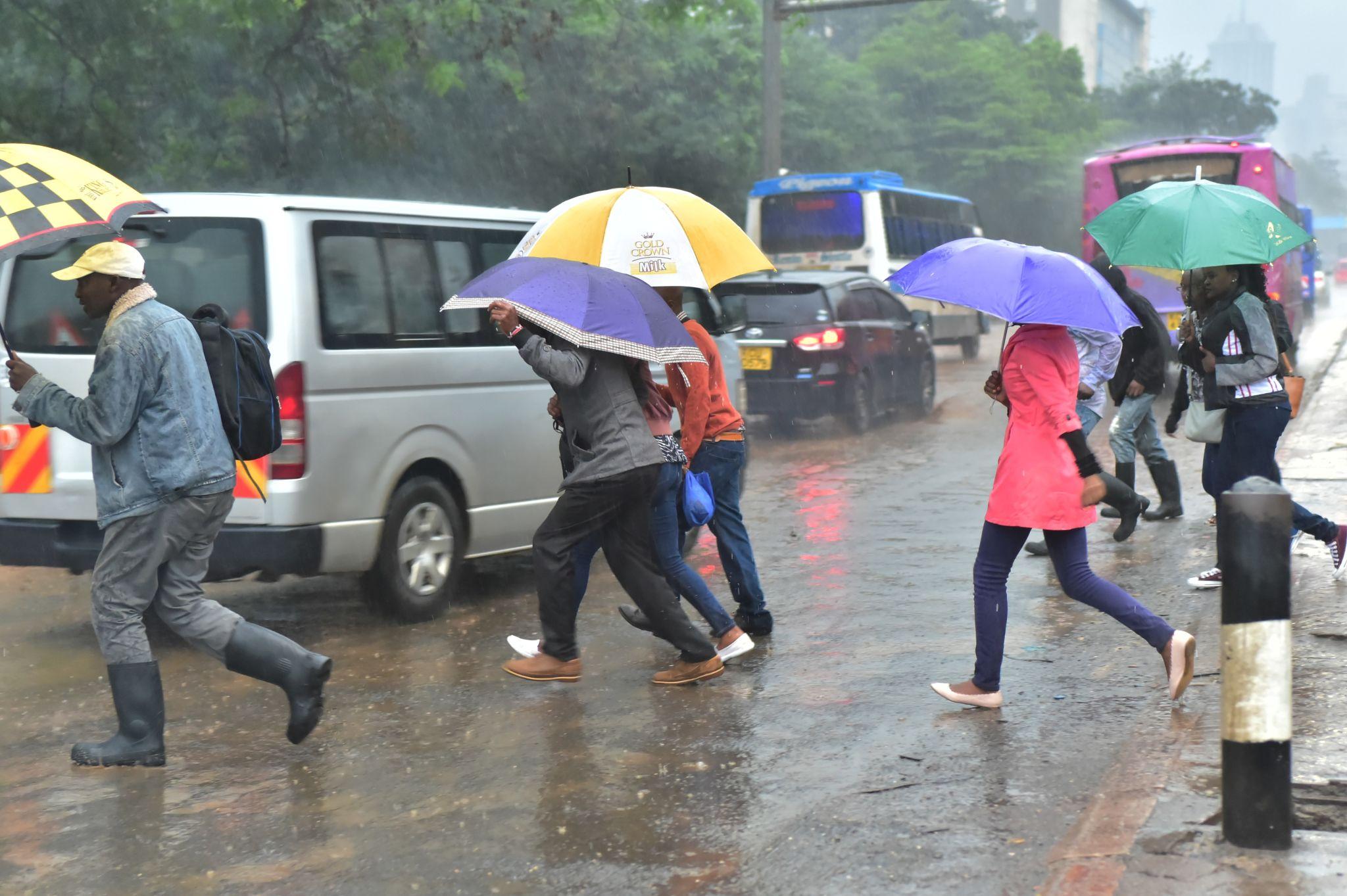
The Kenya Meteorological Department (KMD) has issued a fresh weather advisory warning that rainfall is expected to continue in several parts of the country during the first week of June, with residents urged to remain vigilant and take necessary precautions against possible disruptions associated with persistent showers, cold conditions, and fluctuating temperatures.
The forecast, covering the period between June 2 and June 8, 2026, indicates that various regions will continue to experience wet weather despite expectations that many parts of the country would gradually transition into the cooler June season.
According to the department, rainfall is expected in the Highlands East and West of the Rift Valley, the Lake Victoria Basin, the Rift Valley region, the Coastal region, and parts of Northeastern Kenya.
The latest advisory comes at a time when many areas across the country are still recovering from weeks of sustained rainfall that have affected transport, agriculture, and daily economic activities.
Highlands East and South Eastern Lowlands
According to KMD, the Highlands East of the Rift Valley are expected to experience cool and cloudy weather for much of the forecast period.
The region includes Nairobi, Kiambu, Nyandarua, Nyeri, Kirinyaga, Murang’a, Embu, Meru, Laikipia, and Tharaka Nithi counties. Residents in these areas should expect occasional sunny breaks, although light rainfall is still likely in several locations.
The department notes that while rainfall amounts may not be extremely heavy in some parts of the Highlands East, the combination of cool temperatures, cloud cover, and intermittent showers may create uncomfortable conditions, especially during the morning and evening hours.
Farmers, commuters, and outdoor workers have been advised to plan their activities carefully and remain prepared for sudden changes in weather.
Similar weather patterns are expected in the South Eastern Lowlands, including Machakos, Kitui, Makueni, and Kajiado counties.
These areas are likely to experience periods of cloudiness interspersed with sunshine and occasional rainfall. Although the counties are generally associated with drier conditions compared to other parts of the country, residents have been advised not to dismiss the possibility of rainfall during the forecast period.
Lake Victoria Basin and Rift Valley to remain wet
In the Highlands West of the Rift Valley and the Lake Victoria Basin, rainfall is expected to remain a dominant weather feature.
Counties such as Kakamega, Bungoma, Busia, Vihiga, Kisumu, Siaya, Homa Bay, Migori, Kisii, and Nyamira are among those projected to continue receiving showers over the coming days.
The Lake Victoria Basin has historically experienced enhanced rainfall due to local climatic influences associated with the lake.
Weather experts indicate that moisture generated from the lake often contributes to rainfall formation, particularly during afternoon and evening hours. As a result, residents should continue to expect wet conditions and remain alert for possible localized flooding in areas prone to water accumulation.
The Rift Valley region is also expected to remain wet throughout much of the forecast period.
Counties including Nakuru, Narok, Kericho, Bomet, Nandi, Uasin Gishu, Elgeyo Marakwet, Baringo, and West Pokot are likely to experience rainfall at different intervals.
The continued rainfall is particularly significant because the Rift Valley serves as one of Kenya’s most important agricultural zones.
While adequate rainfall can support crop growth and livestock production, prolonged wet conditions can also create challenges such as waterlogged farms, delayed harvesting, and difficulties in transporting agricultural produce to markets.
Coastal and Northeastern regions
Along the Coast, rainfall is expected in Mombasa, Kilifi, Kwale, Lamu, and parts of Tana River County.
Coastal residents should therefore prepare for occasional showers even as temperatures remain relatively high compared to inland regions.
Meteorologists explain that coastal weather patterns often differ from those experienced in other parts of the country due to the influence of the Indian Ocean.
The interaction between land and sea temperatures frequently results in changing weather conditions, including rainfall, cloud cover, and strong winds.
Residents and fishermen have therefore been encouraged to pay close attention to weather advisories issued by the department.
In Northeastern Kenya, sections of Garissa, Wajir, and Mandera counties may also experience rainfall during the forecast period.
Although these counties are generally characterized by arid and semi-arid conditions, occasional rainfall remains possible, particularly during periods of atmospheric instability.
Temperature variations expected
Beyond rainfall, the department has also highlighted significant temperature variations expected across different regions of the country.
Average daytime temperatures exceeding 30 degrees Celsius are forecast in the Coastal region, parts of the South Eastern Lowlands, and sections of Northeastern and Northwestern Kenya.
Such temperatures are likely to create warm conditions during the day, especially in areas where humidity levels are also high.
Residents have been advised to remain hydrated and avoid prolonged exposure to direct sunlight during the hottest periods of the day.
Conversely, some parts of the country are expected to experience significantly colder conditions at night.
The department projects that average night-time temperatures could fall below 10 degrees Celsius in parts of the Highlands East of the Rift Valley, the Central Rift Valley, and areas surrounding Mount Kilimanjaro.
Cold nights are common during June and July, which are traditionally among the coldest months in Kenya.
The department has advised residents to take appropriate measures to stay warm, especially young children, the elderly, and individuals with health conditions that may be aggravated by cold weather.
Public urged to remain vigilant
The forecast underscores the importance of weather information in helping communities prepare for changing environmental conditions.
Accurate forecasts enable farmers to make informed decisions regarding planting and harvesting, assist transport operators in planning routes, and help households take precautionary measures against adverse weather.
The Kenya Meteorological Department has continued to play a crucial role in monitoring weather patterns and providing timely information to the public.
Through regular forecasts, advisories, and alerts, the department supports disaster preparedness efforts and contributes to reducing the risks associated with extreme weather events.
As rainfall continues in several regions and temperatures fluctuate across the country, KMD has urged all Kenyans to remain cautious, stay informed through official weather updates, and follow safety guidelines issued by relevant authorities.
READ ALSO: Over 1,500 delegates meet in Mombasa to address Africa’s youth health challenges
The department maintains that weather conditions can change rapidly and that continuous monitoring of forecasts remains essential for individuals, businesses, and institutions alike.
With wet conditions expected to persist in many areas during the first week of June, the message from the Kenya Meteorological Department is clear: residents should prepare for continued rainfall, colder nights in some regions, and varying weather patterns across the country while remaining alert to any updates that may be issued as the situation evolves.
By Hillary Muhalya
You can also follow our social media pages on Twitter: Education News KE and Facebook: Education News Newspaper for timely updates.
>>> Click here to stay up-to-date with trending regional stories
>>> Click here to read more informed opinions on the country’s education landscape