-
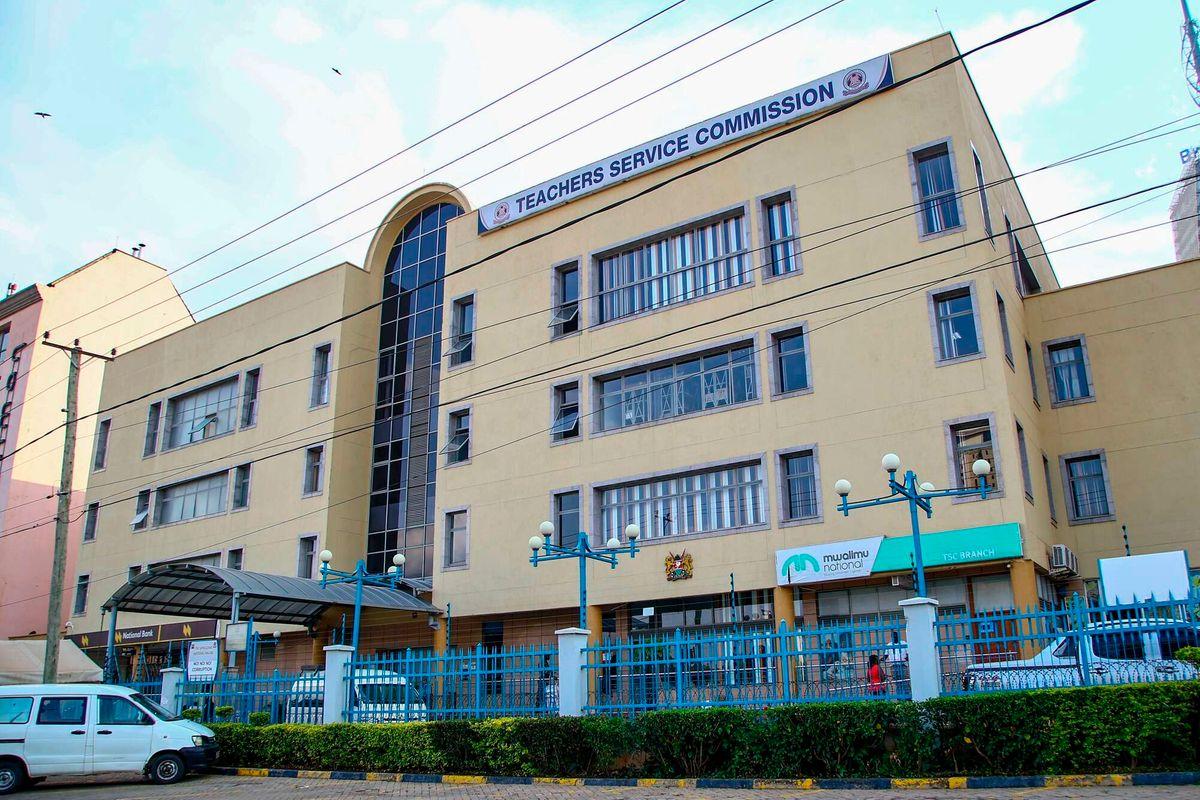
TSC has unveiled one of the most far-reaching reforms in the history of Kenya’s teaching service, proposing a comprehensive overhaul of teacher salaries, career progression and job grading.
-
Submitted to SRC, the reforms combine a progressive salary review with a redesigned career framework that introduces new professional titles, collapses overlapping job grades and establishes a clearer pathway for promotion from entry-level teaching to the highest leadership positions.
The Teachers Service Commission (TSC) has unveiled one of the most far-reaching reforms in the history of Kenya’s teaching service, proposing a comprehensive overhaul of teacher salaries, career progression and job grading.
The reforms seek to improve remuneration, eliminate promotion bottlenecks and harmonise career structures across primary schools, junior secondary schools, secondary schools and teacher training institutions.
The reforms, submitted to the Salaries and Remuneration Commission (SRC) for consideration under the 2025–2029 Collective Bargaining Agreement (CBA), combine a progressive salary review with a redesigned career framework that introduces new professional titles, collapses overlapping job grades and establishes a clearer pathway for promotion from entry-level teaching to the highest leadership positions.
Lower cadre teachers emerge biggest winners
The salary review adopts a progressive model that favours teachers in the lower grades, reflecting the Commission’s intention to narrow income disparities within the profession.
Teachers in Grade B5, the current entry level for primary school teachers, emerge as the biggest beneficiaries, receiving a basic salary increase of approximately 29.5 per cent.
ALSO READ:
Butula University College of Technology moves closer to CUE approval after technical inspection
Their salaries rise to between Ksh28,620 and Ksh37,100, making them the largest percentage winners under the new CBA.
Teachers in Grade C1, the entry grade for Junior Secondary School (JSS) and secondary school teachers, receive an average increase of 26.9 per cent, with salaries rising to Ksh35,336–Ksh47,261.
Those in Grade C2 benefit from increases averaging 19.6 per cent, earning Ksh41,420–Ksh57,230, while Grade C3 teachers receive an average increase of 15.7 per cent, bringing their salaries to Ksh49,781–Ksh66,233.
School administrators in Grade C4 receive salary improvements averaging 12 per cent, earning between Ksh58,585 and Ksh77,120, while teachers in Grade C5 record some of the largest cash gains, with salaries ranging between Ksh69,745 and Ksh96,130 depending on their salary notch.
For school leaders, Grade D1 rises to Ksh80,984–Ksh99,272, D2 to Ksh95,271–Ksh116,070, D3 to Ksh109,224–Ksh133,347, D4 to Ksh121,789–Ksh150,675, and D5 to Ksh135,321–Ksh167,415.
Although these grades receive average percentage increases of about 3 per cent, they continue to enjoy the highest salary scales within the teaching service.
Original proposal to SRC
Before the final CBA was agreed upon, TSC had sought SRC approval for an even more generous remuneration package. The Commission proposed salary increases of up to 32 per cent for teachers in Grades B5 to C3 and up to 16 per cent for those in Grades C4 to D5.
ALSO READ:
Principals must become instructional leaders to drive CBE success, says TSC Chair
The proposal also requested a 20 per cent enhancement of house, commuter and leave allowances, alongside the retention of hardship allowances for teachers working in designated hardship areas. Following consultations involving SRC, the National Treasury and teachers’ unions, a more targeted and fiscally sustainable salary structure was adopted.
New career structure
Beyond salaries, TSC is proposing the most comprehensive restructuring of teacher grading since the introduction of the Career Progressiond Guidelines (CPG).
The Commission seeks to replace the current B, C and D grading system with professional titles that reflect career progression across different learning institutions.
For primary schools, teachers would progress from:
Teacher 9 (T9) – Entry-level Primary Teacher
Teacher 8 (T8)
Teacher 7 (T7)
Teacher 6 (T6)
Teacher 5 (T5)
Teacher 4 (T4)
Teacher 3 (T3)
Teacher 2 (T2)
Teacher 1 (T1) – Highest primary teaching grade.
For Junior Secondary and Secondary Schools, the proposed structure becomes:
Secondary Teacher 8 (ST8) – Entry-level graduate teacher
Secondary Teacher 7 (ST7)
Secondary Teacher 6 (ST6)
Secondary Teacher 5 (ST5)
Secondary Teacher 4 (ST4)
Secondary Teacher 3 (ST3)
Secondary Teacher 2 (ST2)
Secondary Teacher 1 (ST1) – Chief Principal level.
Teacher Training Colleges (TTCs) would adopt a parallel structure beginning with Tutor 7 (TT7) and progressing to Tutor 1 (TT1), while teachers at the Kenya Institute of Special Education (KISE) would advance from Special Needs Tutor 7 (SNT7) to Special Needs Tutor 1 (SNT1).
ALSO READ:
Open University to launch school leadership course for teachers in administrative roles
Entry-Level Harmonisation
The proposed reforms also harmonise entry grades across institutions.
Primary school teachers would continue entering service at Grade B5, renamed Teacher 9 (T9).
Junior Secondary and Secondary School teachers would enter at Grade C1, renamed Secondary Teacher 8 (ST8).
Tutors in Teacher Training Colleges would begin at Grade C2, becoming Tutor 7 (TT7), while KISE lecturers would enter the service as Special Needs Tutor 7 (SNT7).
The harmonised framework is intended to recognise differences in academic qualifications while ensuring clear and predictable promotion pathways across all institutions managed by TSC.
Proposed Grade Rationalisation
To reduce duplication and eliminate promotion bottlenecks, TSC has proposed introducing three new grades—B6, C6 and D6—while collapsing several existing grades.
Under the proposal:
B5 and C1 would be rationalised through the introduction of B6, creating a smoother transition from primary to graduate teaching.
C2 and C3 would be merged into a broader professional teaching grade.
C4 and C5 would be consolidated into a single leadership band before progression to the new C6.
D1 and D2 would become one Deputy Principal grade.
D3 and D4 would be merged into a unified Principal grade.
D5 would transition into the proposed D6, which would become the highest leadership grade within TSC.
A New Era for the Teaching Profession
Education stakeholders believe the reforms represent more than a salary review. They mark a strategic transformation of the teaching profession by linking remuneration, career growth and professional identity within one integrated framework.
If approved by the Salaries and Remuneration Commission and subsequently implemented by TSC, the reforms will redefine the career journey of every teacher—from the newly employed primary school teacher to the chief principal—while ensuring fairer pay, faster progression and a modern grading structure aligned with Kenya’s evolving education system.
For more than 400,000 teachers, the proposals signal the beginning of a new era in which professional growth is expected to be clearer, more equitable and better rewarded than ever before.
By Hillary Muhalya
You can also follow our social media pages on Twitter: Education News KE and Facebook: Education News Newspaper for timely updates.
>>> Click here to stay up-to-date with trending regional stories
>>> Click here to read more informed opinions on the country’s education landscape