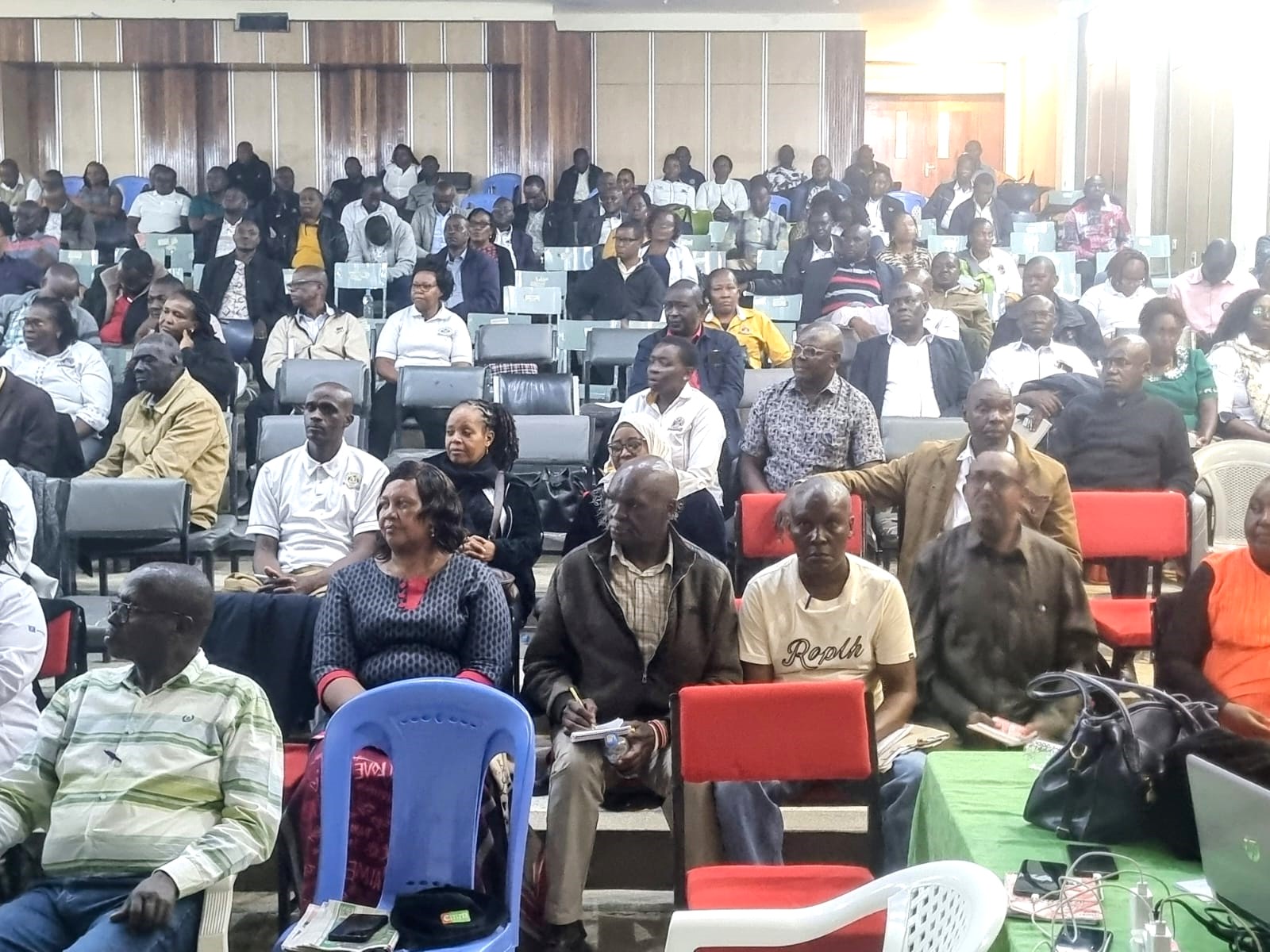
The Kenya Primary Education Equity in Learning (KPEEL) program is a transformative US$317 million project led by the Ministry of Education and the Teachers Service Commission (TSC).
The main mission of this project is to reduce regional disparities in learning outcomes, improve retention of girls in upper primary education, and strengthen systems for delivering equitable education outcomes.
The project, which is funded by the World Bank and the Global Partnership for Education with support from partners like the Lego Foundation, was set to run from 2022 to 2026. In collaboration with TSC, the Ministry of Education also worked with the Kenya National Examinations Council (KNEC), the Kenya Institute of Curriculum Development (KICD), the Kenya Institute of Special Education (KISE), the Kenya Education Management Institute (KEMI), the National Council for Nomadic Education in Kenya (NACONEK), and the Kenya Society for the Blind (KSB).
According to an official document by the State Department for Basic Education, seen by Education News, KPEEL employs a Program-for-Results (PforR) model. Unlike standard budget allocations, funding is released as a reward for reaching specific, verified milestones.
“This program will be implemented through the Program-for-Results (PforR) model, where funding is released upon achievement of specified results,” reads the document.
KPEEL focuses on three core pillars: improving learning outcomes for marginalised and refugee populations, increasing female learner retention, and strengthening reform frameworks.
These grants are tied to specific school improvement plans focusing on school inputs, teacher effectiveness, and school management. They also lay emphasis on learner assessment, overall school attendance, and creating safe, inclusive environments.
To achieve these goals, KPEEL utilises a Results-Based School Grant intervention system targeting 5,422 primary schools. The targeted institutions range from schools in informal urban settlements around Nairobi, Mombasa, and Kisumu to those in refugee-hosting counties like Turkana and Garissa. Each institution must prove progress in teacher effectiveness and safety before receiving funds.
According to the government document, the path to these grants is governed by a rigorous implementation process that begins with a “smart cascade” of training. National master trainers first brief field officers in target counties, who then empower local school teams to take charge of their own development.
Central to this process is the Sub-County Director of Education (SCDE). Schools must develop a data-driven School Improvement Plan (SIP) and submit it to their respective SCDE for thorough vetting. Approval from the SCDE acts as the green light for the first injection of capital.
READ ALSO: TSC equips field officers with KPEEL programme skills in five-day nationwide workshop
To ensure accountability, the US$10,000 total grant is released in three distinct phases. The first phase of US$4,000 is disbursed immediately upon the SCDE’s approval of the school’s SIP. The second tranche of US$3,000 is released only after the school proves it has successfully executed three of its five identified priority projects. The final phase of US$3,000 is reserved for schools that can verify that 70 per cent of teachers are in school and actively teaching.
By Frank Mugwe
You can also follow our social media pages on Twitter: Education News KE and Facebook: Education News Newspaper for timely updates.
>>> Click here to stay up-to-date with trending regional stories
>>> Click here to read more informed opinions on the country’s education landscape
>>> Click here to stay ahead with the latest national news.