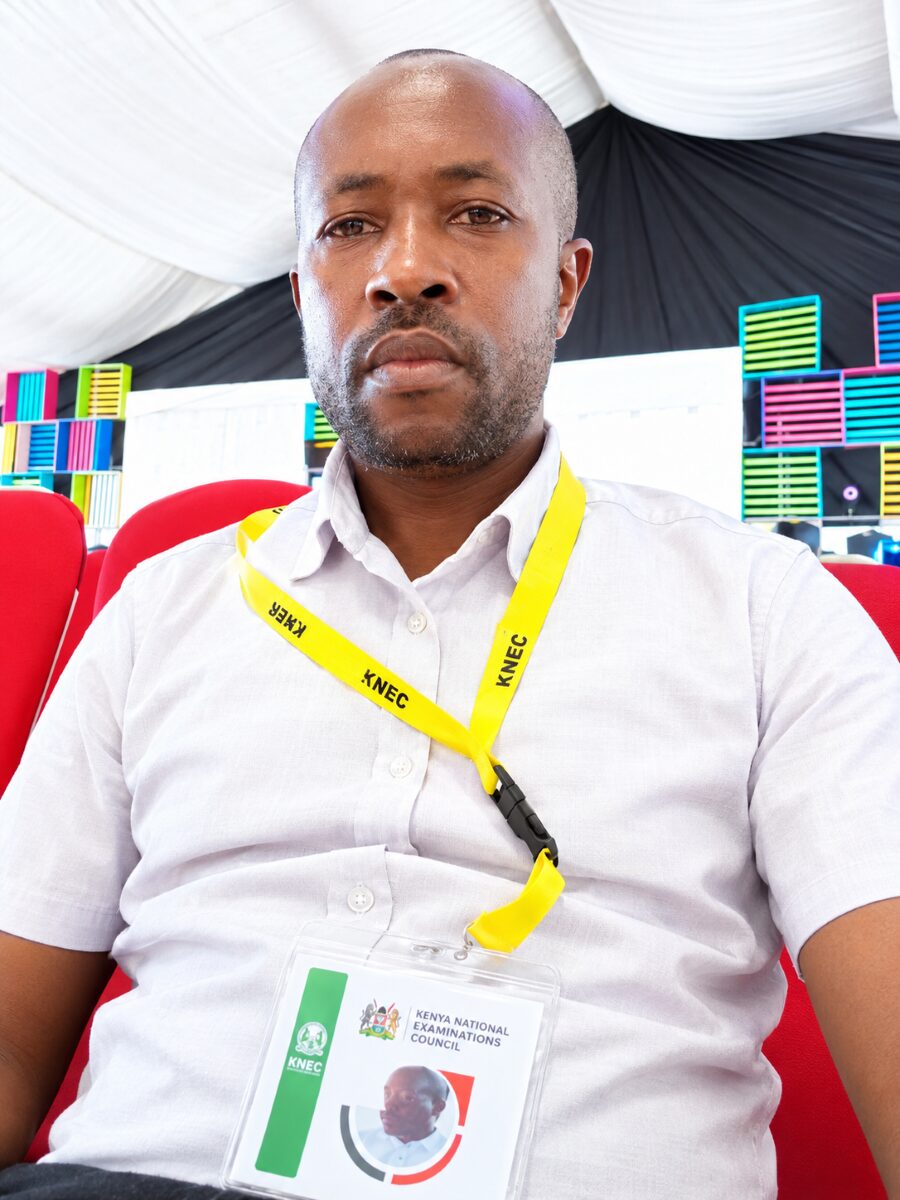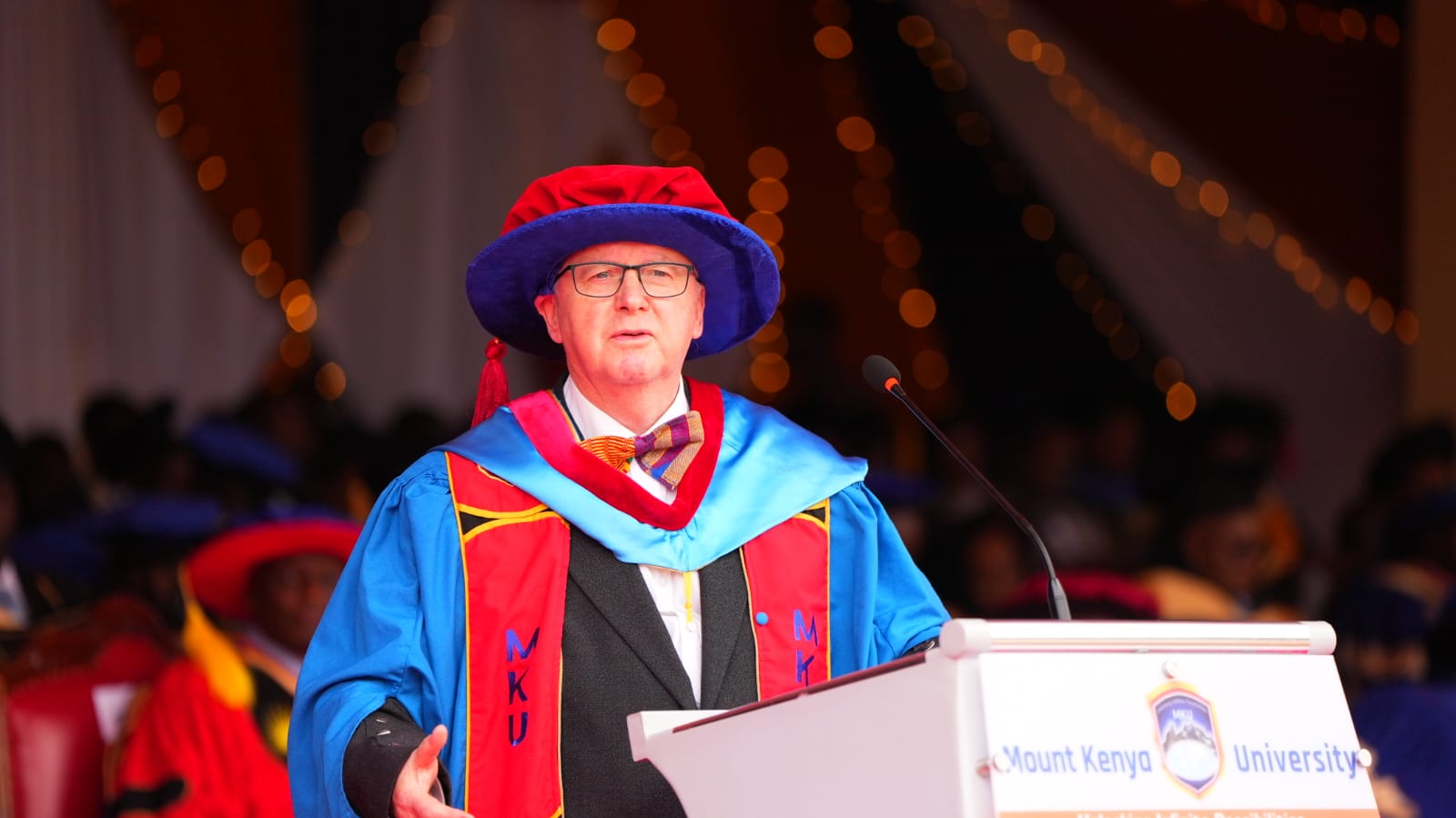
- University leaders and guest speaker Dr Julius Kipng’etich have urged graduates to champion ethical leadership, innovation and social transformation.
- Speakers have highlighted new scholarship and research funding opportunities, including HELB postgraduate loans and international grants extending to 2029.
Graduates have been urged to become champions of social transformation, ethical leadership and inclusivity as they transition into the workforce and community leadership roles.
Speaking during Mount Kenya University’s (MKU) 29th graduation ceremony, MKU Chancellor Prof John Struthers said young people must embrace innovation, adaptability and resilience to thrive in a rapidly changing world shaped by technological advancement and global connectivity.
He cited the university’s global partnerships and expanded investment in emerging technologies, including artificial intelligence, robotics, cloud computing, 5G and the Internet of Things, as evidence of its commitment to preparing graduates for the Fourth Industrial Revolution.
He highlighted the operationalisation of a Cloud Computing Laboratory through collaboration with Xinyada ICT Company and leading Chinese higher education institutions, alongside the extension of MKU’s tenure as the United Nations Academic Impact (UNAI) SDG 9 Hub Chair on Industry, Innovation and Infrastructure until 2030. He thanked government agencies, development partners and philanthropists for supporting students through scholarships and research initiatives, and urged graduates to use their knowledge in service of society while upholding integrity in their careers.
Guest speaker Dr Julius Kipng’etich, CEO of Jubilee Holdings Group, challenged graduates to seize emerging opportunities, embrace innovation and create jobs rather than wait for employment. Quoting Nelson Mandela, he reminded them that education is the most powerful weapon they can use to change the world, and urged them to apply their learning toward solving societal challenges, strengthening institutions and driving sustainable development.
ALSO READ:
Moi University averts KSh1 billion debt crisis as landmark court battle ends
Dr Kipng’etich pointed graduates toward existing funding opportunities, noting that the Higher Education Financing portal now processes government loans and scholarships for both undergraduate and postgraduate study in Kenya, including HELB postgraduate scholarships of up to Kshs 450,000 for a PhD and Kshs 200,000 for a Master’s degree. He also cited global opportunities such as the Chevening Scholarship, DAAD and EU funding, the Fulbright programme, Commonwealth Scholarships and the Mastercard Foundation Scholars Program, which fund thousands of African students, including Kenyans, for fully funded study abroad annually.
He added that the EU-Equity Bank programme, launched in June 2026, has given over 100 Kenyan students access to global master’s research and education opportunities, while 33 Kenyan recipients of the 2026 Erasmus Mundus Joint Master’s scholarships were flagged off the previous week. “Go out and be the architects of change that is social, governance that is ethical and success that is inclusive,” he told the graduating class.
Vice-Chancellor Prof Deogratius Jaganyi said the university continues to strengthen its academic programmes through curriculum reviews, integration of artificial intelligence and digital skills training to prepare learners for the modern workforce. He noted that MKU has expanded its postgraduate offerings into emerging fields such as mental health, psychiatric studies and health records management, and that in the first quarter of 2026, the university secured international research grants extending to 2029 from the Gates Foundation, DAAD, Wellcome Trust and the Erasmus+ Mobility Exchange Programme, supporting research in maternal health and employability.
ALSO READ: Huawei partners with gov’t to accelerate digital learning in schools
MKU Council Chairman Dr Vincent Gaitho told the graduates that graduation marks the beginning of a lifelong commitment to leadership, service and continuous learning. He urged them to confront pressing societal challenges, including poverty, inequality, environmental degradation and social injustice, through innovation, resilience and compassion, stressing that sustainable development depends on principled leaders committed to the common good.
“Your voice matters, and your leadership is needed now more than ever. Go forth as agents of positive change, champions of ethical leadership, and advocates for inclusivity,” Dr Gaitho told the graduating class.
By John Kamau
You can also follow our social media pages on Twitter: Education News KE and Facebook: Education News Newspaper for timely updates.
>>> Click here to stay up-to-date with trending regional stories
>>> Click here to read more informed opinions on the country’s education landscape